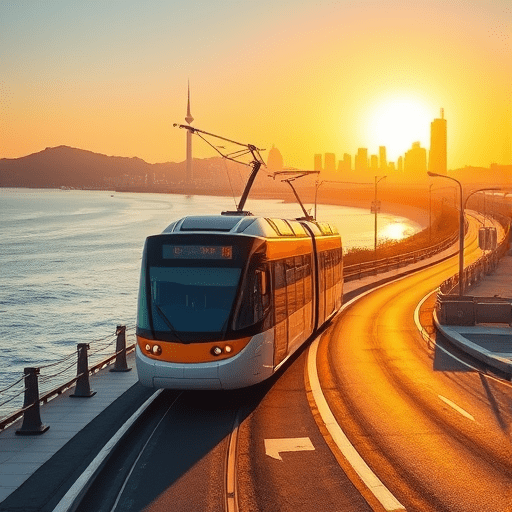
There’s a way to catch the spray and speed of a Formula 1 weekend and still wake up in time for a completely different kind of roar — a music festival abroad. It’s the night-train itinerary that skips expensive flights between two host cities: a few hours after the chequered flag at the Dutch Grand Prix, you board the European Sleeper in Amsterdam, sleep through the border, and arrive in Berlin with the whole morning still intact. No airport security, no baggage-drop roulette, no three-hour-early check-in.
This isn’t a fantasy. The European rail map has become more overnight-friendly again, and the route between the Netherlands and Germany is one of the most useful for anyone planning a race-and-festival double. One train turn does the work of a flight, a hotel night, and the awkward morning-after commute all at once.
Why “flight-skipping” is the new race-weekend cheat code
For years, the standard plan was to fly. Budget airlines make a cross-border leg look like a bargain, but by the time you add the transfer to Schiphol, the airport sandwich, the extra-bag fee, and the ride from Berlin’s airport to the festival hotel, the “cheap flight” costs more than a comfortable couchette. It also costs a night’s sleep and a full morning of exploring.
A night train flips that math. Your transport doubles as your accommodation. You leave after the music and the paddock crowds, not before sunrise. And when you arrive, you’re in the centre of the next city, not at a distant terminal with a 40-minute bus ride ahead.
The itinerary: a Zandvoort race, then Berlin after dark
Here’s how the plan should feel when it’s working properly. The Dutch Grand Prix at Zandvoort has become one of the most atmospheric weekends on the calendar — a dune-surrounded circuit with banking, beach-town chaos, and orange smoke rising into the North Sea wind. The Sunday race ends mid-afternoon, which leaves enough time for a slow track exit, a final Dutch snack, and a short shuttle ride back to Amsterdam.
That evening, the second half of the trip begins. From Amsterdam Centraal, the European Sleeper departs after dark and heads east through Utrecht, across the German border, and down toward Berlin. It’s not just a transfer — it’s a deliberate bridge between two completely different gatherings: the industrial scream of an F1 car and the bass-heavy pulse of a Berlin music festival.
Which Berlin festival fits the plan?
Berlin’s late-summer festival season is broad enough to suit almost any taste. If you want enormous main stages and international pop acts, the late-summer Lollapalooza weekend is a comfortable landing spot. If you prefer experimental electronics, club-oriented showcases, and something with a more local identity, Berlin’s independent festival calendar around the same window rewards curiosity. The useful thing is that the train schedule doesn’t change based on which festival you pick — it just leaves you in Berlin with a full day ahead.
What the European Sleeper actually feels like
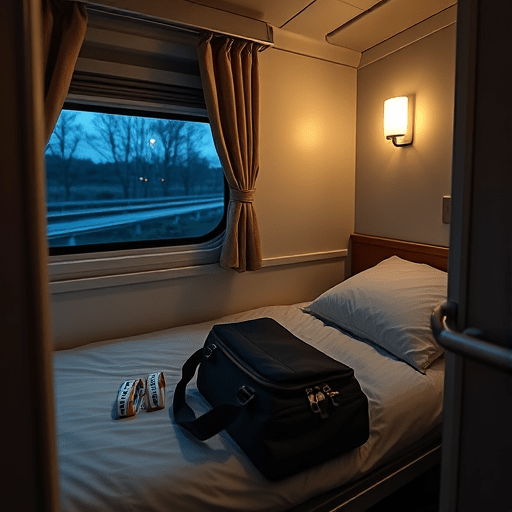
The train is not a luxury hotel. It’s more like a mobile hotel that has seen a few summers and knows exactly what backpackers, festival-goers, and race fans need. You can book a seat in an open coach, a couchette in a shared compartment, or a private sleeper cabin. For a race-and-festival trip, the couchette is the sweet spot: you get a padded berth, a privacy curtain in newer cars, and enough space to change into something comfortable without feeling like you’re performing acrobatics.
There’s a no-fuss breakfast in the morning — usually bread, butter, jam, coffee, and a view of the eastern German landscape sliding past the window. The train itself doesn’t run a full-service restaurant carriage like the old night expresses, so it’s worth buying food and water in Amsterdam before boarding. That’s not a problem: the station has plenty of shops and your bag can double as a picnic basket.
A note on scheduling
The European Sleeper uses a small number of departures per week rather than a daily service, so it pays to check the travel days before booking festival tickets. The same route often connects Brussels, Antwerp, Amsterdam, Berlin, and Prague, which makes it useful for a longer trip, too. In 2026, this kind of sleeper service is no longer a transport anomaly — it’s a normal way to connect two separate weekends.
How to make the race-to-platform connection
The real challenge of a night-train double isn’t the train itself. It’s the connection from the circuit to the station. At Zandvoort, the post-race shuttle can be busy, but the queues move consistently and the walk to the shuttle is clearly signposted. If you leave shortly after the checkered flag, you’ll have hours to spare before the train’s departure.
Once you reach Amsterdam Centraal, you have three options: wait in the station with a book, wander into the centre for a warm meal, or take a short walk to an open late-night spot near the water. The station has luggage lockers if your festival outfit doesn’t need to come out until Berlin. There’s even a quiet corner near the bus platforms that travellers often use as an improvised lounge on warm nights.
Night train vs. the invisible cost of a cheap flight
Let’s put it side by side. A flight from Amsterdam to Berlin takes about an hour and a half, but the full journey from Zandvoort circuit to a Berlin festival gate adds up like this: shuttle to station, train to Schiphol, check-in buffer, security, boarding, the flight, another train out of the airport, and then a final tram to wherever the festival is. That’s easily six hours of alert, upright, slightly anxious travel time.
The night train replaces that with one simple transfer from the spund and a morning arrival in central Berlin. It also removes the luggage-hassle layer. On a European night train, there are no overhead bins and no 10-kilogram carry-on drama. Your bag sits on your berth or under the seat, and nobody scans your volume or argues about the wheelie-bag allowance.
How to pack for a race weekend and a music festival with one bag
A sleeper train between two very different events demands rational packing. Here’s a short list for the two-city trip:
- Earplugs and an eye mask. Train compartments are shared, and the German countryside is brighter at sunrise than you’d expect.
- One pair of comfortable walking shoes. The Zandvoort paddock and the festival grounds both punish fashion-first choices.
- A shirt that can survive both worlds. Dark colours hide the dust from the circuit and the spilled drink at a Berlin set.
- A warm layer. Even in mid-summer, the train’s air conditioning and Berlin’s late-night streets get cool.
- A small toiletry kit. There’s a washbasin in sleeper cabins and a washroom in the corridor, but you won’t want to carry the entire bathroom.
- Your ticket and passport. The train crosses the Dutch–German border, so keep documents within reach.
Two cities, one night, zero flights
There’s something joyful about waking up on a train knowing you’ve already travelled while your body was resting. The tiredness that normally sits at the beginning of a festival week is gone because you didn’t spend six hours in airports and terminals. Instead, you arrive in Berlin as a person who has slept, eaten breakfast, and watched the sunrise from a window. The race is behind you, but the festival is just beginning.
An F1 weekend and a music festival abroad can feel like two holidays that don’t belong in the same week. A night-train itinerary that skips expensive flights between two host cities turns them into one seamless summer story — and it makes the journey between the two the most memorable part of the trip.