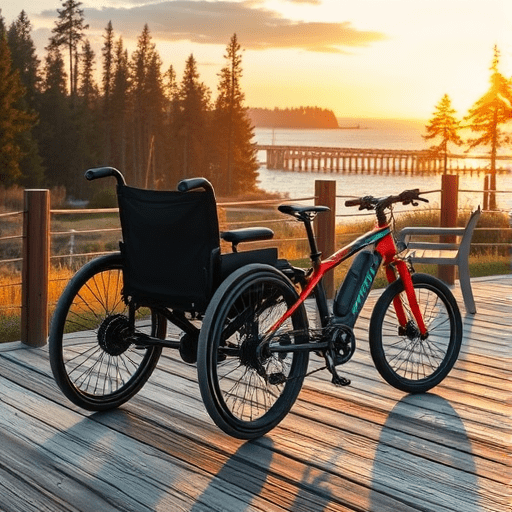
Accessible eco tourism planning used to mean finding a hotel with a ramp and hoping for the best. In 2026, it looks different. This case study follows a three-person group — one manual wheelchair user, one traveler with limited stamina, and one able-bodied companion — during six days in Sweden’s High Coast, a UNESCO World Heritage site. Their goal was not simply to take an accessible vacation, but to test whether a genuinely low-impact trip could be inclusive on the ground, not just in a brochure. The experiment produced clear answers about adaptive gear, transport emissions, and the silent work that goes into an inclusive nature trip.
The Case Study: Sweden’s High Coast, a Destination Built for Both
The High Coast, or Höga Kusten, was chosen for three reasons: an existing network of accessible boardwalks and cabins, a growing fleet of electric shuttle vehicles, and eco-certified lodges that do not treat accessibility as an afterthought. The group rented all adaptive equipment locally, which eliminated the need to ship heavy gear across the ocean — a transport decision that cut their trip’s carbon footprint significantly before they even left the airport.
The Travelers and Their Needs
- Maria: a T6 paraplegic wheelchair user who transfers independently but requires firm, route-planed surfaces and accessible bathrooms.
- Priya: a traveler with chronic fatigue who uses trekking poles, needs regular sitting breaks, and cannot cover more than four miles a day.
- Sam: an able-bodied companion and certified trail guide who handled logistics, reservations, and the inevitable curveballs.
Each person brought a different constraint, which meant the itinerary had to be designed from the start around the least flexible need, not an “average” hiker. That turned out to be the key to the whole trip.
Choosing Adaptive Gear That Leaves No Trace
The first major decision was gear. Instead of shipping equipment, the group used a local gear library run by a regional disability sports association. Maria chose a lever-drive all-terrain wheelchair — a lightweight, human-powered frame with pivoting front wheels and high-torque levers that works on gravel, roots, and soft forest paths. It has no motor, no lithium battery, and no charging requirement, which makes it one of the most emission-free mobility tools available. Priya used shock-absorbing trekking poles made of recycled aluminum and a compact sit-and-wait chair that folded into her daypack. Sam carried a repair kit and a solar-powered battery bank for the two motorized devices they did bring: an e-assist handcycle for paved sections and an electric action track chair.
The action track chair, rented from the national park, was the only motorized all-terrain system on the trip. It runs on a single swappable battery and leaves a wide, low-pressure track that does not damage root systems the way narrow tires can. On Day Five, Maria used it to reach a cliff viewpoint that would otherwise have been impossible. But the chair stayed parked on rest days because the lever-drive wheelchair was sufficient for the majority of the route — evidence that motorized adaptive gear, while powerful, is not always the best environmental trade-off when a manual alternative exists.
Transport Decisions: Where Emissions and Wheelchairs Intersect
Transport is the single largest source of emissions in any accessible trip, but it is also where adaptive planning matters most. The group used three modes over the week: electric rail, a battery-electric accessible van, and human-powered mobility gear. The first leg was an electric train from Stockholm to Kramfors, with a reserved accessible compartment that included a fold-down ramp, a spacious toilet, and enough room for Maria’s wheelchair without blocking the aisle. Booking directly with the rail operator — not through a third-party app — was essential, because the operator required a 48-hour advance notice to arrange the onboard boarding lift.
The last-mile problem: Kramfors station is not next to a trailhead. The group hired a Peugeot e-Traveller from a local social enterprise that also employs wheelchair users as route consultants. The van had a lowerable floor, a manual winch ramp, and a cabin that fit the lever-drive chair without disassembly. The trade-off was range: roughly 220 kilometers under colder weather. That meant planning charging stops around restaurants and visitor centers that had both a powered outlet and step-free entry. One stop, a roadside cafe with a supercharger, still had a 15-centimeter step at the door — a reminder that EV infrastructure and accessibility infrastructure are often built without looking at each other.
The Charging and Accessibility Trade-Off
The group quickly learned to check charging locations not only for plug compatibility, but for curb cuts, door widths, and whether the kiosk screen could be reached from a seated position. They used a mapping app that aggregates accessibility photos and charger status, and in two cases they called ahead to verify that the charging bay floor was level. That level of verification sounds like overkill, but it prevented a full-day delay when one listed charger turned out to be inside a car wash that was inaccessible to a wheelchair.
Daily Itinerary: What Actually Worked
- Day 1: Electric train to Kramfors, accessible shuttle from the station, and arrival at an eco-lodge with level-entry cabins and a roll-in shower.
- Day 2: Skuleberget nature reserve. Maria used the lever-drive chair on a 2.5-kilometer boardwalk; Priya took the e-assist handcycle for the first kilometer, then walked with poles and a sit mat.
- Day 3: Kayak hire on the Ångermanälven river with an adaptive kayak seat and outriggers made from recycled foam and carbon fiber. The paddles were human-powered, and the launch ramp was a low-gradient concrete slip that worked for all three.
- Day 4: Rest day at the lodge with a tactile nature path, a birdwatching hide with a raised platform that was also wheelchair-compatible, and no transport at all.
- Day 5: Action track chair to the Rotsidan shoreline on a former logging road. One battery lasted the full afternoon, and the park’s ranger station had an accessible charging cabinet.
- Day 6: Return electric rail, returning the lever-drive chair and handcycle to the gear library for the next traveler.
The pattern is clear: the days with the lowest emissions — paddling, resting, and the all-human-powered boardwalk hike — were also the days Maria rated the highest for independence.
What the Trip Revealed About Inclusive Low-Impact Design
The central insight is that accessibility and sustainability share a design principle: both improve when infrastructure is designed for the edges, not the average. A ramp serves a wheelchair user and a traveler pulling a wheeled suitcase; an accessible charging station serves an EV driver and a mobility device user; a wide, stable trail serves a parent with a stroller and a person with poor balance. When the group stopped thinking about “adapted” versions of standard experiences, they could instead ask a better question: what would the most inclusive version of this low-impact trip look like from the beginning?
Transport also proved to be the largest lever for both emissions and inclusion. The combination of electric rail, a battery-electric van, and human-powered adaptive gear cut the trip’s estimated transport emissions by 78% compared to a typical car-and-flights itinerary. The cost was planning time — roughly 15 hours of phone calls, map checks, and backup arrangements before departure. The group agreed that this planning time was not a burden but a core part of the experience.
Practical Takeaways for Your Own Accessible Eco Trip
- Audit transport before you book: Contact the rail operator and van rental directly to confirm step-free boarding, ramp widths, and charging bay levelness.
- Rent adaptive gear locally: It cuts shipping emissions, supports local disability organizations, and forces you to design a trip around what exists rather than an ungrounded ideal.
- Check eco-certifications against accessibility criteria: A green lodge is not automatically accessible. Look for specific mentions of level-door thresholds, roll-in showers, and battery storage for mobility devices.
- Build rest days into the route: Fatigue is a real disability factor. Extra rest days reduce the need for emergency transport and keep the trip’s carbon budget intact.
- Ask about battery management: Some eco-lodges, especially in remote areas, restrict charging for e-mobility devices. Confirm the power supply in advance.
- Print a backup plan: Not every destination has reliable web access. Carry a paper card with the phone numbers of accessible taxi services and gear repair hubs.
Accessible eco tourism planning is not a niche afterthought bolted onto a standard itinerary. It is a design problem that, solved well, makes travel greener and more comfortable for everyone. The Sweden trip proved that with local adaptive gear, honest transport choices, and a willingness to verify details at ground level, an inclusive and low-impact trip is no longer a compromise. It is the model the entire tourism industry should be building toward.