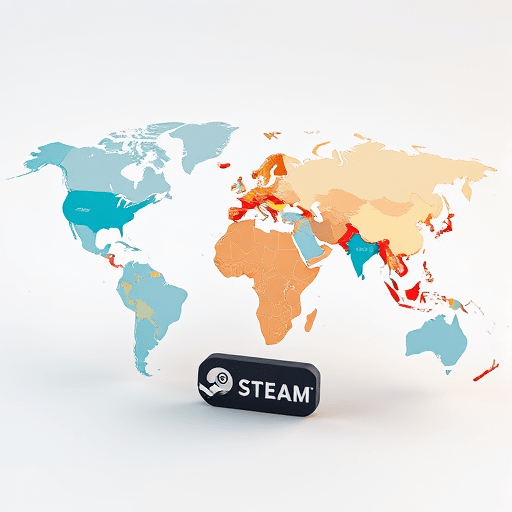
Most indie developers treat fan translations as a nice gesture — a thanks to the most dedicated players, a fun announcement in a Discord channel, then life moves on. But in 2026, the teams that are winning on Steam have stopped seeing fan translations as a side project. They are transforming fan translations into a global distribution strategy, using player-made localizations to open regions that were previously invisible to their store page. This isn’t about monetizing goodwill. It’s about building a regional presence that influences Steam’s recommendation engine, converts wishlists in emerging markets, and turns a language barrier into a permanent competitive advantage.
If your game is currently English-only, or English-plus-a-few-European-languages, there’s a good chance you’re leaving entire countries — and thousands of reviews — untouched. Here’s how to make the shift systematically.
Why Language Support Is the New Regional Pricing
For years, the conversation about Steam global growth centered on regional pricing. Developers were told to adjust prices for Argentina, Turkey, and Southeast Asia to stop the “buying from a cheap region” trick and instead tap into local purchasing power. Regional pricing is still important, but it’s no longer enough. Steam’s storefront now personalizes almost everything around language availability. Players filter search results by “Simplified Chinese,” “Portuguese (Brazil),” or “Vietnamese.” They see screenshots and tags in their own language. A game that only supports English simply does not appear in those filtered views.
It’s not just about discovery, either. A player landing on a store page that isn’t in their language experiences friction before they even click “Add to Cart.” The result is a high bounce rate and a low wishlist conversion. This is where fan translations come in: not as a replacement for professional localization, but as a fast, low-cost way to achieve initial language coverage for a dozen regions at once. When you combine that coverage with regional pricing, the Steam algorithm treats your title as relevant to a much larger audience pool — and the organic visibility follows.
The New Model: Community Localization as a Structured Partnership
The old assumption was that fan translations were a legal gray zone. Either you ignored them and hoped no one made unofficial patches, or you shut them down out of fear that the translation would become an unofficial fork of your game. That thinking feels outdated in 2026. The modern approach is to formalize community translation subsets: invite active fan translators into a structured program with clear guidelines, in-game credits, and early access to build files.
This isn’t “unpaid work.” It’s a partnership with players who already love your game enough to spend dozens of hours on it. What they get is not money, but real status: their names in the credits, a visible role in the community, and an official channel for their contribution. What you get is a localized game with relatively low engineering overhead.
Start With a Single Language Champion
The mistake many developers make is trying to manage all communities at once. Instead, start with one language where you already see strong organic interest. Check your Steam community forums, your Discord server, and your itch.io page. If players are already asking “is there a Spanish translation?” or “can I help translate into Korean?,” you already have your first champion. Reach out to that person, establish a basic workflow, and treat that one language as a pilot. Once the pipeline is proven, you can expand to other languages.
Define the Scope Before You Open the Floodgates
Translating the entire game is a big commitment, but you don’t have to start with every line of dialogue. Consider scoping the first translation to the core UI, inventory descriptions, and key narrative beats. This gives players enough to enjoy the game without forcing the community team to burn out on a 200,000-word lore bible. Define a glossary and a style guide early so that subsequent translations — and future DLC — remain consistent.
Quality Control: Making Player-Made Localizations Feel Native
The biggest fear with fan translations is quality. A word-for-word translation can ruin a joke, miss a cultural reference, or break the UI. But the same is true for some professional localization services. What matters is a clear review loop, not the source of the translation. Set up a two-stage system: group leaders manage the first pass, and a small core team does a second pass inside the game engine, checking text overflow, context lines, and character encoding.
Steamworks doesn’t care who wrote the localization string. It just reads the language file. So take advantage of that. Put the same quality bar on community translations as you would on a paid translation. If a term is too risky, create a “translation note” file so that translators can flag ambiguities. This kind of transparency builds trust and prevents the classic problem of overly literal localizations that feel robotic.
Beyond the Language File: Localizing the Steam Store Page
Here’s the part that almost every developer forgets. Once you have in-game language support, you must localize the Steam store page itself. If you add Simplified Chinese as a game language but the store page remains in English, Steam will show an English store page to Chinese players. That breaks the experience before anyone even downloads the game. Use the localization tools in Steamworks to translate the description, the short description, the reviews, and the screenshots’ caption text.
Store page localization matters for another reason: Steam’s regional curators. When your store page is in a local language, curators in that region are far more likely to feature your game in their discovery queues and recommendation lists. A single regional curator feature can be as powerful as a small press mention.
Leverage Community Hubs as a Connection Layer
Don’t stop at text. Create a subcategory or thread in your Steam Community Hub for each officially supported translation. This gives players a place to report translation issues, suggest better phrasing, and feel like they’re part of the process. It also sends a signal to Steam’s algorithm that the community is active in that region. Steam views actively localized community hubs as a sign of a healthy game ecosystem, which can improve visibility in the “Popular among friends” and “More like this” sections.
Measuring the Regional Expansion Impact
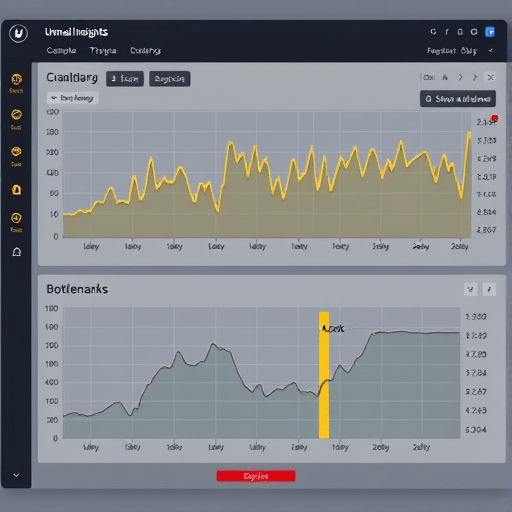
Once the translations go live, turn on your favorite analytics dashboard and track more than just downloads. Use Steam’s sales and traffic reports to compare the weeks before and after a language launch. Look at these key metrics:
- Traffic by country: a spike in visits from the target region is the first positive signal.
- Wishlist conversion rate by region: localized store pages typically convert at a significantly higher rate than non-localized ones.
- Review sentiment and language ratio: soon after launch, you should see reviews appearing in the new language — these are generated by players who previously couldn’t play the game comfortably.
- Referral traffic from regional curators: check which of your store page’s external referrers are coming from regional communities.
The goal is not to nickel-and-dime regional sales, but to build a diversified revenue base. A game that earns 40% of its revenue from countries outside its original language market is much more resistant to the volatile US/EU paid-user acquisition landscape.
The Long Game: Translating as a Roadmap, Not an Event
Adopt a long-term mindset. The first translation will take time to hit your quality bar, and the first regional sales boost might be modest. But after two or three translation cycles, something interesting happens: you build a moat. The community that speaks the language becomes personally invested in your game. They see themselves in the credits. They bring friends. They create guides and wiki pages in their own language. This creates a self-sustaining regional ecosystem that other games simply don’t have.
You can also use the translation pipeline to test future game ideas. If a certain region is overperforming after a localization, consider releasing a mini-LiveOps event tied to a regional cultural moment. The fan translators will be happy to help craft culturally appropriate content. That’s not exploitation — it’s co-creation, and it’s one of the strongest forms of community marketing available to modern indie teams.
Turning Passion into an Organizational Asset
Fan translations are not a threat to your brand or a risk to your codebase. They are a signal that your game matters deeply to someone. In 2026, the most advanced game developers treat those signals as the raw material for a global distribution strategy. The mechanics are simple: formalize the relationship, set a quality bar, localize the store page, and track regional data. The result is a game that feels native to Brazil, China, Korea, and Germany at the same time — not in the marketing sense, but in the practical sense that a player in São Paulo can wishlist your game, read the description in Portuguese, play it in Portuguese, and review it in Portuguese.
That loop is the new distribution flywheel, and it starts not with a big budget but with a conversation — someone in your Discord asking “can I translate this?” All you have to do is say yes, and then build the system around them.