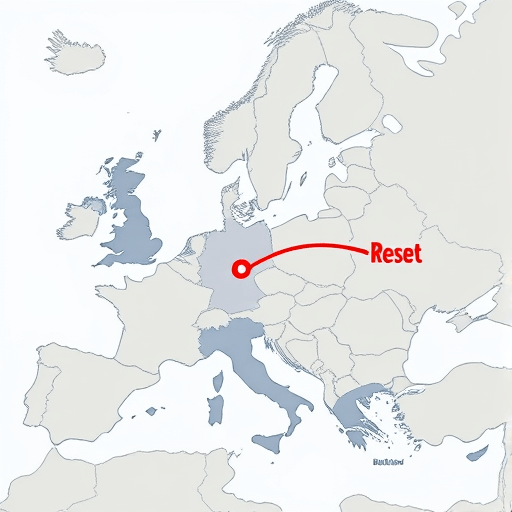
If you’ve ever felt the quiet panic of watching your 90-day Schengen clock tick toward zero while your travel plans are still unfolding, you’re not alone. Slow travelers often hit the same wall: Europe is vast, yet the 90/180 rule confines you to a quarter-year inside the Schengen Area. But here’s the good news — you don’t need to rely on outdated “visa run” tricks or risk an overstay. In 2026, a handful of legal strategies, paired with a smart understanding of the rolling 180-day window, let you reset your 90-day Schengen clock deliberately, comfortably, and even enjoyably. The secret isn’t gaming the system; it’s treating your reset as an essential part of the journey.
Demystifying the Rolling 180-Day Window
Before you can reset your 90-day Schengen clock, you need to understand exactly how the clock works. It’s not a simple calendar reset on January 1st. The 180-day window is rolling — meaning any day you are present in the Schengen Area is checked against the previous 180 days. If that total exceeds 90 days, you’re in violation.
This rolling structure actually offers a subtle advantage: you don’t have to leave for 90 consecutive days to “reset” completely. Instead, you can maintain a delicate balance by planning short, strategic exits. For example, if you spend 30 days in, then 10 days out, you can re-enter and still have room — as long as a 180-day lookback never shows more than 90 days of presence. This is the foundation of every legal slow-travel strategy for Europe.
Use the Official Calculator—Don’t Guess
The European Commission’s short-stay calculator is your best friend. It tracks your entry and exit dates against the rolling window, telling you exactly how many days you have left on any given date. In 2026, with the new Entry/Exit System (EES) expected to automate border checks, the calculator’s logic becomes even more critical. Use it before you book, and re-check it two days before each border crossing.
The Strategic Exit: Neighboring Countries That Don’t Count
One of the most elegant legal strategies is to leave the Schengen Area — not to an airport or a random visa-free corner — but to a country that shares a border with Schengen yet does not count toward your 90 days. These “reset zones” are perfect for slow travelers because they add a new culture, drastically lower costs, and let you return to Schengen without long journeys.
- Ireland — Technically part of the EU but outside Schengen. A short flight from Paris or Amsterdam, Ireland offers dramatic landscapes, warm hospitality, and a separate 90-day allowance for many nationalities.
- Cyprus — Though an EU member, Cyprus has not (yet) joined the Schengen Area. Time spent there doesn’t count against your 180-day total. Bonus: exceptional Mediterranean weather and a growing digital nomad scene.
- Balkan Gems — Albania, Serbia, Bosnia and Herzegovina, Montenegro, and North Macedonia are all outside the Schengen Area and offer visa-free access to many travelers. They also happen to be some of Europe’s most underrated slow-travel destinations, with dramatic hinterlands and coastal routes you can explore for weeks.
- The United Kingdom — A reliable reset spot, though you’ll need to keep an eye on the UK’s own 6-month visitor limit. A train ride from Brussels to London is enough to pause your Schengen timer while you lose yourself in Cornwall or the Yorkshire Dales.
Slow Travel in the “Pause”: Turn a Reset Into a Micro-Adventure
Many travelers dread their mandatory 90 days outside Schengen because they see it as “wasted time.” That’s a huge missed opportunity. Your reset period can become a treasured chapter of your European journey — a chance to slow down even further, at a fraction of the cost.
For example, instead of sprinting from one Schengen capital to another, design a “slow loop” that flows naturally across the border. Spend 90 days in Spain and Portugal, then hop to Morocco (also outside Schengen) for three weeks of beach towns and mountain villages. Return to Schengen for another 90 days through Italy and Slovenia, then reset with a bus trip through the Balkans into Albania. This way, your entire year feels like one continuous journey, not a series of forced separations.
Budget-Friendly Reset Destinations for 2026
If you want to stretch your money during a slow reset, look east and south. While Switzerland and Norway are spectacular, they don’t reset the clock (they are Schengen members). Instead, consider these affordable, non-Schengen spots:
- Albania’s Albanian Riviera offers turquoise waters and hostels for under €15 a night.
- Serbia’s urban energy in Belgrade and cultural depth in Niš make it a compelling month-long stay.
- Bosnia and Herzegovina’s Sarajevo and Mostar are historically rich, with a café culture that rewards slow living.
- Cyprus splits its character between Greek and Turkish influences, and has a warm winter climate perfect for off-season travel.
Legal Loophole? No — It’s Called the “Schengen Gymnastics”
Let’s be clear: there is no true loophole that lets you stay in Schengen forever without a visa. But there is a legitimate set of strategies often called “Schengen gymnastics.” The idea is to keep your presence under 90 days in every rolling 180-day period by alternating stays with short exits. This is not an abuse of the system — it’s exactly how the rules were designed to work.
One common pattern is the 30/30/30 method: 30 days in Schengen, 30 days out, 30 days in, etc. That gives you six months of travel across a year with only three months in dedicated reset zones. For slow travelers, the rhythm can be even gentler: 45 days in, 45 out, then 45 back in. The key is to use the official calculator to confirm that your entry and exit dates don’t accidentally overlap in a problematic way.
The “Buffer Day” Rule of Thumb
Seasoned slow travelers never push the limit to exactly 90 days. Instead, they leave a buffer of 2–3 days in case of canceled flights, border delays, or a sudden wish to linger. In 2026, the new EES will digitally record every entry and exit, so there is no wiggle room for “I didn’t know.” A buffer day isn’t just nice — it’s a safety net that prevents an accidental overstay, which can carry penalties from fines to re-entry bans.
ETIAS and EES in 2026: What Changes and What Doesn’t
Two major systems are shaping up to affect your travels in 2026. The first is the long-awaited Entry/Exit System (EES), which replaces physical passport stamping with digital records for third-country nationals. The second is ETIAS — the European Travel Information and Authorization System — which, once operational, will require a simple online application (€7, valid for 3 years) for visa-exempt non-EU travelers.
Here’s the key: neither ETIAS nor EES changes the 90/180 rule. Your Schengen stay limit remains exactly the same. What changes is enforcement. With digital tracking, overstaying will be much harder to miss, and the consequences may be automated. This makes it even more important to design your slow travel itinerary around legal resets rather than hoping a border officer won’t notice an extra day.
For slow travelers, EES is not a threat — it’s a tool. The calculator and your own travel diary will now match the official records, which means fewer misunderstandings at borders. Just be prepared for slightly longer entry processing times as the system rolls out.
Build Your Own 12-Month Slow Travel Loop
So how do you apply all this in practice? Here is a sample layout for a year of slow travel that legally maxes out your time in Europe without touching the forbidden 91st day:
- Weeks 1–12 — Start in Portugal, wander through Spain, and cross into southern France. Use your full 90 days.
- Weeks 13–16 — Take the ferry from Spain to Morocco, or fly to the Canary Islands (Canaries are EU, but not Schengen? Wait, the Canary Islands are part of Spain and thus Schengen. Instead, take the ferry from Algeciras to Tangier. Spend a month in Morocco.
- Weeks 17–30 — Re-enter Schengen through Italy, slow-traverse Slovenia, Croatia (Croatia is Schengen now), and Austria.
- Weeks 31–34 — Bus from Vienna to Belgrade and spend three weeks in Serbia and Bosnia.
- Weeks 35–48 — Re-enter through Hungary and waltz through the Czech Republic, Germany, and the Netherlands.
- Weeks 49–52 — Cross to the UK for a final month of slow roaming in Wales and Scotland before flying home.
This year-long plan uses Schengen resets twice, with zero overstay risk, and barely a dull moment.
The Art of Slow Travel Without the Clock Anxiety
Resetting your 90-day Schengen clock isn’t about gaming the system or living in trepidation. It’s about embracing the rhythm of travel — knowing when to meander and when to pause in a different culture. The borders of Europe aren’t barriers; they’re invitations to explore the wonderful patchwork of countries that lie just outside the Schengen umbrella. With careful planning, a bit of patience, and the right tools, you can turn a legal requirement into your next greatest adventure.