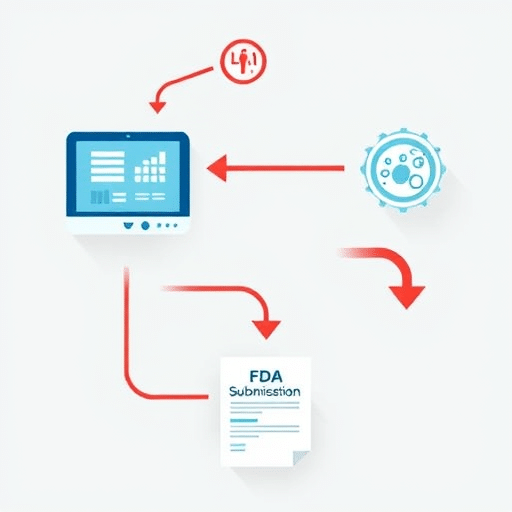
In the rush to deploy clinical artificial intelligence, retrospective accuracy has become a comfort blanket. Yet for many care teams, the harder question is not “what was the AUC on a test set?” but “what happens when the model runs live, on messy data, in the hands of overworked clinicians?” Pragmatic trials for AI address exactly that gap. They shift evaluation out of the lab and into real clinical workflows, measuring not just algorithm performance but usability, trust, and patient impact. This article offers a step-by-step guide for designing prospective validation studies in real clinical workflows — without turning every project into a costly explanatory trial.
Why Retrospective Metrics Are No Longer Enough
Retrospective studies are useful for early screening, but they cannot tell you how a model behaves when the EHR stops sending clean data, when clinicians ignore alerts, or when the patient population drifts away from the training set. In 2026, health systems are increasingly expected to show more than offline performance. Regulators, payers, and hospital quality boards are asking for evidence generated in the actual care environment. That shift means moving beyond retrospective metrics toward prospective validation studies in real clinical workflows, where the intervention can be observed as it interacts with people, processes, and unpredictable clinical events.
Pragmatic trials for AI are designed to answer a practical question: does this model improve care when used under ordinary conditions? They are not necessarily less rigorous. They are differently rigorous, prioritizing external validity over strict explanatory controls. The goal is to understand whether the AI will work at scale, in your clinics, with your documentation patterns, and with your clinicians’ tolerance for false alarms.
Step-by-Step: Designing Prospective Validation Studies in Real Clinical Workflows
Designing a pragmatic trial for AI requires thoughtful simplification. Start small, but start with a decision that matters. Follow these steps to build a study that can survive contact with the clinic.
Step 1: Anchor the Trial to a Specific Clinical Decision
Every effective prospective validation study begins with a clearly defined clinical decision. Is the AI helping to decide whether to order a CT scan? Whether to escalate a deteriorating patient to the ICU? Whether to prescribe a targeted antibiotic? The decision point dictates the endpoint, the inclusion criteria, and the workflow integration. Without this anchor, you are validating a feature, not a clinical tool. Write the clinical scenario in one or two sentences before any statistical plan is drafted.
Step 2: Choose an Endpoint That Reflects Clinical Benefit
Model outputs such as sensitivity and specificity are not enough. A pragmatic trial for AI should measure the downstream consequence of using the AI, such as time to diagnosis, treatment escalation rates, medication errors, or length of stay. If you must use a surrogate, link it clearly to a meaningful clinical outcome. For example, instead of simply measuring alert precision, measure how many high-risk patients received follow-up within two hours.
Step 3: Embed the AI into the Existing Workflow, Not Around It
Resist the impulse to create a parallel research workflow. The whole point of prospective validation studies in real clinical workflows is that the AI lives where the work happens. That means integrating the model into the EHR or the care team’s existing communication tools. The alert may appear in the same place as other lab alarms. The score should be visible without requiring a new sign-on. If the intervention demands special training or extra clicks, the study is no longer pragmatic — it is a usability test wearing a lab coat.
Step 4: Decide Whether Randomization Is Practical
Cluster randomization by clinic, hospital, or clinician team is often more achievable than patient-level randomization in clinical AI studies. You can also use interrupted time series or stepped-wedge designs where the AI is rolled out to different sites at different times. These designs preserve much of the rigor of randomization while respecting the logistics of clinical care. Avoid the temptation to randomize individual clinicians in the same unit unless the AI output can be cleanly isolated; contamination between study arms is a frequent cause of inconclusive results.
Step 5: Pre-specify How Missing Data and Workarounds Are Handled
Real clinical data is incomplete, badly time-stamped, and sometimes contradictory. Before activation, define how the algorithm will behave when input data is missing. Will the model refuse to run, default to a neutral score, or fall back to a previous value? Also pre-specify what counts as “incomplete adoption” by clinicians. If half the clinicians ignore the AI output, your prospective validation study in real clinical workflows must be able to answer the question: did the AI improve care even when it was not used? That can be measured with an intention-to-treat analysis, but only if you planned for it.
Choosing Meaningful Outcomes for Pragmatic AI Trials
Outcome selection should include both clinical and operational metrics. Clinical outcomes might include mortality, complications, readmission, or functional status. Operational outcomes might include clinician time, alert fatigue, unnecessary referrals, or time to radiology order. Include at least one patient-centered outcome if possible, such as symptom burden or satisfaction with care. The most credible studies also measure the quality of clinician-AI interaction: whether clinicians overtrust the model, ignore it, or use it as a second opinion.
Use data collection methods that do not interfere with care. Automated extraction from the EHR is preferred over manual chart reviews. But be careful with EHR-derived endpoints; they can inherit the same biases found in the training data. A pragmatic trial for AI should include a small subset of manual adjudication for key outcomes to catch documentation drift.
Managing Bias, Confounders, and Human Factors
Pragmatic designs sacrifice randomization control in exchange for real-world insight, but that does not mean ignoring bias. Watch for the Hawthorne effect: clinicians may behave differently when they know a study is active. Observe attention and behavior continuously rather than merely comparing before-and-after outcomes. Also consider algorithmic drift. Over time, the model may start receiving new input distributions as documentation changes or new devices enter the workflow. Build in a monitoring loop that tracks input drift as part of the study itself.
Human factors deserve as much attention as model curves. The way clinicians interpret a model confidence score is a form of sociological noise that can confound your results. If the AI recommends a diagnosis but the clinician disagrees, does the final decision include the AI’s reasoning? Use think-aloud interviews or targeted surveys with a subset of users to uncover why they accepted or rejected model recommendations. This qualitative layer turns prospective validation studies in real clinical workflows from a black box into an actionable learning system.
Statistical Considerations for Prospective AI Validation
Consult a biostatistician before you launch, not after. Pragmatic trials for AI often need larger sample sizes because the signal-to-noise ratio is smaller than in highly controlled studies. Cluster randomized designs require accounting for intra-cluster correlation. You should also plan for interim monitoring of safety and feasibility, especially if the AI might worsen outcomes for a subgroup. If the model underperforms in a specific demographic, you need an a priori plan for stopping or modifying the trial.
It is also wise to pre-specify the primary analysis and the sensitivity analyses. This is not just a regulatory nicety; it prevents p-hacking and selective reporting after the results arrive. For pragmatic AI validation, sensitivity analyses should include a per-protocol analysis (where clinicians actually followed the AI recommendations) and an as-treated analysis. If these tell very different stories, you learned something important about the human-AI interaction.
Turning Results into Deployment Decisions
The final step is to translate your findings into a go/no-go decision. A pragmatic trial for AI should be designed from the start with a threshold for adding clinical value. If the AI does not improve the primary endpoint by a meaningful amount, do not deploy it. If the effect is positive but clinician trust is low, consider a further period of workflow redesign and monitoring before deciding whether to scale. The goal is not simply to prove that the algorithm works, but to discover how to make it work in your environment.
Successful prospective validation studies in real clinical workflows also produce implementation knowledge: which sites adopted the AI quickly, which champions helped overcome resistance, which alerts were dismissed as noise. Capture that knowledge while you have the chance. It is yours, but only if you collect it deliberately.
Conclusion
Retrospective metrics can tell you that an algorithm has potential, but only a well-designed pragmatic trial can tell you whether the AI will improve care when humans, hospitals, and real-world messiness are part of the equation. By focusing on a specific clinical decision, selecting meaningful outcomes, embedding the AI into existing workflows, and pre-specifying statistical analysis, care teams can build the evidence they need to move from promising model to trusted clinical partner.