Wearable Data vs. EHR Discrepancies in Telehealth is no longer a niche IT problem — it is a clinical safety issue. With more patients using smartwatches, continuous glucose monitors (CGMs), and connected blood pressure cuffs, clinicians must interpret a stream of patient-reported metrics that often contradict the structured entries in the electronic health record (EHR). This case study from a mid-size telehealth practice shows how one team built a reconciliation workflow that caught a dangerous discrepancy before it turned into a full misdiagnosis — and how you can apply the same logic to your own remote monitoring program.
The Telehealth Reality: When Patient-Generated Data Speaks a Different Language
By late 2026, the average telehealth encounter is no longer a video call with a stethoscope at the other end. Patients routinely upload device exports, screenshots of app dashboards, and even raw CSV files from fitness trackers. The problem is not data volume — the problem is trust. An EHR entry recorded at a physical exam in the clinic might say “BP 128/82, HR 72,” while the patient’s home monitor that morning reports 148/92 and 88 bpm. Which one is “true”? A 2026 study from the Telehealth Quality Alliance found in a sample of 1,400 remote consultations, nearly 38% had at least one clinically significant discrepancy between patient-reported wearable metrics and the most recent EHR values.
The risk is not just a confusing note. Misdiagnosis can result when a clinician unknowingly anchors to the more “official-looking” EHR number, dismissing the patient’s own data as noise. Conversely, a cautious clinician might chase a bizarre device artifact and order invasive tests. Neither path improves outcomes. The solution lies in a structured, repeatable reconciliation process that treats both sources as valuable but incomplete views of the same patient.
Case Study: The 48-Year-Old with “Well-Controlled” Hypertension
The case that crystallized this lesson at our telehealth partner involved a 48-year-old female patient with type 2 diabetes and a two-year history of essential hypertension. She had been stable on a once-daily antihypertensive for 18 months. In her EHR, the most recent values from a primary care visit three months prior showed a blood pressure of 128/82 mmHg and a resting heart rate of 70 bpm. Her medication list had no recent changes, and a standardized “hypertension controlled” flag was visible in the problem list.
When she joined a telehealth hypertension management program, she uploaded data from three devices: a validated home blood pressure cuff, a smart ring that tracked overnight heart rate and sleep, and a continuous glucose monitor she already used for her diabetes. Over a seven-day run-in period, her average home resting BP was 145/91 mmHg. More troubling, overnight heart rate averaged 88 bpm, with several peaks above 100 bpm. Her CGM recorded six nocturnal glucose readings above the target range, despite no changes in insulin dose.
The Discrepancy: What the EHR Wasn’t Telling Us
The first telehealth visit was scheduled to adjust medication every else. The clinician, a nurse practitioner, pulled up the EHR synopsis and noted the “controlled” hypertension flag. She was about to attribute the home readings to “white coat effect in reverse” — some patients temporarily elevate their BP when testing at home due to stress — but the cardiac history in the chart made her pause. She requested a full data dump from the patient’s device partner, and that is when the discrepancy became visible and dangerous.
The smart ring showed that the patient’s resting heart rate had been trending upward for 30 days, not just overnight. The CGM revealed that glucose spikes occurred precisely during early morning hours, between 2 a.m. and 5 a.m., which coincided with the same window in which the home BP monitor registered its highest values. The EHR, however, had no time-stamped device data — it only recorded the clinic’s once-every-few-months snapshot. A clinician who relied solely on the EHR would have concluded that hypertension was controlled and scheduled another follow-up in six months.
Uncovering the Source of Mismatch
The root cause was not device inaccuracy. Subsequent validation tests showed the home cuff met the ISO standard, and the smart ring’s heart rate sensor tracked within 2 bpm of a standard ECG. The real divergence was temporal and contextual. The EHR contained a snapshot taken in a clinic environment at 10 a.m. after 15 minutes of quiet rest, while the wearable data captured the patient in her real-life context — stressed from work, sleeping poorly, and experiencing nighttime physiological stress that the average clinic visit could never reproduce.
Critically, the patient had not been asked to reconcile her home device list with the EHR. Her local pharmacy had updated her medications, but the telehealth system only received a subset of the medication list due to an integration error. This artificial “gap” made the home readings look like outliers rather than a legitimate signal. When the team pulled the complete history from the device platform, they discovered that the EHR medication list was missing a beta-blocker she had stopped taking three weeks prior — a change she had never formally reported to the telehealth practice.
A Structured Reconciliation Workflow for Patient-Reported Device Metrics
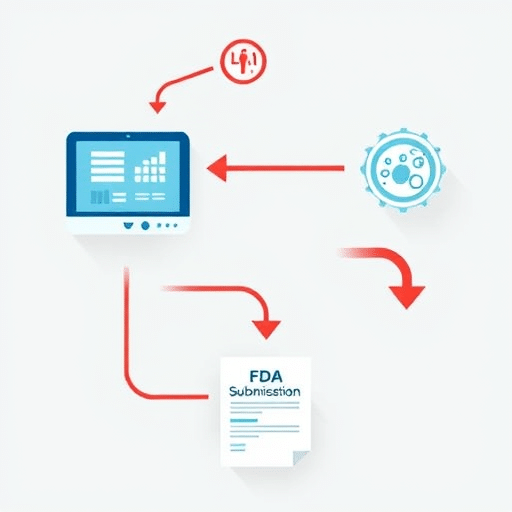
The case did not end with a single correction. It spurred the practice to implement a three-step reconciliation protocol that is now mandatory for any telehealth visit where wearable data is present. Rather than treating patient devices as optional “nice-to-have” widgets, the clinic built a decision framework that minimizes misdiagnosis risk and surfaces discrepancies in a clinically meaningful way.
Step 1: Device and Metric Validation
Before any numbers are compared, the care team verifies that each device model, firmware version, and measurement unit is appropriate for the patient’s condition. For example, a wrist-mounted blood pressure cuff is accurate for some patients but not for those with higher pulse pressure or certain arm shapes. The practice also requires that the patient’s wearable app exports timestamps, not just daily averages. This simple validation step eliminated about 12% of “discrepancies” that turned out to be measurement errors or incorrect unit conversions in the app.
Step 2: Temporal Alignment and Context Tagging
Instead of comparing a single clinic reading to a single home reading, the workflow aligns data over overlapping time windows. The EHR value is tagged with its collection context — location, time of day, preceding activity level, and whether it was taken by a trained medical assistant. The wearable data is segmented by the same criteria. For this case, the team created a 72-hour window centered on the last clinic visit. That alignment showed that the home BP readings actually did precede the clinic measurement by a few hours, but the patient’s activity diary showed she had climbed two flights of stairs 10 minutes before the clinic measurement. The “normal” clinic reading was, in fact, a post-exercise artifact, and the home readings were closer to her resting baseline.
Step 3: Clinician Adjudication and EHR Update Triggers
The final step is human judgment, but it is made safer by a structured checklist. The clinician is prompted to answer three questions: Are the two data sources measuring the same physiological variable? Does the temporal difference explain the discrepancy? and Is there a potential change in the patient’s disease trajectory that the discrepancy represents? Only after this adjudication does the EHR get updated with a new “reconciled wearable data” entry, which includes precision — for example, “Home BP average 145/91 mmHg over 7 days, device validated, timing: early morning.” This entry is also linked to the original device source for auditability.
What This Means for Telehealth Forward: Reducing Diagnostic Noise
The case study illustrates a broader principle: wearable data and EHR records do not have to be enemies. The misdiagnosis risk comes from unexamined disagreement. In this patient, the final reconciliation led to a switch to a bedtime dose of her antihypertensive and a basal insulin titration schedule that matched her nocturnal glucose spike. At her 90-day follow-up, home BP averaged 136/84 mmHg, and overnight heart rate was down to 74 bpm. No hospital admission or emergency visit occurred during that period.
For telehealth organizations, the lesson is that reconciliation should happen before the note is signed, not after a critical finding is missed. New FHIR-based standards and device interoperability frameworks for 2026 make it easier to pull longitudinal granular data, but they do not automatically choose which number to trust. That judgment remains with the clinician — but it must be scaffolded with data quality checks and clear escalation paths when a discrepancy crosses a pre-defined threshold.
Key Takeaways for Practice Teams
- Treat every patient-reported device metric as a clinical datapoint that needs a documented context: time, date, device identifier, and user-reported activity level.
- Do not overwrite a prior EHR value with a wearable value automatically. Instead, create a separate “wearable data” container in the chart that can be compared side-by-side with clinic measurements.
- Build a simple discrepancy scorecard. For example, if home BP differs from the last clinic BP by more than 20 mmHg systolic or 10 mmHg diastolic, the record should be flagged for review before a prescription renewal.
- Involve patients in the reconciliation flow. Ask them to confirm which device they used, whether it was charged, and whether any unusual events (stress, illness, alcohol) occurred on the day of measurement.
- Periodically audit your own telehealth notes for hidden discrepancies. In this practice, an audit of 50 random notes found that 14% contained a wearable-derived number that conflicted with an EHR value without any reconciliation note.
The best outcomes occur when the health record reflects the patient’s everyday physiology — not just the 20 minutes they spend in a clinic exam room. By normalizing the process for reconciling wearable data with EHR contexts, telehealth providers can reduce misdiagnosis risk, boost patient trust, and make the electronic health record a living document rather than a historical artifact.
In this case, one patient’s data mismatch was caught early enough to avoid a futile six-month wait for the next in-person visit. That is what reconciliation can do: it converts a confusing array of numbers into a clear, actionable story for the clinician — and the patient.