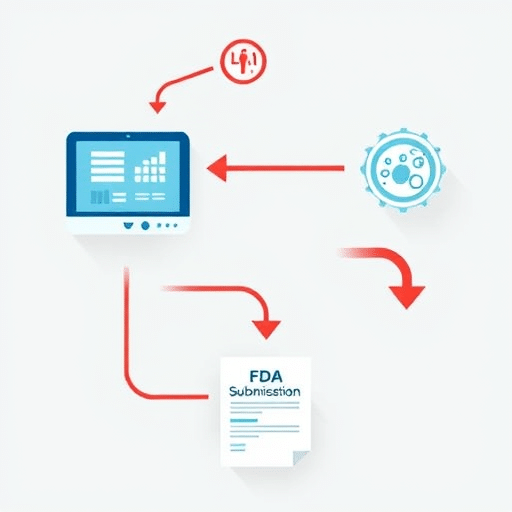
Healthcare interoperability is stuck in a loop—literally. For years, integration teams have relied on FHIR REST polling to detect changes in clinical data, repeatedly hitting endpoints to ask, “Anything new?” That approach is expensive, inefficient, and increasingly untenable as care delivery shifts toward continuous, proactive coordination. Enter FHIR Subscriptions: a standards-based mechanism that flips the model from “ask” to “listen.” Instead of polling, your system receives real-time alerts when a resource changes, enabling true event-driven care coordination. This guide walks through why that matters, how to implement it, and what to watch out for in 2026’s production environments.
Why Polling Falls Short in Modern Care Coordination
REST polling is the default go-to for many FHIR implementations because it’s straightforward: GET a resource, check the lastUpdated timestamp, repeat. But as the volume of clinical data grows and expectations shift toward immediate awareness, polling reveals its cracks.
- Latency vs. cost tension: The less often you poll, the longer you wait to discover critical changes. The more often you poll, the higher your server load and network costs.
- Wasted requests: Most polls return unchanged data. A patient’s vitals may not change for hours, yet you still query every few minutes.
- Scalability issues: A single integration polling multiple resources across many patients quickly turns into thousands of calls per hour. Multiply that by dozens of client systems, and your FHIR server becomes the bottleneck.
- Delayed escalation: Care teams often learn about urgent lab results or medication changes only after the next poll cycle—sometimes 15 minutes later, sometimes 30. In acute scenarios, that delay can matter.
Polling is not “wrong”; it’s just not designed for real-time. FHIR Subscriptions address the root problem by notifying subscribers when specific events occur on a FHIR resource server. This is the foundation of event-driven care coordination—where the right information reaches the right system at the right time, automatically.
Understanding FHIR Subscriptions Basics
The FHIR Subscription resource is surprisingly simple from a conceptual standpoint. A client creates a Subscription that describes the criteria for events it cares about—say, all Encounter changes where the status becomes “in-progress” for a specific department. The server then sends notifications whenever a matching resource is created, updated, or deleted.
FHIR Subscriptions support multiple channel types, but in 2026, the most practical are:
REST Hook
The server sends an HTTP POST request to a callback URL your system exposes. This is the most common channel because it integrates easily with existing web services and APIs. The payload can be a Bundle of resources or just a notification with the resource ID, depending on the payload type you configure.
WebSocket
For lower-latency, bidirectional messaging, WebSocket channels provide persistent connections that push notifications as they happen. This is ideal for apps that need a live, always-on feed—such as a clinical dashboard or mobile care app.
Sometimes you just want to notify a human, not a machine. Email channels are still useful for non-automated workflows like “send an alert when a patient is admitted.”
In all cases, the subscription includes a status lifecycle (requested, active, error, off), allowing subscribers to monitor the health of their notification pipelines.
Real-Time Alerts That Actually Improve Care Workflows
Event-driven care coordination isn’t just about technical elegance; it’s about clinical outcomes. Here are concrete scenarios where FHIR Subscriptions create measurable value.
Admission, Discharge, and Transfer (ADT) Alerts
Instead of polling for ADT encounters every few minutes, an integration subscribes to Encounter status changes. When a patient is admitted to an ED, care coordinators, pharmacy systems, and utilization review tools get notified instantly. This speeds up patient placement, medication reconciliation, and insurance verification.
Lab Result Critical Value Notification
When a lab order’s Observation is updated with a critical value, the system can trigger a subscription that sends a real-time alert to the attending clinician’s mobile app. No polling interval, no delay waiting for the next batch job.
Medication Supply Chain Updates
Subscriptions aren’t limited to clinical data. By subscribing to MedicationDispense or SupplyRequest changes, organizations can track inventory in near real time. This is especially relevant in 2026, as drug shortages and supply chain variability demand faster logistics responses.
Care Plan Changes for Chronic Disease Management
Subscriptions on CarePlan or Goal updates allow care teams to immediately react when another provider modifies a patient’s plan. This supports team-based care and reduces the “disconnect” between primary care and specialists.
Implementing FHIR Subscriptions: Key Considerations
A practical guide wouldn’t be complete without implementation advice. Here’s what you need to think about before rolling out FHIR Subscriptions in a production environment.
Define Your Event Criteria Carefully
Subscription criteria are expressed as FHIRPath queries, such as Observation?code=http://loinc.org|2093-3. Get the filters right from the start. Too broad, and you’ll receive noise; too narrow, and you’ll miss relevant alerts. Work with clinical stakeholders to map exactly which event types justify real-time notifications versus which can remain in batch reports.
Choose the Right Channel and Payload
Most implementations should start with REST Hook and a JSON payload. If you need to reduce downstream processing, use the id-only payload type, which returns only the resource ID, and then have the subscriber fetch the full resource via a normal GET. For high-throughput scenarios, consider WebSocket to avoid HTTPS connection overhead.
Plan for Subscriber Reliability
Your callback endpoint must be available 24/7. Implement authentication on the callback URL (e.g., bearer tokens or OAuth 2.0), and make sure your system can handle out-of-order delivery or duplicate events. FHIR Subscriptions are not transactional message queues; they may occasionally re-deliver or skip events if the server restarts or the network fails.
Monitor Subscription Health
Subscriptions can silently fail—for example, if the callback URL starts returning 500s or if the channel becomes invalid. Use FHIR’s SubscriptionStatus resources to track delivery success rates, and set up your own monitoring alerts on those statuses. This is a growing area of focus in 2026, as organizations treat subscriptions as critical infrastructure.
Use Cases for 2026 and Beyond: Event-Driven Interoperability Meets AI
The near-term future of FHIR Subscriptions is intertwined with artificial intelligence and automated decision support. With real-time event feeds, AI models can be triggered the moment new data arrives, rather than on a fixed schedule. Imagine:
- An ML-based sepsis prediction model that re-runs risk scoring each time a new vital sign is posted for a patient.
- A supply chain AI that adjusts order quantities immediately when a medication stock level changes, rather than once a day.
- A care coordination bot that sends a message to the patient’s care team when a newly prescribed medication conflicts with an existing allergy.
All of these scenarios rely on event-driven data delivery. FHIR Subscriptions enable that pulse.
But we’re also seeing broader adoption of subscription-like patterns within healthcare APIs. The FHIR standard now integrates with modern web messaging patterns, and some backend systems are implementing internal event buses that emit FHIR resources to subscribers. This is a sign that the industry is moving away from “data at rest” thinking and toward a streaming, event-driven approach—what many call the “real-time healthcare enterprise.”
Common Pitfalls and How to Avoid Them
Adopting FHIR Subscriptions isn’t just about reading the spec. Real-world deployments often hit the same stumbling blocks. Here are a few to anticipate.
Underestimating Notification Volume
A subscription for all Observation updates in a busy hospital can generate thousands of events per minute. Use conservative criteria and test with historical data to estimate volume. If necessary, combine multiple events into a single notification by using a message payload type or batch delivery settings.
Treating Subscriptions as Fire-and-Forget
If a notification is lost, your subscriber may miss a critical change. Build in a reconciliation mechanism—for example, a periodic “sweep” job that queries for updates since the last confirmed event. This isn’t polling for everything; it’s a safety net to catch any missed messages.
Forgetting About Security and Privacy
Subscriptions can expose sensitive patient data at the callback URL. Always enforce TLS, use OAuth 2.0 for authentication, and audit access controls on both the subscription creation and the notification endpoint.
Version Ambiguity
FHIR Subscriptions have changed across R4, R4B, and R5. If you’re on FHIR R4, the subscription features are less mature than in R5. Check your server’s supported version and be prepared to adapt. In 2026, many vendors are still on R4, but R5 adoption is increasing—so keep an eye on compatibility.
Making the Leap from Polling to Events
Migrating an existing integration from REST polling to FHIR Subscriptions doesn’t have to be a big-bang rewrite. Start with a single high-volume use case, like ADT alerts, and run both mechanisms in parallel. Measure the reduction in API calls and the improved latency. Then expand to other resources and workflows.
The transition requires a mindset shift: instead of building integrations around scheduled requests, you’re building them around event-driven reactions. That’s a foundational change—but one that leads to more scalable, cost-effective, and clinically responsive systems.
Conclusion
FHIR Subscriptions are not just a feature of the specification; they are a practical answer to the growing demand for real-time, event-driven care coordination. By moving away from expensive and slow REST polling, healthcare organizations can respond faster, reduce server loads, and create workflows that mirror the pace of clinical care. The technology is mature enough for production in 2026—and with the right criteria, channels, and reliability planning, you can make the shift with confidence.