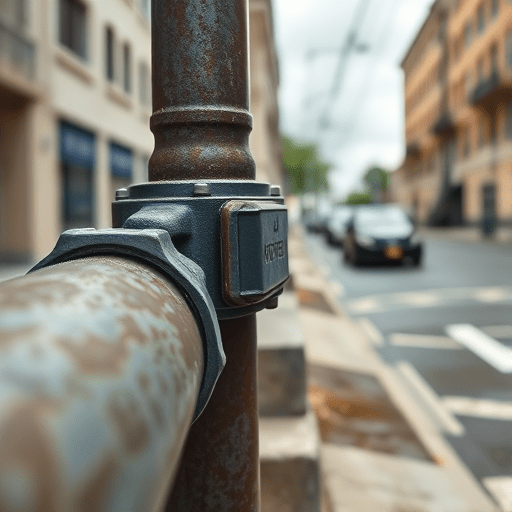
Every city has them: decades-old traffic signal controllers, water mains, streetlights, and HVAC systems that were never designed for digital connectivity. The temptation to rip and replace is understandable, but budgets, permitting, and operational risk usually slam the door on such ambition. That’s where retrofitting legacy infrastructure with IoT comes in—an approach that focuses on adding sensors and intelligence to existing systems, not replacing them. This guide walks through the process from assessment to ongoing maintenance, with a fresh eye on the tools and techniques available in 2026 that make retrofits cheaper, faster, and less disruptive than ever before.
Step 1: Conduct a Non-Invasive Systems Audit
The first step in any retrofitting effort is understanding what you already have. A full audit might sound like a traditional engineering task, but in 2026 it has evolved into a hybrid of physical inspection and digital twin analysis. Start by collecting every available blueprint, wiring diagram, and control logic document. Then, supplement that with portable acoustic and infrared sensors to map energy flow, heat spots, and mechanical stress without opening up walls or digging cable trenches. The goal is to identify each subsystem’s input/output points, data port availability, and physical resilience to added mounts or attachments.
For this audit, prioritise systems that have a high uptime requirement but low monitoring today. A pumping station running 24/7 is a better candidate than a decorative fountain. Create a shortlist of ten to twelve assets that could yield immediate safety or efficiency gains—this prevents your retrofit roadmap from becoming a thirty-page wishlist that goes nowhere.
Step 2: Choose Sensors That Work Around the Legacy Layer
Not all sensors play nicely with aging control panels. The key is to select components that are both wireless and non-invasive. Look for vibration sensors that clamp onto pipes, ambient light sensors that stick to existing light fixtures, and current transformers that clip around power cables without cutting them. In 2026, the best options operate on low-power wide-area networks (LPWAN) tolerating the intermittent connectivity and voltage fluctuations common in old infrastructure.
Some cities have started using “self-describing” sensors that automatically upload their calibration data to the network. That might sound like a minor detail, but it saves weeks of troubleshooting when a sensor is installed in a remote manhole and you need to verify readings. If a vendor can’t provide support for industrial protocols like Modbus or BACnet over a gateway, cross them off your list right away.
Sensor Mounting: A Tactical Decision
Mounting strategy determines both data quality and physical safety. For pipes and valves, use adhesive mounts or zip-tie brackets that respect the existing surface temperature and material. Avoid drilling into load-bearing concrete or joining dissimilar metals that could corrode. For traffic cabinets, consider magnetic or DIN-rail mounts that can be moved during maintenance, so the existing enclosure remains accessible. The less you modify the original asset, the lower the risk of invalidating liability coverage or breaching warranty terms leftover from a previous upgrade.
Step 3: Build a Modular IoT Gateway Layer
Legacy infrastructure rarely has a native path to the cloud. That’s why the gateway is the unsung hero of every retrofit. Rather than trying to force every old controller to talk directly to your platform, deploy a modular gateway that bridges legacy protocols and modern IP networks. In 2026, many gateways support edge processing, meaning they can filter out noise, calculate simple statistics, and send only meaningful events to the central dashboard. This reduces data costs and lets you keep alerts local when cellular coverage is unreliable.
Design your gateway layer to be protocol-agnostic. A retrofit in one neighbourhood might use IoT over the 900 MHz ISM band, while another area relies on 5G network slicing. A gateway that accepts both, plus older serial connections, future-proofs your city without forcing a single vendor. Also, ensure the gateway is powered by DC or PoE so it can be energised from the same lines feeding the legacy asset—no need to install new power circuits.
Step 4: Power Without Penetrating the Asset
One of the biggest fears when retrofitting old infrastructure is introducing a new failure point through power wiring. Fortunately, energy harvesting and battery technologies have improved massively. Solar panels are now thin enough to curve around a streetlight pole, and thermoelectric generators can exploit temperature differences between a pump’s surface and the air. For indoor assets, use vibration harvesters on motors or inductive pickups on existing power cables. This allows sensors to run for years without anyone touching the wiring.
For scenarios where harvesting isn’t feasible, choose high-capacity lithium thionyl chloride batteries rated for 15-year operation at low current. In 2026, these batteries are considerably cheaper than they were a half-decade ago, making them a legitimate first choice. Just remember to build a battery-status field into your data model so you can budget for replacements before failure—not after.
Step 5: Integrate Data with a City-Twin Platform
A retrofit is only as good as the insights it generates. The goal is to connect sensor data to an existing city-twin or GIS platform, where it can be merged with weather, traffic, and utility data. Rather than creating a separate IoT silo, push all raw readings to a central message bus, then use a data-normalisation layer to map them to standard schemas like SSN/SOSA (Sensor, Observation, Sample, Actuator). This keeps the retrofit compatible with future applications built on top of the same data.
Use a lightweight digital-twin approach for each asset—essentially a software model that updates in real time. For example, a legacy water valve’s digital twin can combine pressure readings, opening percentage, and predicted pipe corrosion to recommend a maintenance window. This kind of context is far more useful than a raw meters-per-second value delivered to spreadsheets. If your city already has a central operations dashboard, expose the retrofit data through standard REST APIs, so every department can embed the relevant widgets.
Step 6: Create a Maintenance and Observability Loop
Once the sensors are in, the work is just beginning. Retrofits fail when nobody remembers they exist. Appoint a small IoT operations team responsible for monitoring gateway uptime, sensor battery health, and data plausibility checks. Use the existing SCADA or workflow management system to log every issue, so that the retrofitted layer doesn’t bypass institutional memory. In 2026, many cities employ automated self-healing scripts that restart unresponsive gateways or switch them to a backup network—embrace that level of automation.
Also, schedule periodic “physical spot checks” at least twice a year. Sensors drift, cables get damaged during roadworks, and brackets loosen after temperature swings. A simple maintenance checklist—date, asset ID, sensor reading comparing to a manual measurement—goes a long way in preserving data quality. Store those audit logs alongside the sensor installation documents.
Common Pitfalls to Avoid in 2026
- Ignoring legacy protocol quirks: some old controllers reboot if they receive unexpected network packets. Always test with a bench replica first.
- Over-securing the network: encryption is essential, but legacy CPUs may not handle TLS 1.3 smoothly. Use lightweight edge proxies instead of forcing protocol changes.
- Counting on cloud availability: design your gateway to record locally during network outages. Cities can’t rely on 100% cellular coverage.
- Forgetting about physical security: a sensor mounted on a sidewalk is easy to vandalise. Use tamper-resistant enclosures and geofenced alerts.
Start Small, Prove Value, Then Scale
A single successful retrofit—say, a smart bus shelter or a corrosion-monitoring pipe section—can serve as a proof-of-concept that wins over elected officials and finance staff. Document the savings in maintenance dispatch, energy use, or reduced downtime. Then replicate the same reference architecture across similar assets, adjusting only the sensor types and mounting specifics. The slow, iterative approach also gives your procurement team time to renegotiate vendor contracts based on real performance data.
Retrofitting legacy infrastructure is no longer a stopgap measure. With affordable sensors, modular gateways, and city-twin integration, cities can transform decades-old assets into responsive components of a modern IoT fabric. The key is resisting the urge to start over. Instead, look at every old pipe, pole, and panel as a potential platform for new intelligence.