Every endurance athlete knows the feeling: you’re miles into a race, your legs feel strong, but your stomach is churning, cramping, and threatening to derail everything. The standard advice—eat bland food, avoid fiber before racing—has left countless runners and cyclists stuck with a fragile gut that can’t handle real-world race nutrition. But there’s a smarter approach gaining traction in sports science: train your gut like a muscle by micro-dosing fibrous foods during training. This systematic method can cure race day nausea for good, transforming your digestive system from a weak link into a reliable performer.
Why Race Day Nausea Happens: The Gut-Brain Traffic Jam
Mid-race nausea isn’t just about what you ate this morning. It’s a physiological response to intense exercise. When you run hard, your body shunts blood away from the digestive tract and toward working muscles. This reduced blood flow (splanchnic hypoperfusion) slows gastric emptying and impairs nutrient absorption. The result: food sits in your stomach like a brick, triggering nausea, bloating, and even vomiting.
But here’s the key insight: the gut is adaptable. Just like skeletal muscle responds to progressive overload, the gastrointestinal tract can be trained to tolerate more stress, more fluid, and more fiber. The problem is that most athletes treat their stomach as a fixed entity, avoiding all fiber on race day and hoping for the best. Instead, by deliberately exposing your gut to small, increasing amounts of fiber in training, you can raise its tolerance threshold and reduce the likelihood of race day misery.
The Principle of Gut Micro-Dosing: Small Bites, Big Adaptation
Micro-dosing fiber is exactly what it sounds like: intentionally consuming small but meaningful amounts of fibrous foods at specific times during training sessions. This isn’t about loading up on bran flakes before a speed workout. It’s about systematically teaching your gut to handle the types and quantities of fiber you’ll encounter during a race, without triggering the exaggerated response that comes from a sudden “fiber bomb.”
Think of your GI tract as a network of muscles and nerves that respond to repeated exposure. Each tiny dose of fiber stimulates motility, enzyme secretion, and blood flow regulation. Over time, these micro-adjustments become lasting adaptations—your gut becomes more efficient at moving food along, less prone to inflammation, and better at absorbing water. The goal is to reach race day with a stomach that treats a pre-race oatmeal or a handful of dried fruit as a normal, manageable input.
How to Micro-Dose Fiber in Training: A Practical Protocol
Before you start, understand that gut training is highly individual. What works for your training partner may not work for you. But the underlying principles are universal: start low, go slow, and be consistent. Here’s how to build a fiber micro-dosing routine that fits your current training plan.
Start with Soluble Fiber for a Gentler Ride
Soluble fiber (found in oats, barley, psyllium, apples, carrots, and chia seeds) dissolves in water to form a gel-like substance. It’s generally easier on the stomach than insoluble fiber (like wheat bran or raw vegetables), because it doesn’t add rough bulk that can irritate the intestinal lining. For the first two to three weeks of gut training, stick primarily to soluble fiber sources. A tablespoon of ground flaxseed in a recovery smoothie is a classic micro-dose—about 2 grams of fiber—that won’t overwhelm your system.
Incremental Increases: The 10–15% Rule
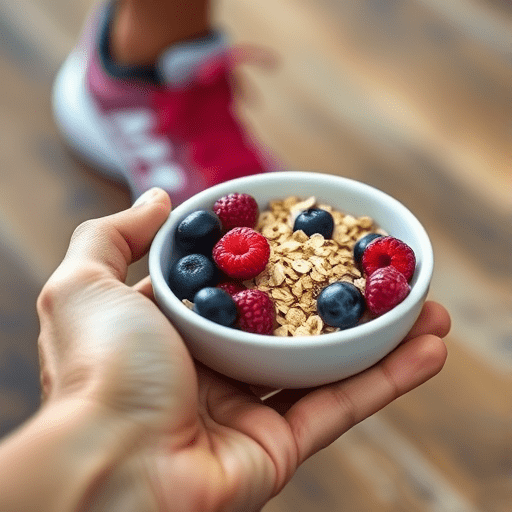
Just as you wouldn’t add 20 miles to your weekly training overnight, you shouldn’t double your fiber intake in a week. Add roughly 10–15% more fiber per week, spread across multiple small servings. For example, if you currently consume 20 grams of fiber per day, aim for 22–23 grams the next week. During training runs, include a small fiber source 30–45 minutes before the session—maybe half a banana with a teaspoon of almond butter, or a small handful of berries. Keep the dose low enough that you don’t feel any GI distress during the workout. If you do, back off and hold at that level for another week.
Time Your Micro-Doses with Long Sessions
Your longest, low-intensity workouts are the perfect labs for gut training. This is when blood flow to the gut is less compromised than during high-intensity intervals, making it easier for your stomach to process fiber. On these days, practice eating a small fibrous snack before the workout and another during the first 60 minutes. For instance, a few dates (each date has about 1.6 grams of fiber) or a small rice cake with raspberry jam can be excellent training tools. Over several weeks, gradually increase the quantity and shift it closer to race-day intensity.
Race Day Fiber Strategy: Don’t Abandon Your Training
The biggest mistake athletes make on race morning is suddenly going “fiber-free” to avoid GI issues. This is understandable—nobody wants to risk a stomach disaster—but it undermines all your gut training. Your gut has become accustomed to processing fiber, and a sudden withdrawal can actually make it more reactive to other race-day foods, especially high-sugar gels and electrolytes.
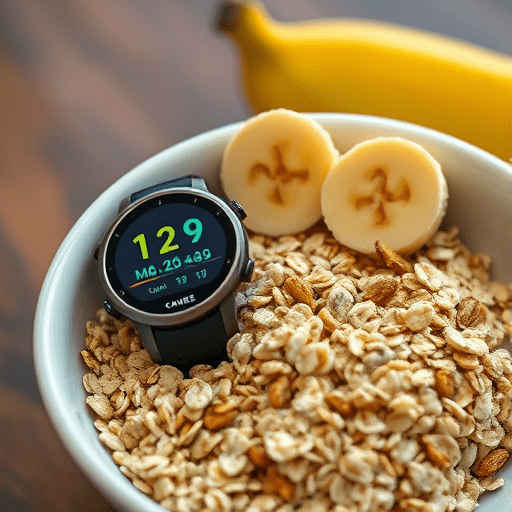
Instead, use your race day nutrition to mirror your training. Eat a familiar, fiber-inclusive breakfast that you’ve practiced during long runs. For many athletes, this might be a bowl of low-sugar oatmeal with a few sliced strawberries, or a piece of whole-grain toast with peanut butter. Keep the total fiber modest—5 to 8 grams is enough to validate your gut training without risking sluggishness.
During the race, don’t suddenly add new high-fiber foods. The goal is not to eat a salad in the middle of a marathon. Aim for small, repeated inputs that include a tiny amount of fiber—like a segment of an orange at each aid station, or a few raisins as part of your gel rotation. This keeps your gut engaged and “awake,” preventing the sluggish, heavy feeling that often comes from a pure sugar diet.
Troubleshooting: When Gut Training Goes Wrong
Even with a gradual plan, you’ll occasionally experience bloating, cramps, or gas. This is normal—it means you’ve found your current edge. The trick is to know how to respond. If you feel bloated during a training run, slow down and sip water. Do not take high-osmolarity sports drinks immediately, as they can draw water into the gut and worsen the cramping. Instead, reduce the fiber dose next time, or choose a different fiber source.
Another common mistake is increasing fiber without increasing water. Fiber absorbs water, and if you’re not properly hydrated, it can actually ACHIEVE the opposite effect—compacting in the colon and causing constipation. This is why hydration and electrolytes are not optional side notes; they’re essential partners in your gut training program.
The Role of Hydration and Electrolytes in Fiber Tolerance
Fiber is not an isolated variable. Its behavior in your digestive tract depends heavily on the amount of water and sodium in your system. Soluble fiber needs water to swell and form a healthy gel. Insoluble fiber needs water to move through the intestines efficiently. When you’re dehydrated—which is common during long training runs—fiber can become a nuisance rather than a training tool.
As you increase your fiber micro-doses, also increase your fluid intake by an extra 4 to 6 ounces per serving. Pay attention to electrolytes, especially sodium, because it helps your gut absorb water. Try adding a pinch of salt to your pre-run oatmeal or drinking an electrolyte solution with your fiber-containing snack. This simple combination can dramatically reduce the chance of cramps and bloating, allowing your gut to adapt faster and more comfortably.
Build a Bulletproof Gut, One Micro-Dose at a Time
Race day nausea is not an inevitable part of endurance sport. By treating your gut as a trainable system and applying the principles of micro-dosing fibrous foods during training, you can gradually raise your tolerance and enjoy a smooth, nausea-free race. Remember: the goal is not to eat a high-fiber diet on race day, but to ensure that the moderate fiber you do consume feels perfectly normal. Start small, stay consistent, and let your gastrointestinal tract adapt at its own pace. When your stomach is calm, your legs can do the rest.