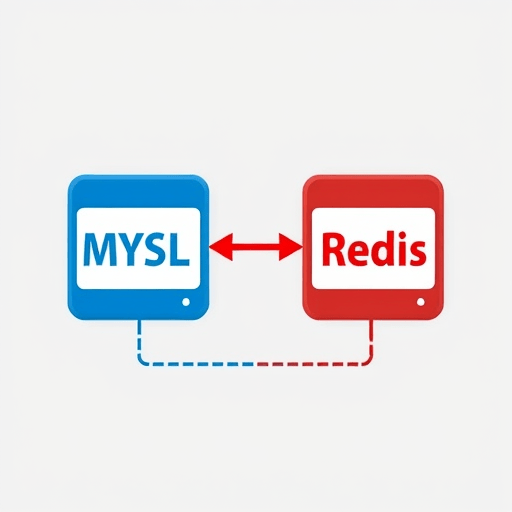
Every order management system eventually hits the same wall: the database that guarantees correctness is too slow to serve every read, and the cache that serves reads instantly can’t be trusted to hold the final truth. That’s why we use MySQL and Redis together for order management. The idea sounds counterintuitive—duplicating data in two storage engines creates a consistency risk—but with the right patterns, duplication becomes a feature, not a bug. In 2026, as order volumes climb and customers expect sub-second status updates, this hybrid architecture has become the quiet workhorse behind many reliable commerce platforms. Here’s how we made it work, where the traps are, and why the trade-off is worth it.
The Core Tension: Relational Integrity vs. Millisecond Reads
MySQL gives us ACID transactions, foreign keys, and the ability to run complex joins across orders, customers, payments, and inventory. That’s non-negotiable for order management—we cannot afford partial writes or orphaned records. But MySQL’s strengths come at a cost. A typical order detail view might involve six tables, a few subqueries, and a handful of indexes. In production, under peak load, that query can take 80 to 150 milliseconds. Scale that to thousands of concurrent requests, and you have a bottleneck.
Redis, on the other hand, is an in-memory data store that returns simple key-value or hash reads in under a millisecond. It doesn’t understand joins, transactions, or relational integrity at the same level. It’s not a replacement for MySQL—it’s a complementary speed layer. The trick is deciding what to duplicate, how to keep the copy fresh, and what to do when the copy is stale or missing.
Our Architecture: MySQL as the Source of Truth, Redis as the Speed Layer
In our setup, MySQL remains the only system of record. Every order, status change, payment capture, refund, or shipment event is written to MySQL first. Redis holds a denormalized projection of order data optimized for the read-heavy paths: order summaries, recent orders, status timelines, and dashboard lists.
The duplication is intentional. A typical cached order object in Redis might look like this:
- Order ID and customer ID
- Subtotal, discounts, tax, and total amounts
- Item line summaries (SKU, name, quantity, unit price)
- Current status and a compact history of status changes
- Shipping address snapshot and carrier tracking numbers
- Payment method description and authorization state
This object is not normalized. It doesn’t reference other tables. It is exactly what the frontend and API layer need to render an order page or a list of recent orders. By storing a ready-to-serve payload in Redis, we avoid repetitive joins and reduce the load on MySQL by roughly 85 percent for read-heavy traffic.
Write-Through with a Twist: How We Keep Duplicated Data Fresh
The most common question about this architecture is simple: how do you prevent the Redis copy from going stale? We use a write-through strategy augmented by an event-driven invalidation pipeline. When an order changes, the application layer performs the MySQL transaction first. Once the transaction commits successfully, the service publishes a domain event—order.updated, order.refunded, order.shipped—to an internal message bus. A dedicated projection worker consumes that event, builds the new Redis payload, and writes it back. This is sometimes called the outbox pattern with a projection, and it works.
What About the Window Between Commit and Cache Write?
There is a tiny inconsistency window: the MySQL commit has happened, but the Redis projection hasn’t been recomputed yet. In practice, this window is a few milliseconds. For most order management use cases, that is acceptable. If a user refreshes an order page during that window, they might see the previous status for a split second. We mitigate this on the API layer by adding a short monotonic version number to each cached payload. If a client submits a status-changing action, the system validates the version from Redis against MySQL. If they mismatch, we perform a fresh read from MySQL and resolve the conflict.
Read-Repair: Handling Cache Misses Without Overloading MySQL
No cache is perfect. Keys expire, servers restart, and some queries are simply too rare to keep warm. When the Redis layer misses, the naive approach is to query MySQL directly, rebuild the payload, and write it back to Redis. That works, but it invites a thundering herd: a popular order view that expires can trigger hundreds of identical MySQL queries simultaneously.
We solved this with a read-repair pattern that includes per-key mutexes. When a miss occurs, the requesting process attempts to acquire a short-lived Redis lock for that order ID. Only one process runs the MySQL query and builds the payload. The others wait a few milliseconds, then read the freshly rebuilt value from Redis. This keeps MySQL query volume flat even under heavy cache churn.
Failure Modes: Designing for Redis Outages
Redis is fast, but it is not permanent storage. If the Redis cluster restarts, loses a node, or becomes unreachable, the order management system must still function. Our rule is simple: Redis is an accelerator, not a dependency. When Redis is healthy, nearly all reads are served from it. When Redis is down, the application layer falls back to MySQL with a per-request timeout. The response gets slower—maybe 150 milliseconds instead of 2—but the system does not go down.
We also treat Redis as evictable. On startup, the projection workers health-check the cache and rebuild only the hottest data. Cold order history remains in MySQL, and it gets promoted to Redis on demand. This approach prevents a slow, miserable cache-warming process after every deployment or failover.
Durability Trade-Offs and What Redis Persistence Actually Means
A persistent concern when duplicating orders into Redis is data loss. What if a Redis write succeeds, but the process restarts before the projection is consumed? The answer is: nothing is lost, because Redis is never the source of truth. If the cache disappears, we replay events from the database or rebuild from MySQL. We enable Redis Append Only File (AOF) persistence to improve cache warming speed, but we never treat a Redis write as a business-level commit. The guarantee that matters—an order is captured exactly once and its state transitions are recorded—is enforced by MySQL transactions.
When Duplication Saves More Than Time
Using MySQL and Redis together for order management is not just about lower latency. It also reduces contention on the primary database. In our earlier monolithic setup, a single dashboard endpoint that listed recent orders across multiple customers could take several seconds because of deep joins. Now, that same endpoint reads from a Redis sorted set of recent order IDs, then fetches the payloads in parallel. The database cost is near zero, and the user experience improved dramatically.
The duplication also simplifies scaling. If read traffic triples, we add Redis replicas. If write traffic increases, we scale MySQL or shard it. Because the two layers are loosely coupled, we don’t have to optimize one schema for two contradictory workloads.
Monitoring the Drift
We track consistency drift with a reconciliation job that runs every few minutes on a sample of orders. It compares version numbers in Redis against MySQL checksums. If drift is detected, we flag the order, expire the Redis key, and let read-repair rebuild it. In the last year, the drift rate was less than 0.1 percent, and most of those events were caused by manual database fixes that bypassed the event bus—a process problem, not an architecture flaw.
Lessons Learned From Running a Hybrid Order Store
Building this system took iteration. The first version stored raw JSON blobs in Redis with no schema documentation. That worked until a frontend change required a new field and every payload had to be migrated. We now version the cache payload schema, using a simple integer prefix on the key, such as v3:order:12345. Deploying a new schema writes new keys and lets old keys expire naturally.
We also learned to avoid over-caching. Not every order needs to live in Redis. Small, low-volume merchants or abandoned carts are better served by occasional MySQL reads. We threshold-cache: an order is cached only after it receives its first status update, which is usually the point where customers start refreshing pages repeatedly.
Finally, we learned to keep cache logic inside a dedicated service layer. Developers are tempted to write Redis calls directly into controllers for convenience, but that leads to scattered invalidation logic and inconsistency bugs. Every read and write to the order cache goes through one module with five methods: get, put, invalidate, rebuild, and reconcile. This single choke point has saved us more times than I can count.
Conclusion
There is no perfect storage engine for every workload. MySQL gives us the integrity that order management demands, and Redis gives us the speed that modern users expect. The combination of the two—duplicating data deliberately, keeping MySQL as the source of truth, and building a disciplined projection pipeline around Redis—lets us have both. It isn’t a compromise. It’s a design that acknowledges each tool’s strengths and uses them where they belong. For any team running a high-volume order system, the question isn’t whether you need a cache. It’s whether you can trust yourself to keep it consistent. With the right patterns, you can.