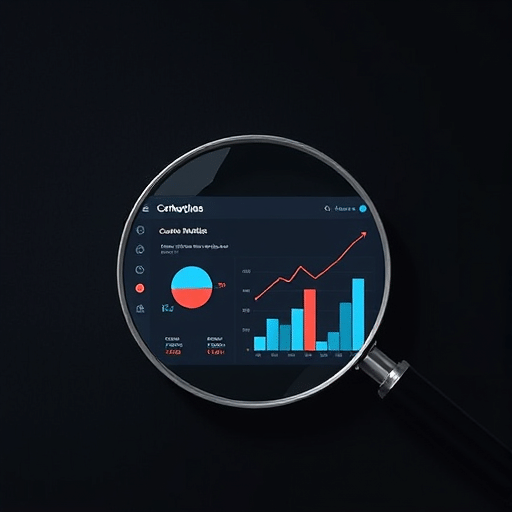
The question is no longer whether AI will replace middle management in hypergrowth startups—it is how quickly it will happen and what actually takes its place. In the current landscape, the answer gaining traction is the AI decision log: a continuous, machine-maintained record of every meaningful choice a startup makes, from pricing experiments to vendor selections. As execution speed becomes the defining advantage of category leaders, these logs are quietly displacing the middle manager’s core function—approval—and replacing it with something faster, more granular, and far more scalable.
This is not a speculative thought exercise. It is a structural shift already visible in how modern product teams ship, how revenue teams price, and how hiring loops run. The middle management layer is not being fired, exactly. It is being bypassed by software that records context, flags risk, and routes exceptions with the same thoroughness a senior manager once provided—only at millisecond speed.
When Managers Become the Bottleneck
Hypergrowth startups share a telltale symptom: brilliant individual contributors start waiting for approvals. Every pricing adjustment, feature scope change, or contract deviation requires a manager with the authority to say yes—and that manager is usually in back-to-back meetings. The result is a queue. Decisions pile up. Execution speed collapses.
The deeper problem is that middle managers in a growing startup are paid to make decisions they have too little context to make well. They rely on status updates and slide decks. They spend their time re-establishing context that already exists elsewhere. When a company is growing from 100 to 1,000 employees, that contextual gap widens weekly. The approval becomes the bottleneck, and the bottleneck becomes the brand.
AI Decision Logs: The Management Layer Reimagined
An AI decision log is a structured, continuously updated record of how and why a startup makes decisions. It does not just capture the outcome; it captures the inputs, the trade-offs, the stakeholders consulted, the alternatives rejected, and the assumptions that carried the day. Every entry is automatically tagged, versioned, and searchable. Every new decision is compared against past patterns in the same log.
What makes this profoundly different from a shared doc or a dashboard is that the AI does not merely store information—it reasons over it. Before a decision is ratified, the system checks for consistency, surfaces conflicting past precedents, and flags thresholds that trigger human intervention.
A typical AI decision log entry contains:
- Context: The relevant metrics, customer signals, or operational constraints at the moment the decision was made
- Options considered: The alternatives that were weighed, including the ones that were rejected and why
- Assumptions: The beliefs the decision rests on, explicitly stated and testable
- Stakeholders: Who was consulted, who signed off, and who would be affected
- Risk thresholds: The conditions that would automatically escalate the decision to a human leader
- Expected outcomes: A time-bound projection that the system can later compare against actual results
Once these logs reach a meaningful volume, they become a training surface. The AI learns which decisions routinely succeed without human input and which consistently generate exceptions. It then increases autonomy for the former and sharpens alerting for the latter.
How Decision Logs Accelerate Execution Speed
Execution speed in a hypergrowth startup is less about individual effort and more about reducing the latency between an insight and an action. AI decision logs compress that latency in three concrete ways.
First, they remove the approval queue. Routine decisions—common discount requests, minor scope changes, standard hiring steps—are ratified automatically when they match established patterns. The employee on the ground gets a decision in seconds, not days. No manager to ping, no meeting to request.
Second, they turn decisions into reusable assets. Every decision logged is a precedent that the next decision can reference. A revenue operations lead pricing a new enterprise tier no longer needs to track down a VP to recall how a similar deal was structured last quarter. The log provides the answer instantly, with more fidelity than any human memory.
Third, they shift the organization from reactive oversight to proactive boundaries. Instead of waiting for a human to notice a risky decision, the risk engine evaluates the proposal before it is sent for review. If a sales representative wants to offer terms outside the approved range, the AI does not just escalate—it predicts the likely downstream effects based on historical outcomes. That kind of insight used to require a seasoned executive’s intuition; now it is a computed property of the data.
The result is that alignment becomes a byproduct of a shared artifact rather than a burden of meetings. Teams move faster because they are no longer synchronizing decisions across calendars; they are syncing with a common, always-current record of what the company believes to be true.
From Approvers to Decision Architects
The human layer does not disappear; the middle manager’s job specification changes. The people who thrive in this environment are no longer the ones who can approve the most requests in the shortest time. They are the ones who design the systems that make approvals unnecessary.
Titles like “Decision Architect” and “Operating System Lead” are already appearing in the org charts of forward-leaning companies. These roles are responsible for defining the thresholds that trigger escalation, maintaining the quality of the decision log’s training data, and handling the exceptions that genuinely require human judgment. It is a smaller layer, but a more senior one—less about babysitting and more about designing the guardrails that let the organization run on its own.
For career-minded professionals, the implication is blunt: the future belongs to those who can codify judgment into decision frameworks, not those who hoard it in their calendars.
The Limits of Algorithmic Management
The honest assessment is that AI decision logs are excellent at pattern recognition, risk scoring, and velocity—but they remain weak where human judgment is genuinely irreplaceable. Interpersonal conflict, for instance, does not reduce cleanly to a log entry. When two senior engineers are at an impasse over an architectural direction, the resolution involves ego, trust, and nuanced communication. An AI can document the disagreement; it cannot navigate the human dynamics that resolve it.
Ethical gray zones also remain stubbornly human. When a decision involves a trade-off between short-term revenue and long-term customer trust, there is no historical-pattern answer that feels safe. And crucially, accountability still attaches to people. Shareholders, regulators, and customers want a human name attached to consequential calls. The AI can recommend; it does not take responsibility.
The winning pattern, then, is distribution: routine decisions are pushed down into the AI decision log for instantaneous execution, while exceptional decisions are pushed up to a smaller, more experienced human layer. The old middle-management density between these two zones is what gets compressed.
Conclusion
AI decision logs are not a futuristic abstraction—they are the operating system that lets hypergrowth startups scale execution speed without scaling management headcount. By turning decisions into structured, searchable artifacts, they eliminate the approval bottleneck that so often kills momentum in fast-moving companies. The managers who remain will be fewer, sharper, and focused on designing the rules of the game rather than refereeing every play. In that world, the question is not whether AI will replace middle management, but which managers will be the ones designing the logs—and which will be logged out of the org chart entirely.