A factory digital twin is only as valuable as its fidelity to the physical asset it represents. Too often, manufacturers invest heavily in creating a sophisticated simulation model, only to watch its accuracy degrade over time as machines age, production schedules shift, and environmental conditions change. That gap between the model and reality is called drift, and it silently undermines every prediction your digital twin produces. For a factory digital twin to remain useful, it must be continuously calibrated against live data streams—otherwise, the simulation becomes a beautifully rendered but ultimately misleading artifact. In 2026, the most resilient manufacturers are not just building digital twins; they are wiring them directly to real-time IoT streams to keep every parameter, threshold, and behavioral rule aligned with what actually happens on the shop floor.
The Hidden Danger of Digital Twin Drift
Digital twin drift occurs when the simulation slowly diverges from the physical process it mirrors. Initially, small deviations might seem harmless: a slight temperature offset in a heat treatment oven, a minor delay in conveyor speed, a subtle change in raw material viscosity. But these minor errors compound. Over days, weeks, or months, the twin begins to suggest optimal setpoints that are slightly too aggressive or maintenance windows that are slightly too late. By the time a human notices the mismatch, the twin has already generated dozens of mispredictions—each one potentially triggering a wrong decision.
The cost of drift is not abstract. Consider a semiconductor fabrication plant where a digital twin predicts yield under varying humidity levels. If the model’s baseline humidity reading is 2% off the actual sensor data, the recommended process adjustments could push thousands of wafers outside specification. Similarly, in an automotive assembly line, a robotic arm’s cycle-time model that fails to account for bearing wear will overestimate throughput, leading to missed delivery deadlines and unnecessary overtime. Live data calibration directly addresses this by embedding the twin in a closed feedback loop: sensor readings continuously correct the model, preventing errors from ever becoming systemic.
Why Mispredictions Are Costlier Than Equipment Failures
Unexpected equipment failures are preventable with proper monitoring, but mispredictions are insidious because they appear valid. A digital twin that confidently forecasts lower energy consumption is likely to make operators ignore rising utility bills. A twin that predicts stable torque in a compressor will cause technicians to skip vibration checks. These are silent, chronic errors that erode trust in the entire digitalization initiative. Live data calibration ensures the twin learns from every subtle shift, so its recommendations remain grounded in observed reality rather than assumed parameters.
Real-Time IoT Streams as the Ground Truth
IoT sensors are the most direct source of ground truth for a factory digital twin. Vibration sensors, thermal cameras, PLC logs, energy meters, and quality inspection systems collectively provide a continuous stream of operational data. The challenge is not collecting this data—most modern factories already generate terabytes from these sources—but rather ingesting it into the twin at the right frequency and with the right semantic context. A part counter on a press machine might need to update every few seconds, while a chemical reactor’s viscosity model could require sub-second updates.
Syncing simulation models to real-time IoT streams involves more than just piping data into the twin’s input fields. It requires a semantic mapping between the physical signal and the simulation variable. For example, an IoT accelerometer mounted on a motor produces a raw waveform, while the twin’s motor model expects a scalar value for bearing friction. Calibration middleware must transform, filter, and contextualize the data before it can update the model. This is where many digital twin projects fail—they assume that “live data” simply means connecting an API, when in reality it demands a deliberate data governance strategy.
Event-Driven Calibration vs. Continuous Calibration
Not every twin needs constant, real-time updates. Some models are best calibrated on triggers—after a maintenance event, a changeover, or a batch-completion signal. Others require continuous calibration to track slowly evolving variables like tool wear or ambient temperature. The right approach depends on the fidelity requirements and the cost of being wrong. A predictive maintenance model for a critical pump should be calibrated continuously, because a sudden spike in current draw could indicate imminent failure. In contrast, a production scheduling twin can be calibrated on an event basis, as long as the underlying process parameters are stable between events.
Hybrid strategies are becoming common. A base model can be calibrated regularly using batch processing, while selected high-sensitivity parameters receive continuous updates. This reduces computational load without sacrificing the accuracy of the most consequential predictions. The key is to identify which variables have the largest impact on the twin’s output and prioritize those for live synchronization.
Key Calibration Strategies for Continuous Alignment
Implementing live data calibration requires more than software; it demands a disciplined approach to model maintenance. Below are the most effective strategies used by manufacturers that keep their digital twins reliably aligned.
- Recursive parameter estimation: Instead of replacing static coefficients, the twin uses recursive algorithms like Kalman filters to update model parameters based on each incoming IoT datapoint. This method excels at handling noisy sensor data and adapting to gradual process changes.
- Drift detection with adaptive reset: Statistical process control charts monitor the residual between predicted and actual outputs. When the residual exceeds a threshold, the twin triggers a recalibration, rather than waiting for a scheduled update. This catches sudden anomalies like a blocked sensor tube or a defective batch of materials.
- Digital twin shadowing: Run a parallel, low-fidelity version of the twin on raw data alone. Compare its output to that of the high-fidelity twin; any persistent divergence indicates that the primary model needs live adjustments. This provides early warning without disrupting the main operational workflow.
- Transfer learning from similar assets: When one factory line has well-calibrated data, its learned parameters can be transferred to a sister line with a smaller sensor footprint. This reduces the calibration burden while keeping all twins aligned with real-world behavior.
Overcoming Common Implementation Pitfalls
Even with the right strategy, live calibration can fail for mundane reasons. The most common pitfall is data latency. If IoT streams are processed through a slower analytics pipeline, the twin may receive updates that are already stale. For fast-moving processes, sidecar processing at the edge—where a gateway computer applies calibration logic directly next to the equipment—can cut latency from seconds to milliseconds.
Another pitfall is data quality. A calibration system that blindly trusts every sensor reading will propagate errors into the twin. Outlier rejection, redundant sensor fusion, and confidence weighting are essential. For example, if one temperature sensor fails, the twin should automatically reweight its contributions based on neighboring sensors’ values. Furthermore, security must be integrated from the start. An unauthenticated IoT stream is an attack vector; if a malicious actor injects false data, the twin will calibrate to a lie, leading to dangerous operational decisions.
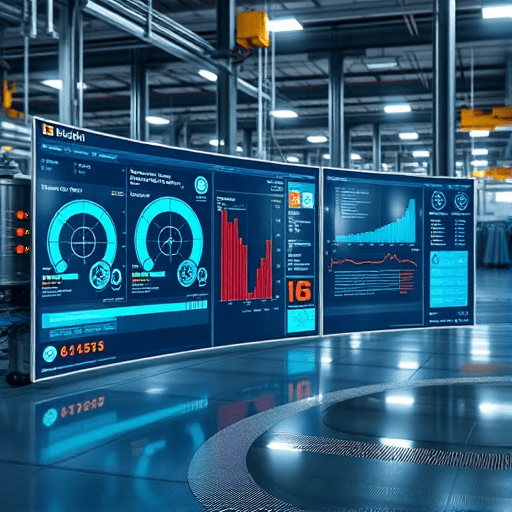
Organizational resistance is a third obstacle. Maintenance engineers may distrust a twin that constantly adjusts its own parameters, preferring a stable model they can understand. Clear visualization of calibration events—showing when and why the model updated—builds confidence and makes the twin’s behavior transparent. A well-governed digital twin should document every calibration action, just as a good quality management system logs every product inspection.
The Future: Self-Calibrating Twins
Looking forward, the line between simulation and real-time analytics is blurring. Next-generation digital twins will not just respond to IoT data; they will proactively request additional measurements when their confidence drops. This closed-loop autonomy will enable what industry leaders call “self-calibrating twins”—models that maintain their accuracy without human intervention, even as production lines are reconfigured for new products. Machine learning models can learn the typical drift patterns of a process and anticipate when recalibration is needed before visible residual emerges.
However, the foundation remains the same: a robust connection to live data. The industrial internet of things is maturing, with cheaper sensors, faster edge computing, and more reliable time-sensitive network protocols. Manufacturers that treat IoT streams not as a monitoring dashboard but as the lifeblood of their digital twin will unlock the true promise of Industry 4.0—predictions that are not only fast, but also correct.
Conclusion
Live data calibration is the difference between a digital twin that merely visualizes a factory and one that helps run it. By syncing simulation models to real-time IoT streams, manufacturers can eliminate drift, reduce mispredictions, and ensure that every recommendation reflects the current state of the physical world. The technology to achieve this exists today; the challenge is to adopt a mindset that treats calibration as a continuous process, not a one-time setup. For any factory relying on digital twins for critical decisions, live data calibration is not optional—it is the mechanism that keeps the virtual and physical worlds honest.