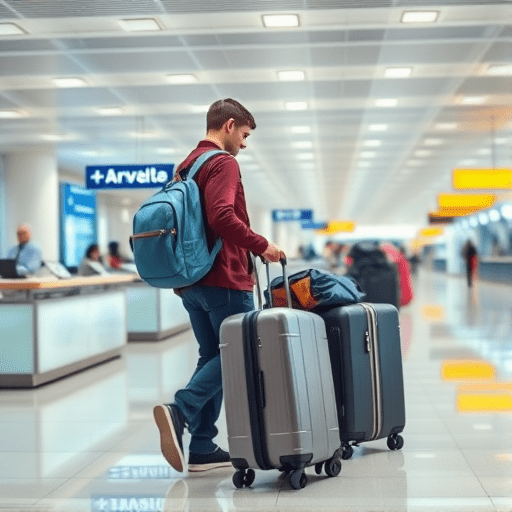
When traveling with budget airlines across Asia, the thrill of cheap fares can quickly turn into a costly baggage nightmare. Many travelers underestimate how many “hidden” fees are attached to checked luggage—especially with carriers that shift pricing models each season. In this guide, we’ll walk through the newest fee structures, show you the best moments to book, and explain how to use smart packing, loyalty status, and tech hacks to keep your checked luggage costs at a minimum, so you can focus on enjoying the journey rather than scrambling for refunds.
The Hidden Cost Landscape of Asian Low-Cost Carriers
Low-cost carriers (LCCs) in Asia—such as AirAsia, Cebu Pacific, Scoot, and VietJet—rely on ancillary revenue to stay profitable. The checked baggage segment is a prime source of this revenue, but the way the fees are presented has evolved dramatically since the 2010s. Here’s what to look for when comparing routes:
- Fee Tiers by Weight – Most LCCs now charge per kilogram beyond a base allowance. A 20‑kg extra bag can cost $25 on one airline and $40 on another.
- Dynamic Pricing – Some carriers adjust baggage fees based on seat class, fare type, and even the day of the week. A business class ticket may include a 30‑kg allowance, while an economy fare might give only 10 kg.
- “Hidden” Seasonal Discounts – Promotional periods (e.g., mid‑winter or “Double Christmas”) often promise lower baggage fees, but only if you book early and commit to a non‑refundable fare.
- Additional Charges at the Airport – Even if your ticket shows free baggage, you’ll still be charged on the day of departure if you exceed the limit. The difference between a 15‑kg and a 20‑kg bag can be $15, a non‑negotiable fee that’s easy to forget.
Understanding these factors is the first step to avoiding overpaying for checked luggage.
Three Newest Fee Models in 2026
By 2026, Asian LCCs have introduced three distinctive fee models that can influence your baggage strategy:
1. Pay‑Per‑Bag with Flat-Rate Tiers
AirAsia’s latest “Bag X” initiative bundles checked luggage into tiered packages: 10 kg for $12, 20 kg for $25, and 30 kg for $40. The key advantage is that the price remains constant regardless of flight distance. If you’re traveling from Bangkok to Tokyo, the same bag cost applies.
2. Weight‑Based Pay‑Per‑Kilogram
Cebu Pacific has returned to a purely weight‑based system, charging $2.50 per kilogram beyond the 10‑kg free allowance. While this appears simple, the per‑kg rate can spike during high‑season booking windows, pushing the total to $75 for a 30‑kg bag.
3. Tiered Loyalty Waivers
VietJet introduced a loyalty tier that offers “bag credits” once you accumulate 15,000 miles. A credit can cover one 20‑kg bag for any flight, but it must be used within 12 months of earning. This model rewards frequent flyers but can also catch infrequent travelers off guard.
Knowing which model applies to your airline of choice will help you calculate whether it’s cheaper to buy a larger bag in advance or to split your items across multiple smaller bags.
Early‑Bird Tricks to Save on Baggage
Booking your ticket well in advance can make a significant difference in baggage costs. Here are the top early‑bird tactics:
- Set a Fare Alert for the “Best Price” Tier – Most travel sites allow you to receive notifications when the lowest fare (which includes baggage) drops. Set alerts on 30‑day horizons.
- Choose “Basic Economy” with a 10‑kg Allowance – This fare type typically includes the lowest baggage fee. If you’re planning to travel light, it’s often cheaper than upgrading to “Standard Economy” with higher fees.
- Book on the Airline’s Own Platform – Some carriers (e.g., Scoot) offer a discounted baggage fee if you purchase directly through their website, but only if you book at least 48 hours before departure.
Smart Packing: The 50‑Gram Rule and Beyond
In 2026, “smart packing” has become a crucial skill for budget travelers. Here’s how to use the 50‑gram rule to your advantage:
- Adopt the 50‑Gram Rule – When measuring each item, weigh it and add only 50 grams to account for packaging. This practice helps you stay within weight limits and avoid the dreaded “extra 5 kg” charge.
- Use Compression Packs – Compression bags can reduce the volume of clothes by up to 40%. Less volume often means less weight, especially for bulky garments like jackets.
- Choose Multi‑Use Items – Swap a bulky sweater for a lightweight cardigan that can be layered. A single piece can replace multiple items, cutting weight and volume.
- Pack in Two Bags Strategically – If you’re allowed one 10‑kg bag for free and a second bag incurs a fee, consider splitting fragile or valuable items into the paid bag and non‑fragile items into the free bag. This way you can still keep the total weight under the cheaper tier.
Leverage Digital Tools and Loyalty Status to Waive Fees
Technology is playing an increasingly vital role in lowering baggage costs. Here’s what to use:
- Airline Mobile Apps – Many apps now let you pre‑pay for baggage during check‑in. By doing so online, you often get a 10–15 % discount compared to paying at the counter.
- Third‑Party Apps for Weight Tracking – Apps like “BagTracker” allow you to upload your luggage weight before departure, giving you an early warning if you’re about to exceed limits.
- Loyalty Programs with Bag Credits – Join a frequent flyer program and earn points that can be redeemed for bag credits. For example, 1,000 points might equal a free 20‑kg bag on AirAsia.
- Credit Card Partnerships – Some premium travel cards offer baggage fee waivers or reimbursements. Verify if your card partner includes Asia LCCs.
When to Negotiate at the Airport
Even with the best planning, sometimes you’ll find yourself over the baggage limit. Knowing when to negotiate can save you money:
- Early Check‑In – If you arrive at the gate early, staff may offer to add a small extra bag for a reduced rate.
- Ask for “Frequent Flyer” Discounts – Some carriers will provide a lower rate if you mention your loyalty status, even if you’re not a member.
- Use “Friend or Family” Passes – If you’re traveling with a companion who can absorb the extra cost, ask if they can pay a reduced rate for the additional bag.
- Appeal During Security – In rare cases, if your bag’s weight is only marginally over, security may allow a minor excess at a discounted rate.
Case Study: A 2026 Trip to Vietnam
Last month, a traveler booked a flight from Singapore to Hanoi on VietJet with a 20‑kg allowance. He was mindful of the new weight‑based fee structure and packed his luggage to 19.5 kg. At the counter, he was offered a discounted 20‑kg bag for an additional $15—below the standard $25 fee. By using the airline’s mobile app, he pre‑paid for the extra bag at $12, saving $3. Thanks to a 12‑month loyalty credit, he then applied a 20‑kg bag credit that waived the entire fee, leaving him with zero baggage charges.
Conclusion
Budget flying across Asia doesn’t have to mean paying a fortune for checked luggage. By staying ahead of fee models, booking early, packing smartly, and leveraging digital tools and loyalty programs, you can keep baggage costs low and enjoy a smoother travel experience.