In 2026, the startup ecosystem has become more competitive and data‑driven than ever. Founders and executives must assemble advisory boards that can guide product strategy, market entry, and fundraising—yet the traditional vetting process can consume weeks of research and introduce uncertainty. AI reputation scores for startup advisory boards promise a radical shift: a single, dashboard‑centric platform that condenses hours of evaluation into minutes. This article explores how the new AI‑powered reputation framework works, the key metrics it leverages, and how it transforms board selection for today’s fast‑moving ventures.
The Challenge of Vetting Advisory Board Members
Historically, building an advisory board involved a mix of intuition, personal referrals, and extensive background checks. Founders would sift through LinkedIn profiles, press releases, and third‑party databases, cross‑referencing each candidate’s past successes and controversies. This manual approach had two main drawbacks:
- Time‑consuming: A single candidate could require 10–15 hours of research before a founder could reach a decision.
- Incomplete data: Human judgment is prone to bias, and key red flags—such as a short tenure at a high‑growth company—might be overlooked.
As the startup landscape grew denser, founders needed a faster, more objective way to assess whether an advisor could truly add value.
Traditional Research Timeframes and Their Limitations
Before AI reputation scores, the typical advisory board vetting cycle looked like this:
- Collect candidate names from networks.
- Search online for CVs, articles, and social media.
- Compile findings into a spreadsheet.
- Discuss with co‑founders and advisors.
- Make a decision and draft an offer letter.
This process could span 4–6 weeks, especially when multiple candidates were considered. Delays translated directly into missed market windows and lost investor interest.
How AI Reputation Scores Transform the Process
AI reputation scores merge machine learning, natural language processing, and real‑time data feeds to quantify an advisor’s potential fit for a startup. The system aggregates signals from:
- Professional history (roles, durations, impact metrics)
- Public speaking and thought leadership (speeches, publications)
- Network density and overlap with founders
- Social media sentiment and engagement
- Corporate governance and compliance records
- Previous board memberships and outcomes
Each signal is weighted by an algorithm trained on successful advisory board case studies, producing a composite reputation score between 0 and 100. The higher the score, the stronger the predicted contribution to the startup’s growth trajectory.
Key Metrics Driving Reputation Scores
Understanding the underlying metrics helps founders trust the AI output and fine‑tune their selection criteria:
- Impact Score: Quantifies a candidate’s track record of driving revenue, scaling teams, or securing funding.
- Network Reach: Measures the breadth and depth of a candidate’s professional connections, including VC partners, industry influencers, and potential customers.
- Thought Leadership Index: Assesses influence via conference talks, publications, and patent holdings.
- Governance Compliance: Flags any regulatory or ethical red flags that could jeopardize the startup’s reputation.
- Engagement Potential: Estimates the likelihood that the advisor will actively participate in board meetings and provide actionable feedback.
Building a Dashboard That Delivers
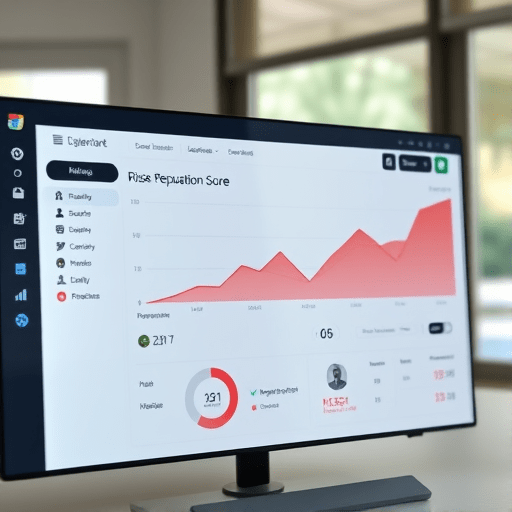
The AI reputation platform’s dashboard is designed for speed and clarity. Key features include:
- Candidate Snapshot: A one‑page view with the reputation score, top three metrics, and a brief narrative summary.
- Heat‑Map Visualization: Highlights areas where a candidate excels or lacks experience, such as market segments or product domains.
- Comparative Analyzer: Lets founders drag and drop multiple candidates to compare scores side‑by‑side.
- Alert System: Flags red‑flag signals (e.g., legal disputes) and auto‑generates a risk assessment report.
- Integration API: Seamlessly pulls data from LinkedIn, Crunchbase, and internal CRM systems.
By condensing complex data into intuitive visuals, the dashboard enables founders to make informed decisions within minutes.
Integrating AI Scores into Board Selection
Once the dashboard identifies top candidates, founders can proceed with the following streamlined steps:
- Schedule an initial “AI‑Brief” call where the platform automatically generates talking points based on the candidate’s reputation profile.
- Invite a senior team member to join the call for a second opinion.
- Leverage the platform’s negotiation module to propose equity or stipend packages aligned with the candidate’s score.
- Upon acceptance, the platform triggers a standardized board member agreement template.
Because every stage is data‑driven, the process cuts decision time from weeks to hours.
Case Study: A Rapid Advisory Board Formation
In March 2026, a SaaS startup seeking to enter the healthcare compliance market used the AI reputation platform to assemble its advisory board. The founders started with a shortlist of ten candidates, entered their LinkedIn URLs into the dashboard, and received scores within 10 seconds.
The top three candidates received scores of 92, 88, and 85. The founders focused on the 92‑score candidate—a former CMO of a successful med‑tech company—who had deep experience in regulatory pathways. The board was finalized in under 36 hours, and within three months, the startup secured a $4M Series A round, attributing the swift investor confidence to the board’s expertise and credibility.
Future Trends and AI Governance
Looking ahead, AI reputation scores are likely to evolve in three key directions:
- Real‑Time Updates: Continuous monitoring of candidates’ activities will keep scores current, ensuring that boards remain relevant as advisors’ careers progress.
- Bias Mitigation: Advanced techniques will further reduce demographic bias, ensuring that diverse voices are accurately represented.
- Cross‑Industry Portfolios: AI will enable founders to identify advisors whose expertise spans multiple verticals, unlocking synergies for multi‑product startups.
Governance frameworks will also emerge to standardize how reputation scores are calculated, guaranteeing transparency for both founders and advisors.
Conclusion
AI reputation scores for startup advisory boards represent a game‑changing approach that slashes vetting time from weeks to hours while delivering data‑driven insights into candidate fit. By leveraging a single dashboard that aggregates thousands of signals, founders can assemble highly qualified boards faster, reduce uncertainty, and accelerate product‑market fit. In the fast‑paced world of 2026, those who adopt AI‑powered reputation scoring will gain a decisive advantage over competitors still relying on manual, opaque vetting processes.