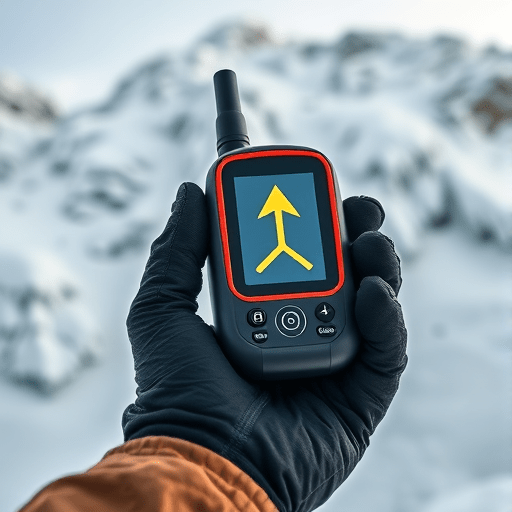
When a buried companion has minutes, not hours, the difference between life and death often comes down to how fast a beacon can separate a real signal from the surrounding noise. In 2026, a new generation of AI-powered avalanche beacons with predictive signal filtering is shrinking that window even further, turning what used to be a frantic analog search into a guided, data-driven operation. Riders, skiers, and mountain rescue teams are quickly adopting these devices, and the early numbers from test slopes in Europe and North America are turning heads across the winter outdoor industry.
Why Traditional Beacons Hit Their Limits
Conventional avalanche transceivers operate on a simple principle: transmit on 457 kHz, listen for matching signals, and guide the searcher along a flux-line toward the strongest reading. The system has saved thousands of lives since the 1980s, but it has well-documented pain points. Multiple burials create overlapping fields, deep burials attenuate the signal, and electronic interference from phones, heated gloves, or even nearby searchers can introduce ghost readings that send a rescuer wandering in circles.
Even seasoned guides will admit that the final “fine search” stage, where the probe meets the snow, is where most of the time is lost. The classic three-meter circle of uncertainty after the last signal spike is a recurring bottleneck in real-world case studies, and that is exactly the gap that machine-learning-enabled hardware is now closing.
The Hardware Leap Behind 2026 Models
The newest beacons are no longer just single-antenna or dual-antenna receivers. Manufacturers are shipping triple-antenna arrays with onboard MEMS magnetometers, barometric pressure cells, and inertial measurement units. A small edge-AI chip, typically a low-power neural processing unit, processes all of those streams in parallel. Instead of relying on a single field-strength number, the device interprets how the signal strength, magnetic disturbance, and your own motion correlate across milliseconds.
The result is a search experience that feels closer to a GPS-guided approach than the traditional bracketing method. The handset quietly discards readings that do not fit the profile of a buried transmitter, dramatically reducing the false-positive spikes that used to pull rescuers off course.
From Reactive Tracking to Predictive Guidance
The biggest conceptual shift in AI-assisted avalanche rescue technology is the move from reactive to predictive. The latest firmware update from several leading brands introduces a feature called trajectory modeling. As you sweep the slope, the beacon continuously estimates where the next strongest signal should appear based on your motion and the history of readings from the past few seconds.
Imagine sweeping your beacon in one direction and seeing the display nudge you slightly back toward the true path before you have even reached the edge of the signal cone. That is not science fiction anymore; it is what ski patrol tests in Davos and Berthoud Pass have been running all winter. Early reports suggest search times are dropping by roughly 30 to 40 percent in multi-burial scenarios compared with the same teams using legacy hardware.
Separating Real Burials From Electronic Noise
The second headline capability is what engineers call adaptive noise rejection. Heated apparel, action cameras, and even other beacons in transmit mode can pollute the 457 kHz band. Older units average readings over time to smooth things out, which costs precious seconds. New models use a trained classifier to recognize the signature of human-body electromagnetic interference versus an actual transmitter pulse, and they lower the weight of contaminated samples on the fly.
In practice, this means fewer “spookings,” those maddening moments when the bearing arrow snaps 90 degrees for no apparent reason. For guides managing a group of clients, the cognitive load drops as well, letting the rescuer focus on digging technique instead of second-guessing the device.
What the Data Tells Us About Real Rescue Outcomes
Hardware demos are one thing; field outcomes are another. The International Commission for Alpine Rescue has been quietly aggregating anonymized beacon logs from participating teams for the past two winters, and a pattern is emerging.
- Average fine-search time dropped from 4.5 minutes to under 2 minutes in single-burial drills involving professional patrollers.
- False-signal events during the coarse search dropped by more than half when adaptive noise rejection was enabled.
- Multi-burial scenarios showed the largest gains, with the time to locate the second victim nearly a third faster than the same crews using previous-generation hardware.
It is worth noting that these numbers come from trained responders, not weekend warriors. That is why manufacturers are leaning heavily on guided practice modes that simulate degraded signals, so everyday users can build the muscle memory before they ever face the real thing.
Battery Life, Privacy, and the Cloud Question
One question keeps popping up in forums: is any of this data leaving the device? The honest answer for 2026 hardware is mostly no. Most processing happens on-device, and anonymized telemetry is opt-in only. That matters because rescue teams, guides, and soldiers do not want their training routes or deployment patterns quietly uploaded to a vendor cloud.
Battery life has actually improved despite the added horsepower. Triple-antenna designs draw more current on receive, but smarter duty-cycling means most new beacons still clear 250 hours in transmit mode on a set of three AAA cells. A few premium models have switched to USB-C rechargeable lithium packs with a cold-weather chemistry rated to negative 30 degrees Celsius, a nod to the reality that cold storage kills alkalines fast.
Pairing Beacons With Other Emerging Backcountry Tools
AI-enhanced beacons do not work in isolation. They are increasingly paired with mesh-radio helmet units that can relay a burial signal down the slope when a rescuer is momentarily out of range, and with avalanche airbags that auto-deploy based on accelerometer thresholds. On the software side, route-planning apps are beginning to feed slope-angle and historical release data directly into pre-trip checklists, so riders arrive at the trailhead already aware of how their gear will perform in the day’s specific snowpack.
None of this replaces the fundamentals of reading the snow, traveling one at a time across suspect slopes, or carrying a probe and shovel. What it does is shrink the punishing math of survival. Every minute shaved from a search is a minute of oxygen preserved for the person under the snow.
What to Look for If You Are Buying in 2026
If a new beacon is on your shopping list this season, a few features are worth prioritizing:
- Confirmed AI-assisted search and noise rejection, not just marketing language; look for independent test reviews.
- Triple-antenna design with a documented multiple-burial marking mode.
- Practice and training mode that lets you replay realistic scenarios without broadcasting on the slope.
- Group-check assist that automates the pre-tour partner check, where most beacon failures are actually caught.
- Proven cold-weather battery performance with verifiable specs, not vague marketing claims.
The 2026 backcountry season is shaping up to be the most safety-advanced winter the recreation community has ever seen, and the humble avalanche beacon, once a basic radio, is now a small, intelligent edge device that learns as you search. As the hardware matures and prices gradually come down, the hope across mountain towns is simple: that fewer stories end with a helicopter, and more end with friends digging each other out in time.