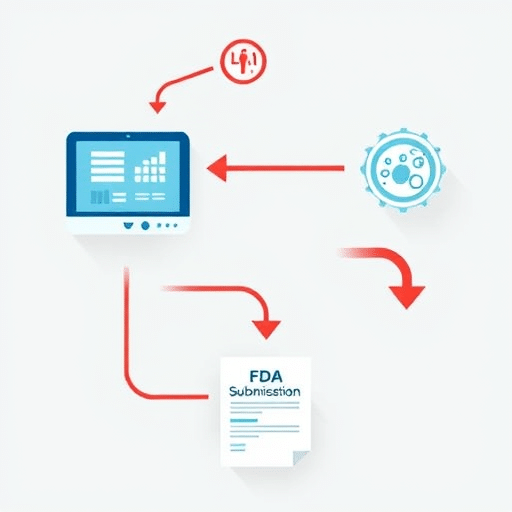
Hospitals, research networks, and digital health startups are increasingly turning to federated learning for wearable data to build predictive models without centralizing sensitive physiological signals. The premise is elegant: instead of sending raw ECG, accelerometer, or glucose readings to a central server, each site trains a local model and shares only weight updates. Yet in practice, federated learning for wearable data introduces privacy pitfalls that can silently undermine patient trust and regulatory compliance. This article unpacks three of the most dangerous traps and offers a step-by-step how-to for building a secure multi-site remote monitoring architecture that holds up under scrutiny.
Pitfall #1: Gradient Leakage via Model Inversion
Federated learning assumes that sharing gradients is safer than sharing raw data. That assumption is dangerously incomplete. Gradient leakage attacks, such as Deep Leakage from Gradients (DLG) and improved variants, have shown that an attacker with access to model updates can reconstruct plausible versions of the original training data. For wearable signals—which are often periodic, predictable, and heavily correlated with identity—this reconstruction is disturbingly effective.
Consider a multi-site study using wrist-worn photoplethysmography (PPG) sensors. A single batch gradient update might contain enough information to infer not only heart rate patterns but also the beat-to-beat intervals that share patient-specific features. In 2026, attackers no longer need to be advanced state-sponsored actors; open-source gradient inversion tools can be run by a curious graduate student or a malicious insider at a participating site.
Why Wearable Data Makes This Worse
Wearable time-series data have low entropy compared to natural images. Their statistical regularity makes them prime candidates for inversion attacks. Moreover, many wearable datasets are imbalanced—a participant may have hours of nighttime heart rate data that are nearly identical—so gradients calculated on small batches can leak almost exact raw waveforms.
How to Mitigate Gradient Leakage
- Add calibrated differential privacy (DP) noise to local updates. Instead of applying DP globally, clip gradients at each edge device and inject Gaussian noise with a privacy budget that is auditable across all sites.
- Use secure aggregation protocols. Secure multi-party computation (SMPC) lets the central server see only the sum of updates from a group of sites, not individual updates. This neutralizes single-site gradient inspection.
- Do not expose model updates to all participants. Restrict update visibility to a trusted aggregator, and consider using a trustless relay architecture where no single party sees both the model and the updates.
Pitfall #2: Membership Inference on Wearable Time-Series
Membership inference attacks aim to determine whether a specific individual’s data was included in the training set. In wearable remote monitoring, this is a direct privacy violation. A model trained on patient heart failure episodes might be subjected to a black-box attack that queries the model with a known patient’s heart-rate sequence. If the model consistently outputs a high confidence score for that sequence, an attacker can infer the patient participated in the monitoring study—revealing a medical condition they may not have disclosed to their employer or insurer.
Wearable data is uniquely vulnerable to membership inference because it is highly individual and often spans long time periods. The more correlated a person’s data is across time, the easier it becomes for an attacker to distinguish “seen” samples from “unseen” samples. In a multi-site setup, the risk is compounded: each site might have a different demographic distribution, making the model’s confidence calibration uneven across sites and easy to exploit.
How to Harden Against Membership Inference
- Use stronger differential privacy at the boundary. While DP noise protects against inversion, it also provides a mathematical guarantee for membership inference. Set a strict privacy budget (ε) that aligns with the sensitivity of wearable health data.
- Implement regularizer-based defenses. Techniques like adversarial training that penalize overconfidence on outlier samples can reduce the effectiveness of black-box membership inference.
- Apply output perturbation. In remote monitoring, you often only need a prediction (e.g., an alert) rather than a raw probability score. Perturbing model outputs adds an extra layer of difficulty for attackers querying the model.
Pitfall #3: Data Poisoning in Cross-Silo Aggregation
Federated learning for wearable data relies on trust across sites. But not every site is equally honorable or equally secure. A compromised hospital network or a malicious edge server can poison the global model by submitting crafted updates. Unlike centralized training, where a single bad actor can be identified through direct data inspection, federated aggregation makes it difficult to determine which update caused the model to degrade.
Wearable monitoring applications are especially sensitive to poisoning. Suppose a remote monitoring platform uses federated learning to detect abnormal gait patterns that precede a fall. An attacker at one site could upload gradients that shift the decision boundary so that falls are classified as normal, leading to missed alerts and potentially serious injuries. In 2026, poisoning attacks are no longer theoretical—they have been demonstrated in production federated systems, and the healthcare sector is a prime target.
How to Detect and Isolate Poisoned Updates
- Use robust aggregation rules. Replace simple averaging with median-based or trimmed-mean aggregation. These methods are less sensitive to extreme updates from a single rogue site.
- Monitor update norms and directional consistency. Healthy gradients from legitimate sites tend to point in similar directions. Anomalous updates that deviate significantly in magnitude or angle should be quarantined and investigated.
- Incorporate reputation scoring for sites. Maintain a per-site trust score based on historical validation performance and data-quality metrics. If a site’s updates cause the global model to degrade on a public holdout set, lower its score and require manual review.
- Run periodic cross-site audits. Even without sharing raw data, sites can exchange synthetic or k-anonymized summaries to verify that their local data distributions remain consistent with expectations.
How to Build a Secure Multi-Site Remote Monitoring Pipeline
Avoiding the three pitfalls above requires more than just selecting the right libraries. You need a disciplined architecture that weaves security into every layer of the federated loop. Below is a practical how-to sequence that can be adapted to any wearable-data research or production deployment involving multiple hospitals or clinics.
Step 1: Define a Threat Model Before You Write Code
Write down exactly which parties you trust and which you do not. Is the aggregator trusted? Are all participating sites equally trusted? Is the data subject’s informed consent compatible with sharing model updates? Your threat model will determine which combinations of secure aggregation, differential privacy, and robustness techniques are necessary. Do not simply copy a generic privacy pipeline from a tutorial.
Step 2: Normalize and Segment Data at the Edge
On each wearable device or local gateway, perform basic quality checks, remove artifacts, and segment time-series into fixed-length windows. Ensure that data is labeled consistently across sites. Use a unified schema for timestamps, sensor channels, and event annotations. This reduces the risk of non-IID distribution causing gradients to diverge, which in turn makes poisoning and inference attacks easier to detect.
Step 3: Apply Local Differential Privacy (LDP) with a Formal Budget
Add calibrated noise to each local update before transmission. Use a composition framework like Rényi differential privacy to track the total privacy cost over the entire training process. In 2026, many privacy regulations expect explicit privacy budget accounting, so keep a digital ledger of every noise injection parameter and its corresponding ε, δ. This can be audited by regulators or review boards.
Step 4: Deploy Secure Aggregation and a Trusted Execution Environment
For multi-site remote monitoring, do not rely on a single aggregation server that can see plaintext updates. Use a secure aggregation protocol such as Bonawitz et al.’s scheme or a noise-free alternative built on SMPC. Alternatively, run the aggregator inside a trusted execution environment (TEE) like Intel SGX or Arm TrustZone, where updates are decrypted only inside an attestable enclave. This gives you both confidentiality and verifiability.
Step 5: Continuously Evaluate for Privacy Leakage
During training, maintain a small, representative test set on the aggregator side. Run periodic membership inference and gradient inversion simulations to measure how much information each round leaks. If the attack success rate rises above a predefined threshold, pause training, increase noise, or switch to a more robust aggregation rule. Make this evaluation an automated part of your CI/CD pipeline for model updates.
Step 6: Document Consent and Data Provenance
Even with perfect technical privacy, you need to show that your process is trustworthy. Keep metadata about which sites contributed to which model version, how many devices were included, and what preprocessing steps were applied. Use cryptographic hashes to chain model updates to their source sites without revealing the underlying data. This provenance trail is essential for both legal accountability and clinical adoption.
Final Thoughts
Federated learning for wearable data can deliver powerful remote monitoring capabilities without centralizing sensitive health information, but only if you treat privacy as an adversarial design problem rather than a default feature. Gradient inversion, membership inference, and poisoning attacks are not hypothetical risks—they are practical threats that must be mitigated with differential privacy, secure aggregation, robust aggregation, and ongoing audits. By embedding these measures into a multi-site architecture from day one, you can build a system that is both clinically effective and genuinely privacy-preserving.