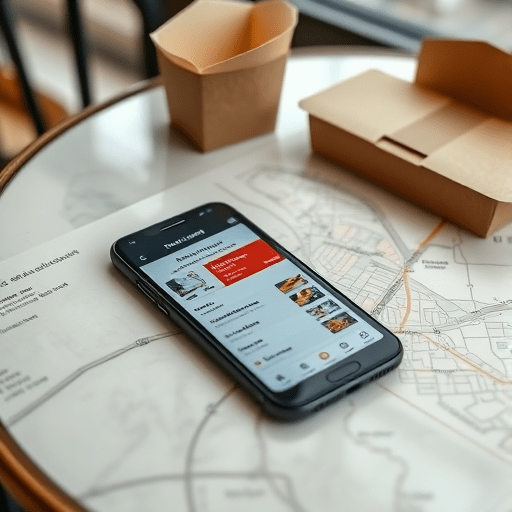
You can use delivery apps to eat like a local without tourist menus by paying attention to what nearby residents actually order. Instead of trusting your map, reading plastic-coated menus outside restaurants, or scrolling through review sites dominated by visitors, open a delivery app and treat it like a live neighborhood food diary. In 2026, delivery apps have quietly become one of the most honest sources of local food culture we have — because they don’t show you what tourists say you should eat; they show you what people in a specific area keep putting in their carts.
Why Tourist Menus and Maps Can’t Tell You What Locals Eat
Tourist menus are designed to be familiar. They offer pizzas, stir-fries, and “local specials” that are safe, quick, and often not what a resident would choose on a random Tuesday. Maps are even worse: they reward restaurants with high review counts and good SEO, not necessarily the places where people actually eat on a weeknight. A five-star review from someone who visited once is not the same as a daily order that comes through a delivery app from someone two streets away.
Delivery apps invert that logic. Their best-performing items are not chosen by marketing teams — they are chosen by repeat behavior. The dish that appears in dozens of “most ordered” slots at 7 p.m. is what nearby residents actually order. The restaurant that holds a high rating but has very few recent orders may be a tourist trap with excellent branding. The delivery app doesn’t care about your vacation itinerary. It only cares about what has already been bought.
How to Read a Delivery App Like a Neighborhood Insider
You don’t need to be a data scientist to use delivery apps for local discovery. You just need to change the way you look at the interface. Instead of searching for a restaurant by name, search by neighborhood and observe the patterns. The app is already telling you what locals order — you just have to learn how to listen.
Set Your Delivery Address to a Residential Block
The fastest trick is to change your delivery address from your hotel or current location to a residential block nearby. Pick an address in a residential area, not a commercial street, and then browse the app. A restaurant that delivers to local residents at lunchtime is a much stronger signal than one that just happens to be close to a major landmark. You’ll often see smaller places that don’t appear on tourist maps — simple kitchens with a handful of dishes that people in the neighborhood order on repeat.
Look for Repetition, Not Ratings
Delivery apps show clear signals like “most ordered,” “popular near you,” or “frequently reordered.” These labels are worth more than a 4.9 rating. A high rating might mean the restaurant is good at consistency, but “most ordered” means a dish has become a habit. When you see the same ordering trend across multiple dinner times, you’re looking at a genuine local favorite. Pay attention to restaurants that have been on the app for years, with hundreds or thousands of orders — that’s the kind of longevity that comes from repeat neighborhood customers, not from tourists passing through.
Watch What Disappears First
One of the most underrated signals on delivery apps is sold-out items. If you open the app around 5 p.m. or 11 a.m., you’ll often notice that certain dishes are no longer available for delivery. Those items are usually what the kitchen prepared in limited quantity because they know their regulars are going to order them. A menu item that’s sold out by 6:30 p.m. is not an inconvenience — it’s a clue. It means the nearby residents bought it before you even started looking. That is the exact opposite of a tourist menu item, which is usually always available because it is made in bulk and offered to everyone.
Favor Short Menus with Few Photos
In 2026, an eye-catching menu with dozens of glossy photos might actually be a warning sign. Tourist-friendly restaurants often build huge menus to make everyone feel welcome. Local delivery menus, on the other hand, are frequently short, text-heavy, and edited for people who already know what they want. If a restaurant has just eight items and each one sounds specific and regional, it is probably cooking for a local crowd. The food is often less sweet, spicier, more seasonal, and more tied to the neighborhood’s own sense of taste.
The “Third Menu” Effect: What the App Shows That the Wall Menu Doesn’t
A fresh reason to use delivery apps in 2026 is the rise of the “third menu.” Many restaurants now display a tourist-friendly menu on the wall, a more complete printed menu on the table, and a completely different set of options on delivery apps. The delivery menu is often written by the kitchen for regulars — the people who know how to find the restaurant digitally. These app-only menus may include daily specials, regional sides, or family-size portions that a tourist would never think to ask for. By browsing the local delivery app, you get a direct look at what residents are actually being offered and what they choose to buy.
Use Local Delivery Hours to Read Resident Habits
Time of day is another powerful filter. Tourist food places tend to stay open consistently from noon to late night, because they don’t know when walk-ins will arrive. Local places that count on delivery orders often have more structured schedules. A restaurant that closes by 4 p.m. is probably feeding a lunch crowd of workers and residents. A place that opens at 10 p.m. and starts delivering late-night snacks is probably serving residents who just want a quick bite after work. When you check a delivery app at 8 a.m., you’ll see breakfast items that locals actually order — not the elaborate tourist breakfasts advertised near hotels.
Morning delivery is especially useful for identifying local food habits. The fact that dozens of nearby residents order the same coffee and savory pastry at 7:45 a.m. tells you more about the neighborhood than any “top ten things to eat” list ever could. In many cities, breakfast delivery demand is low compared to lunch, so the places that survive in the morning are the ones that have real resident followings. Look for restaurants with a strong morning order history and you’ll find the places where people begin their day exactly the way they always have.
Order the Dish That Keeps Showing Up in Other Carts
Once you find a restaurant with strong local order patterns, resist the urge to order the most unusual or exotic item on the menu. Order the dish that appears in the “customers also reorder” section or the item with the highest number of previous orders. That dish is the one the kitchen makes best because they have repeated it more times than anything else. If you see a certain meal being ordered again and again with “mild” and “extra sauce” in the customization notes, follow that trend. The note section itself can be a useful guide — local users often write instructions that reveal how they prefer a dish to be prepared, and you can simply ask for the same.
If you’re not sure what to choose, look at the side dishes and add-ons. Locals rarely order just a main dish; they build a complete meal from local patterns. A delivery order with rice, a soup, and a fried egg may look strange on a tourist menu, but to a resident it’s dinner. By copying these patterns, you can eat the way people in that neighborhood actually eat, without needing to ask a stranger for recommendations.
The Real Measure of Local Food Culture
In the end, delivery apps matter because they show us what people do when nobody is watching. Tourists perform their meals in public — posting photos, trying famous dishes, and following the recommendations of travel websites. Residents are just trying to eat well, fast, and affordably. That distinction is what makes delivery apps so useful for eating like a local. The quiet, repetitive behavior of hundreds of hungry neighbors is a more reliable guide than any glossy menu or curated travel blog.
Conclusion
Using delivery apps to eat like a local without tourist menus is not about ordering food to your hotel room. It’s about using the digital habits of nearby residents as a travel guide. By setting your location to a residential address, watching what people reorder, noticing what sells out, and reading the time-based rhythms of local kitchens, you can discover the meals that define a neighborhood from the inside. Maps show you where to eat; delivery apps show you what people actually eat. The difference is the difference between a tourist menu and a local one.