# How to Use Systemic Narrative to Avoid Player Choice Burnout
Ask a player why they stopped replaying a branching story game and you will often hear the same complaint: “There were too many choices, and I was afraid of making the wrong one.” That is player choice burnout, and it is one of the quieter problems in modern narrative design. The instinct to solve it with more branching, more flags, and more elaborate consequence tracking often makes it worse. This article explains how to use systemic narrative to avoid player choice burnout by trading authored decision trees for responsive, simulation-oriented game worlds that generate meaningful stories from the player’s actual behavior.
## The Difference Between Branching and Systemic Narrative
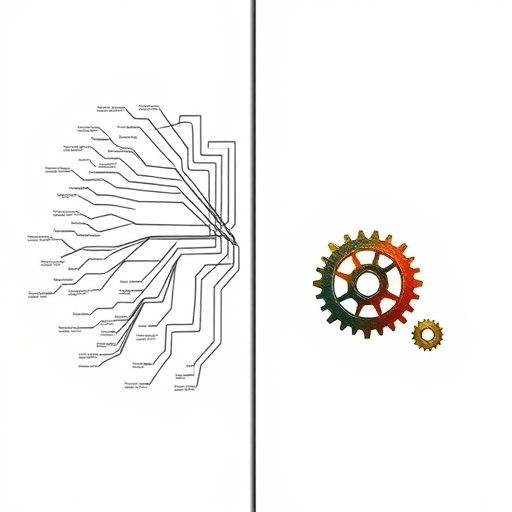
Branching narrative is the familiar choose-your-own-adventure model. The designer writes a set of story paths, places decision points, and links outcomes to choices. It works well for short, tightly controlled experiences, but it scales poorly. Each new branch multiplies content; each promise of consequence raises the player’s anxiety about missing something.
Systemic narrative takes a different approach. Instead of pre-writing every possible story path, the designer creates a set of rules and relationships, then lets the player’s actions move the world. A faction stops trusting you because you were seen stealing from one of their allies. A companion shares a memory with you because you protected a weak NPC in a fight. No pop-up says “Zelda will remember that.” The world simply changes in ways the player can observe and understand.
Systemic narrative is not about having fewer choices. It is about making choices count through dynamic interplay rather than through sprawling content trees.
## Why Player Choice Burnout Happens
Choice burnout is a form of cognitive overload. When a game presents too many options, each carrying unclear consequences, the player’s brain treats the moment not as freedom but as a demand to foresee the future. This is especially common when players believe that there is a correct choice, one that will unlock the best story or avoid the worst outcome.
Several design habits contribute to this pressure:
– Long lists of dialogue options that are actually cosmetic variations.
– Failed “missable opportunities” that require guide-reading or perfect play.
– Branching trees that show off their own magnitude, making players feel they are missing most of the content.
– Consequence systems that feel opaque, so players cannot learn from past mistakes.
Systemic narrative can help with all four. Because story events emerge from rules rather than from hidden flags, every playthrough is naturally unique. The player’s focus shifts from “what did I miss?” to “what happened because I did that?”
## Designing for Emergent Stories Without Overwhelming Players
The goal is not to remove authored writing. It is to make the story feel like a living response to the player’s actions. The following design principles can guide that process.
### Start with Verbs, Not Branches
Systemic narrative works best when you define the actions that matter before you decide the story. Ask what the player is able to do in the world: trust, betray, protect, reveal, hide, trade, threaten. These verbs become the vocabulary of your narrative system. If lying to an NPC creates interesting consequences, then lying needs to be a mechanical reality, not just a line of dialogue that changes a value.
A small set of meaningful verbs is enough. The interesting stories come from their interactions. Trusting one faction may make another hostile. Protecting a traveler may reduce your resources but unlock a hidden route. When verbs feed into systems, the player can make choices with intention.
### Make Consequences a Natural Function of the World
A traditional branching game tracks choices with invisible flags. In a systemic narrative, consequences are the result of ongoing world states. Faction reputation, alliance strength, economic pressure, and character relationships all exist as active systems. The player’s actions push those systems, and the systems push back.
For example, if you decide to save a prisoner, the faction that imprisoned them might lose standing. The prisoner may return with useful information later. The faction that lost standing may become more desperate and act aggressively. None of this requires a written branch for every possibility. It requires rules that let world states interact.
This approach also reduces burnout because players can reason about consequence. They do not need to remember “choice A will cause outcome B.” They can understand “if I help this faction, that other faction will be less safe.” That understanding transforms anxiety into agency.
### Let Players Miss Things
One of the deepest sources of choice burnout is the fear of missing out. Players exhaust themselves trying to see every side quest, every conversation, every ending. Systemic narrative can ease this by treating missable moments as evidence that the world is alive, not as a failure of player completion.
When an event does not appear because the player did the wrong thing or went the wrong way, the world still tells a coherent story. A town that has lost its healer because you sent the healer away is not a failure state; it is a different texture of life. The story is still whole, even when the player does not see every piece of it.
Designers can help by keeping the story legible at the level of “why.” It is easier to accept missing content when the cause and effect were visible. If an event never appears because of a random trigger, it feels unfair. If it disappears because the player openly chose to ignore it, it feels like a narrative consequence.
### Use Feedback to Make Choices Feel Seen Without Menus
Players need confirmation that their actions matter. But too many games do this through intrusive UI messages or “X remembers that” notifications. Systemic narrative can give quieter, more diegetic feedback.
A quest giver who now greets you with a slightly different posture. A shopkeeper who refuses to serve you after you exposed a thief. A wall of graffiti praising the rebel captain you protected. These are small signifiers, but they are immediate, grounded, and believable. They encourage the player to keep experimenting because the world is always paying attention.
## Practical Patterns for Systemic Narrative
The following patterns have proven useful in games that use systemic narrative without overwhelming their players.
### Keep a Persistent, Legible World State
Maintain an internal model of the world’s situation. Factions have opinions, characters have relationships, locations have resource levels. The player’s actions update these values. But do not represent every value to the player in a giant spreadsheet. Show only what the player can understand through observation, such as a guard’s body language, a city’s smoke-stained walls, or an old friend’s silence.
### Make Change Local Before It Becomes Global
Many systemic stories fail because every action immediately changes the entire world. Players need local consequences first. Your decision to save a town becomes visible in that town’s street before it is referenced in a distant kingdom. Local change lets players connect cause and effect. It also prevents the world from feeling hyper-reactive, which can be just as exhausting as no reactivity at all.
### Do Not Simulate Everything
Systemic narrative does not require a full simulation of every object and character. The goal is a small number of interconnected systems that serve the story. A love triangle does not need a currency system. A political coup does not need a cooking minigame. Design only the systems that will create the kinds of meaningful emergent stories your setting promises.
### Provide Some Dramatic Anchors
A purely emergent story can feel aimless. Players need framing, goals, and pressure to keep them moving. A systemic narrative can include authored events, quest hooks, or a central mystery. These anchors do not control the outcome; they simply give the systems something to react to. The player’s choices push the anchors in different directions, and the world responds.
## Avoiding the “Anything Goes” Trap
There is a myth that systemic narrative means the player can do anything and the game will somehow create a story. In practice, no system is infinite. The key is making constraints feel natural rather than arbitrary.
Establish boundaries through not only mechanics but also narrative context. A character may only betray the player if they have a secret, a motive, and a viable ally. A faction may only negotiate if they have something to lose. These constraints are not limitations on player freedom; they create the conditions in which choices become dramatic.
If every action is possible, every consequence is weak. Choice burnout also appears when players cannot tell which actions matter or when the world is so chaotic that no one can plan. The best systemic narratives are not sandboxes of total freedom. They are dense spaces with clear pressures and realistic social dynamics.
## A Simple Worked Example
Imagine a village between two rival factions. The player needs a bridge repaired to access a mine. The bridge can be repaired by the northern faction, if they feel indebted, or by the southern faction, if they want the mine’s ore. The player must decide who to approach.
Instead of written branches for every combination, the designer builds a small set of systems. Faction favor, resource scarcity, and relationship status are all simulated. If the player saved a northern scout earlier, the northern faction is more willing to help. If the player sold ore to the southern faction at a low price, southern resources increase. If the player is known to have stolen from both factions, neither wants to cooperate, so the player must find another third path.
The story that emerges is different for every playthrough, but it is never shapeless. The player understood the systems, made a choice, and saw the world move. No dialogue wheel was needed to produce a meaningful dilemma.
## Conclusion
Player choice burnout does not come from having choices. It comes from the feeling that choices are burdens, traps, or hidden tests. Systemic narrative offers a more humane and more sustainable alternative. By replacing sprawling branching structures with a few well-designed systems, designers can create emergent stories that are meaningful, legible, and delightfully surprising. The player is no longer a juggler of too many threads, but an active participant in a world that listens, remembers, and responds in ways that feel earned.