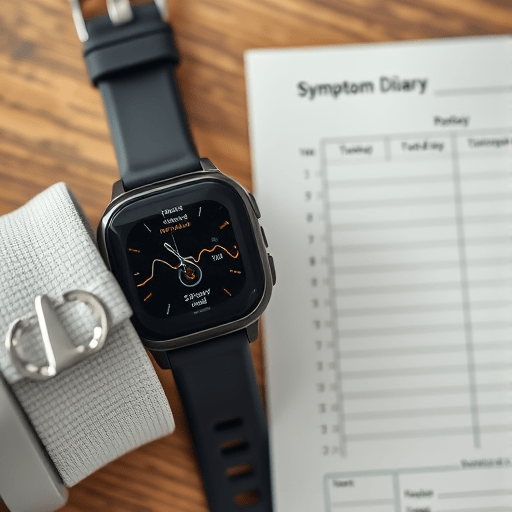
If you live with myalgic encephalomyelitis/chronic fatigue syndrome, the line between “doing something” and “doing too much” is often invisible. That is why so many patients are turning to wearable HRV for chronic fatigue syndrome: not simply to track heart rate variability, but to run pacing algorithms that convert raw data into an early warning system for overexertion. With newer wearable platforms, these algorithms are finally flexible enough to be adapted to individual baseline shifts, symptom flares, and delayed post-exertional malaise. This article shows you how to use them in practice.
The Shift from Activity Quotas to HRV-Driven Pacing
Traditional pacing often uses a heart-rate ceiling, such as staying within 15 beats of resting heart rate, or a fixed number of steps per day. Those methods remain useful, but they treat every day as if it were the same. HRV-driven pacing is different: it adjusts your energy envelope based on your autonomic nervous system’s current state. A drop in HRV often appears 24 to 48 hours before a crash, giving you a narrow but valuable window to reduce activity before overexertion sets in.
The goal is not to improve your HRV as if it were a sports statistic. The goal is to respect what HRV is telling you about your body’s recovery capacity. For chronic fatigue syndrome, a high HRV on a given day does not mean you should run a marathon; it means your system has more cushion than yesterday. A low HRV means the next task, even a small one, carries more risk of triggering a flare.
What Your Wearable Needs to Measure
Not all HRV data is useful for pacing. To build a reliable protocol, you need consistency in measurement conditions. The most useful data points for chronic fatigue syndrome are:
- Overnight average HRV: This reflects your resting autonomic state during sleep, free from daytime movement, caffeine, and conversation.
- Morning HRV reading: A short seated or lying reading taken within one hour of waking. The same time, same position, and same hydration level matter more than the exact number.
- Daily baseline rolling average: A 7-day or 14-day average that smooths out one-off bad nights. Without this baseline, a single low reading can lead to unnecessary panic or, worse, an overexertion cycle.
- Exertion load data: Steps, active minutes, and heart-rate response to activity. HRV before and after activity is most meaningful when paired with how much you actually did.
Many modern wearables allow you to export raw HRV values or set threshold alerts. The algorithms below can be executed with a simple spreadsheet or a smartwatch app that supports custom condition rules.
Three Pacing Algorithms to Avoid Overexertion
The following pacing algorithms have been adapted specifically for chronic fatigue syndrome. They are not universal rules; they are frameworks you can tune to your own baseline. Always start with a conservative setting and adjust after two or three weeks.
1. The 10% Baseline Band
This algorithm uses your 7-day rolling average of overnight HRV as a reference. Each morning, compare today’s HRV to that average. If the morning reading falls more than 10% below your baseline, treat the day as a “low safety” day. Reduce planned activity by at least 30%–50%: shorten walks, break cognitive tasks into shorter segments, and schedule extra rest.
If the morning reading is above baseline, you can increase activity slightly, but never by more than 10% above your usual energy budget. The idea is to use a high-HRV day to build a small buffer, not to maximize output. For chronic fatigue syndrome, the 10% threshold works better than the 20% threshold used in sports science, because ME/CFS patients are more sensitive to autonomic shifts.
2. The 48-Hour Fatigue Average
A single morning reading can be misleading. Poor sleep, a stressful dream, or a brief overnight awakening can produce an isolated HRV dip that has nothing to do with your chronic fatigue status. To avoid overreacting, use a 48-hour moving average of the same morning HRV reading. If the average of today and yesterday is lower than your 7-day baseline, that is a stronger signal.
When the 48-hour average crosses your threshold, enter “crash-avoidance mode”: reduce cognitive and physical load to the minimum needed for self-care, avoid new or unfamiliar tasks, and increase rest intervals by 50%. Because post-exertional malaise is often delayed by 24–48 hours, this algorithm catches the slow downward drift that single-day readings miss.
3. The Exertion–HRV Debt Limit
This algorithm focuses on recovery after each activity block, not just the morning baseline. Before a planned activity, take a 60–90 second seated HRV reading. Then perform the activity for no more than 20–30 minutes. Immediately after, sit down and take another 60–90 second reading. Compare the two values.
If your post-activity HRV drops by more than 15% and does not begin to rise within ten minutes, mark that activity as “debt.” Keep a running count for the day. When you accumulate three debt activities or reach a subjective symptom score of 7/10, stop all further activity. This algorithm treats HRV as a recovery check, not just a morning prediction, and is one of the most direct pacing algorithms to avoid overexertion in real time.
How to Set Up Your Personal HRV Pacing Protocol
You can implement these algorithms in a simple notebook, a spreadsheet, or an app that supports custom metrics. Follow this sequence to avoid common pitfalls:
- Pick one measurement time and stick to it. Morning readings are best because they are less influenced by the day’s exertion.
- Collect baseline data for at least two weeks before making any activity changes. Avoid starting during a crash.
- Use the 7-day average as your anchor, but keep a separate 14-day average for comparing weekly trends.
- Work with one algorithm at a time. Once you understand how your body reacts, you can combine the 10% band with the 48-hour average.
- Log your symptoms and activity alongside HRV. The numbers become far more useful when you can see which low-HRV days actually resulted in post-exertional malaise.
Common HRV Pacing Mistakes
Even carefully designed pacing algorithms fail when the user falls into these traps. Watch for them during the first month:
- Chasing high HRV: A higher morning reading is not an instruction to do more. It is permission to stay within your planned envelope with slightly less fear.
- Comparing with healthy norms: HRV values are highly individual. What matters is your own deviation from your baseline, not whether your number is “good.”
- Changing measurement conditions: Coffee, sunlight, talking, or even shifting from sitting to lying can change HRV by more than the thresholds you are using.
- Overreacting to one low reading: The 48-hour average exists specifically to smooth out noise. Do not cancel all plans because of a single dip.
- Ignoring symptoms: HRV is a guide, not an oracle. If you feel awful but HRV looks stable, trust the symptoms and reduce your load.
Combining HRV with Subjective Symptom Scores
HRV data becomes more powerful when combined with a daily symptom score. Each evening, rate your fatigue, cognitive clarity, and orthostatic intolerance on a 0–10 scale. Use that score to adjust your algorithm’s thresholds. For example, if your 10% HRV threshold is not predicting crashes because your symptoms arrive before HRV changes, lower the trigger to 7%. If you are getting too many false alarms, raise it to 12%.
Some pacing algorithms now incorporate a “recovery inertia” factor: if you had a high symptom score yesterday, today’s HRV is interpreted with a stricter margin. This prevents the common problem of doing too much on a good-feeling morning that follows a bad day. The best system is one that respects both the wearable’s numbers and your own lived experience of energy, pain, and cognitive fog.
Start Small and Let the Algorithm Learn
For a person with chronic fatigue syndrome, the most important aspect of wearable HRV is not accuracy to the millisecond; it is consistency over time. Choose one pacing algorithm, run it for two weeks, and then compare the number of crashes or overexertion episodes with the previous month. You may find that the 10% band is too cautious or not cautious enough. That adjustment is the point.
By combining a stable baseline, a delayed-fever-style 48-hour average, and a real-time exertion debt limit, you can create a personalized buffer between daily life and post-exertional malaise. The wearable is not there to motivate you to do more. It is there to help you stop in time, before the body makes the decision for you.
Wearable HRV becomes practical only when it changes what you do next. The pacing algorithms described here are starting points, not medical prescriptions. Choose one, test it against your own symptoms, and refine the thresholds carefully. Over time, you can build a sensitive, personalized early warning system that helps you avoid overexertion and keep your energy envelope stable.