In 2026, consumer health wearables are no longer just fitness trackers—they are integral parts of personal healthcare ecosystems, collecting and transmitting highly sensitive biometric data. If your product integrates with medical records or telehealth services, you must embed Secure Patient Consent on Wearable Health Apps in 2026 that satisfies GDPR, ePrivacy, and emerging health data regulations. This guide walks developers through a concrete, code‑ready approach to creating dynamic, GDPR‑compliant consent flows, ensuring both regulatory compliance and user trust.
1. Understand the Regulatory Landscape: GDPR, ePrivacy, and Emerging Health Data Laws
Consent is not a one‑time checkbox; it’s an ongoing, contextual, and revocable right that changes as regulations evolve. Below is the regulatory backdrop developers must navigate.
- GDPR Core Principles: Lawfulness, fairness, transparency, purpose limitation, data minimization, accuracy, storage limitation, integrity, and confidentiality.
- ePrivacy Directive (Revised 2025): Mandates explicit consent for electronic communications and profiling, with tighter rules on behavioral advertising and automated decision‑making.
- Digital Health Act (EU, 2025): Provides a framework for digital health services, requiring interoperable data standards and robust patient consent mechanisms.
- US HIPAA Updates (2026): Expands the definition of PHI to include fitness data that can be linked to health status, tightening consent and privacy controls.
- UK NHS Digital Consent Guidelines: Emphasizes dynamic consent for research and clinical trials, with a focus on patient empowerment.
Key takeaway: GDPR’s Consent Articulation section (Art. 7) mandates that consent be “freely given, specific, informed, and unambiguous.” Your wearable’s firmware and cloud stack must reflect that mandate in every interaction.
2. Adopt a Privacy‑by‑Design Architecture from Day One
Embedding privacy into architecture reduces cost and risk later. Consider these foundational pillars.
2.1 Data Minimization and Purpose Limitation
Collect only the raw metrics necessary for the user’s objective—e.g., heart rate for a cardio workout—and store them in anonymized, aggregated form wherever possible. Avoid storing full GPS traces unless explicitly consented.
2.2 Edge Processing and Local Storage
Run analytics locally on the device to generate insights without sending raw data to the cloud. If data must travel, transmit encrypted tokens that reference local datasets, ensuring minimal exposure.
2.3 End‑to‑End Encryption and Key Management
Use authenticated encryption (e.g., AES‑GCM) for all data at rest and TLS 1.3 for transport. Manage keys with a dedicated Hardware Security Module (HSM) or secure enclave, and rotate keys quarterly to meet GDPR’s “security” requirement.
3. Build a Dynamic Consent Engine That Evolves with User Needs
Dynamic consent is a flexible, user‑centric model where permissions can be adjusted on demand. Below is a practical architecture for implementing this engine on a wearable.
3.1 Consent Flow Templates: Opt‑in, Granular, and Revocation
- Opt‑in: The default “yes” path, triggered by an initial device pairing.
- Granular: Users can select data categories (e.g., sleep data, heart rate, location) separately.
- Revocation: Users can withdraw consent instantly via a dedicated “Privacy” panel on the companion app.
3.2 Multi‑Modal Interaction: Voice, Gesture, and Haptic Feedback
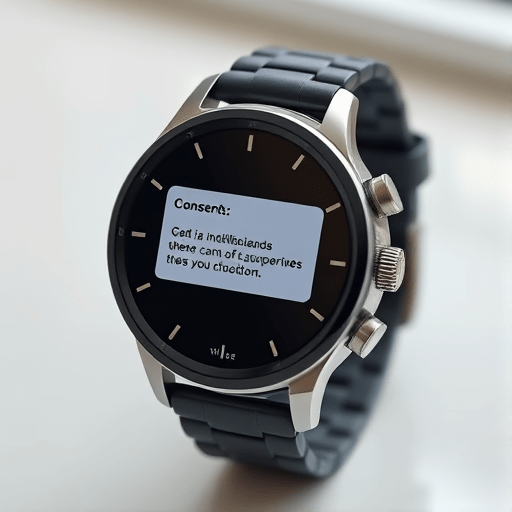
Leverage the wearable’s limited UI by providing voice prompts (“Do you consent to share your heart rate with your doctor?”) and simple haptic confirmation (“tap twice to agree”). This satisfies accessibility and enhances user engagement.
3.3 API‑First Consent Management
Expose a RESTful or gRPC API that lets your backend query current consent status, update permissions, and receive webhook notifications on changes. The API should return a signed JWT containing the consent state, ensuring integrity.
4. Implement Consent as Code with SDKs and Consent Management Platforms (CMPs)
Embedding consent into firmware and cloud services is facilitated by reusable SDKs and CMPs. Here’s how to integrate them effectively.
4.1 Embedding the Consent SDK into the Firmware
Choose a lightweight SDK (e.g., ConsentSDK‑IoT) that supports the device’s OS (RTOS, Embedded Linux). The SDK handles UI rendering, consent persistence, and secure communication with the CMP.
4.2 Using Open‑Source CMPs Like IAB TCF v2.4 and ConsentFlow
Adopt the IAB Transparency & Consent Framework (TCF) v2.4 for a standardised consent string, even though it’s primarily used in advertising. Adapt it for health data by redefining purposes and adding custom scopes (e.g., “clinical research”). ConsentFlow provides a Docker‑ready server that manages consent records, audit logs, and revocation events.
4.3 Server‑Side Consent Validation and Audit Trails
Every data request to the cloud must include the signed consent token. The server validates the token, checks expiration, and logs the access in a tamper‑evident audit trail (e.g., append‑only ledger). This satisfies GDPR’s accountability principle and facilitates future audits.
5. Design a Seamless User Experience While Maintaining Transparency
Balancing regulatory rigor with usability is key. Users should feel empowered, not overwhelmed.
5.1 Clear Language and Dynamic Notices
Use plain‑language explanations and avoid legalese. When a new data type is introduced (e.g., blood oxygen monitoring), prompt the user with a concise notice that updates automatically.
5.2 Visualizing Data Flow with Consent Dashboards
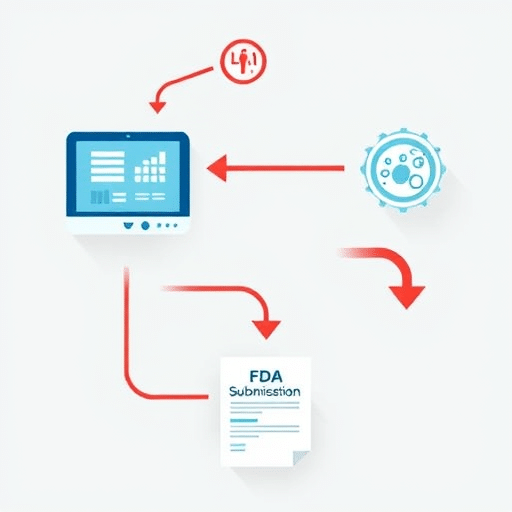
Provide a web dashboard that maps data paths: “Device → Companion App → Cloud → Doctor Portal.” Users can toggle switches for each hop, giving a visual assurance of control.
5.3 In‑App Alerts and Contextual Consent Requests
Trigger consent prompts only when the data collection mode changes (e.g., switching from “normal mode” to “high‑intensity training” that requires heart rate variability). This reduces consent fatigue.
6. Ensure Continuous Compliance with Automated Monitoring and Audits
Compliance is an ongoing process. Automation reduces manual oversight and improves responsiveness.
6.1 Real‑Time Consent Monitoring Dashboards
Integrate Grafana or Kibana dashboards that display consent distribution, revocation rates, and data flow metrics in real time. Set alerts for anomalies such as a sudden spike in revocations.
6.2 Automated Consent Expiry & Renewal Workflows
Consent tokens should expire after a configurable period (e.g., 12 months). Use a background job to push renewal requests to users, offering them the option to update preferences before data usage continues.
6.3 Data Subject Rights Automation: Access, Deletion, Portability
Expose APIs for users to request a downloadable copy of their data, delete it, or transfer it to another provider. Automate these requests via the CMP’s consent token to ensure they are legitimate and authenticated.
7. Case Study: Integrating Consent into a Next‑Gen Fitness Band
Let’s walk through a realistic scenario where a startup, FitPulse, launches a fitness band that tracks heart rate, sleep, and GPS.
- Initial Pairing: The band displays a concise message: “FitPulse wants to share your heart rate with your health coach. Agree?” The user taps “Agree.” The SDK records an opt‑in for heart rate.
- Granular Update: The companion app sends a push notification: “Would you like to share your sleep data for personalized insights?” The user selects “Only with my coach.” The CMP updates the consent string, revokes the default sleep share.
- Edge Processing: Sleep data is anonymized on the device and stored locally. When the user consents to share with research, the device sends a tokenized, aggregated dataset to the research server.
- Audit Trail: Every data transfer logs the consent token and the timestamp. FitPulse’s auditors review the ledger quarterly and find no unauthorized accesses.
- Revocation: Two weeks later, the user visits the app, taps “Privacy,” and revokes sleep data sharing. FitPulse stops transmitting that data immediately.
This workflow demonstrates how dynamic consent can be woven into the product lifecycle without compromising user trust.
8. Checklist for Developers – From Code to Deployment
- 🔒 Encrypt all data at rest and in transit.
- 🗃️ Minimize data collection and apply purpose limitation.
- 📜 Document every consent flow and API endpoint.
- 🤖 Integrate a Consent SDK and CMP in both firmware and backend.
- 🧪 Test consent revocation and renewal scenarios with unit and integration tests.
- 📈 Monitor consent metrics with real‑time dashboards.
- 🛡️ Audit logs quarterly and ensure tamper‑evident storage.
- 💬 Communicate changes to users transparently via in‑app notices.
- 🛠️ Update firmware to reflect regulatory changes (e.g., new data categories).
Adhering to this checklist helps you avoid costly compliance gaps while delivering a trustworthy product.
In the evolving landscape of wearable health technology, developers who weave GDPR‑compliant dynamic consent into their code will not only meet regulatory obligations but also build lasting user trust. By adopting privacy‑by‑design principles, leveraging consent‑management SDKs, and automating compliance monitoring, you can create a resilient consent ecosystem that adapts to new laws and user expectations in 2026 and beyond.