In 2026, telehealth providers must prove that they respect patient consent while safeguarding sensitive health information. Zero‑knowledge audits—cryptographic protocols that confirm compliance without revealing underlying data—offer a breakthrough solution. By leveraging zero‑knowledge proofs (ZKPs), auditors can verify that consent policies are enforced, records are accurate, and privacy regulations are met, all while keeping the patient’s personal data hidden from the auditor.
Why Zero‑Knowledge Matters for Telehealth Consent
Telehealth platforms handle a vast array of data: biometric readings, medication histories, imaging, and real‑time video streams. Traditional audit methods require auditors to inspect raw records, creating privacy risks and often violating the very regulations they intend to verify. ZKPs solve this dilemma by allowing a provider to demonstrate that a specific rule—such as “patient X gave consent for data sharing with specialist Y”—holds true without exposing the actual consent document or the patient’s identity.
Regulators like the EU’s General Data Protection Regulation (GDPR) and the U.S. Health Insurance Portability and Accountability Act (HIPAA) increasingly demand evidence of lawful data processing. Zero‑knowledge audits satisfy both the letter and the spirit of these laws, as they keep personal data within the provider’s secure enclave while offering verifiable proof to auditors and regulators.
Key Components of a Zero‑Knowledge Telehealth Audit
1. Consent Management Ledger
A blockchain‑based ledger records every consent transaction as a cryptographic commitment. Each entry includes the consented purpose, data categories, and the time stamp, but the actual content is hashed or encrypted. The ledger’s immutability ensures tamper‑evidence, a critical requirement for auditability.
2. ZKP Generation Engine
The engine takes the ledger commitments and the audit query (e.g., “Did patient X consent to data sharing with provider Y?”) and produces a succinct, non‑interactive zero‑knowledge proof. Modern ZKP libraries such as Bellman or Halo 2 enable proofs that are a few kilobytes long and can be verified in milliseconds.
3. Audit Interface
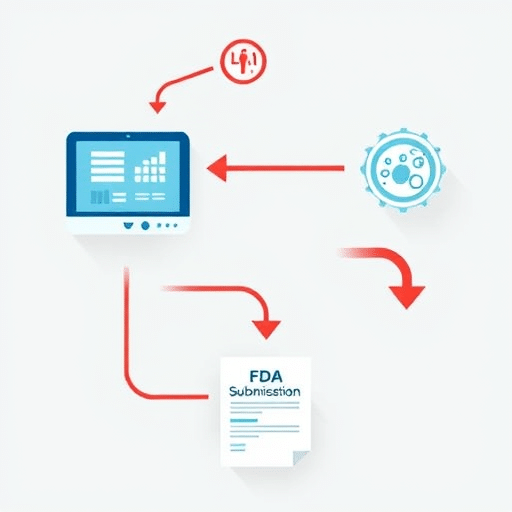
A web‑based portal presents auditors with the proof and a minimal verification interface. Auditors verify the proof against the public ledger, confirming compliance without ever accessing the underlying consent details. The interface logs each verification attempt, creating a transparent audit trail.
4. Regulatory Compatibility Layer
To meet different jurisdictional requirements, the system can translate the proof into regulatory‑specific formats (e.g., an EU Data Protection Authority (DPA) compliance report or a HIPAA 183‑audit document). This layer ensures that the same zero‑knowledge evidence satisfies multiple frameworks.
Implementing Zero‑Knowledge Audits in Telehealth Workflows
Integrating ZKPs into an existing telehealth stack involves a phased approach:
- Data Mapping: Identify all data flows that require consent validation. Map out which data categories are captured, where they are stored, and who can access them.
- Consent Capture: Upgrade consent collection mechanisms to emit cryptographic commitments. Modern patient portals can embed ZKP generators that produce signed commitments at the moment of consent.
- Ledger Integration: Deploy a lightweight permissioned blockchain (e.g., Hyperledger Besu) to store commitments. Ensure that the chain runs within the provider’s secure infrastructure to maintain control over private keys.
- Audit Triggering: Configure the system to automatically generate ZKPs when an audit request arrives. For routine audits, scheduled batch proofs can be generated to reduce latency.
- Verification Platform: Provide auditors with a sandbox environment where they can input the proof and verify it against the ledger. The platform should log all verification attempts and capture audit metadata.
During this integration, it’s crucial to maintain end‑to‑end encryption for all data, even while generating commitments. The encryption keys should be stored in a hardware security module (HSM) to prevent key compromise.
Benefits Beyond Compliance
Zero‑knowledge audits deliver multiple strategic advantages for telehealth providers:
- Enhanced Patient Trust: Patients see that their consent is respected and that auditors cannot see their private information, increasing confidence in the platform.
- Reduced Audit Costs: Proofs are lightweight and verifiable with minimal computational resources, lowering audit fees and turnaround times.
- Scalability: A single proof can cover hundreds of consent records, making it efficient for large‑scale audits.
- Interoperability: The same ledger and ZKP framework can be reused across different services (e.g., mental health, chronic disease management) without redesigning the audit logic.
- Future‑Proofing: As regulations evolve, adding new compliance checks merely requires updating the proof generation logic, not rewriting the entire audit system.
Challenges and Mitigations
While zero‑knowledge audits promise significant gains, they come with technical and organizational hurdles:
1. Proof Size and Complexity
Early ZKP implementations produced large proofs, leading to storage and transmission overheads. Modern succinct proofs like zk‑SNARKs and zk‑STARKs have shrunk sizes to under 10 kB. Providers should adopt the latest libraries and periodically benchmark proof generation times.
2. Key Management
Compromise of signing keys would allow an attacker to forge consent proofs. Implement strict key lifecycle policies, rotate keys regularly, and store them in HSMs. Additionally, audit key usage logs to detect anomalies.
3. Regulatory Acceptance
Some regulators may not yet recognize zero‑knowledge proofs as valid evidence. Engage early with authorities, present technical whitepapers, and participate in cross‑industry working groups to build consensus.
4. Interoperability with Legacy Systems
Many telehealth platforms still use monolithic databases. Introducing a blockchain ledger can require substantial refactoring. A hybrid approach—using the ledger for consent commitments while keeping legacy data storage for other purposes—can mitigate disruption.
Case Study: A Mid‑Size Telehealth Network
Acme Telehealth, serving over 120,000 patients, implemented a zero‑knowledge audit system in Q1 2026. By integrating consent capture with a permissioned Hyperledger chain, Acme was able to produce a single proof covering 3,500 consent transactions in under 200 ms. When the EU Data Protection Authority conducted a surprise audit, Acme supplied the proof, and the audit was completed within 24 hours, yielding a clean compliance verdict. The audit team reported that the evidence satisfied both GDPR Article 32 (security measures) and HIPAA Section 164.312(b) (audit controls).
This success led Acme to roll out the same framework across its pediatric and oncology services, demonstrating the scalability and adaptability of zero‑knowledge audits.
Future Outlook: 2027 and Beyond
Looking ahead, the convergence of ZKPs with emerging standards such as OpenID Connect for Health and FHIR Path promises to embed privacy proofs directly into the data interchange layer. By embedding consent proofs into FHIR resources, a provider could attach a verifiable proof to each record, enabling automated, policy‑driven audits across healthcare ecosystems.
Meanwhile, regulatory bodies are likely to formalize acceptance criteria for zero‑knowledge proofs. Draft guidance from the European Data Protection Board (EDPB) and the U.S. Office of the National Coordinator for Health Information Technology (ONC) is already citing ZKPs as a viable method for demonstrating privacy compliance.
Conclusion
Zero‑knowledge audits represent a paradigm shift for telehealth data privacy compliance. By allowing providers to prove that patient consent is honored without exposing sensitive information, ZKPs align with the core principles of GDPR and HIPAA while streamlining audit processes. As regulatory frameworks evolve and technical maturity increases, adopting zero‑knowledge audits will become a strategic imperative for any telehealth organization committed to privacy, trust, and operational efficiency.