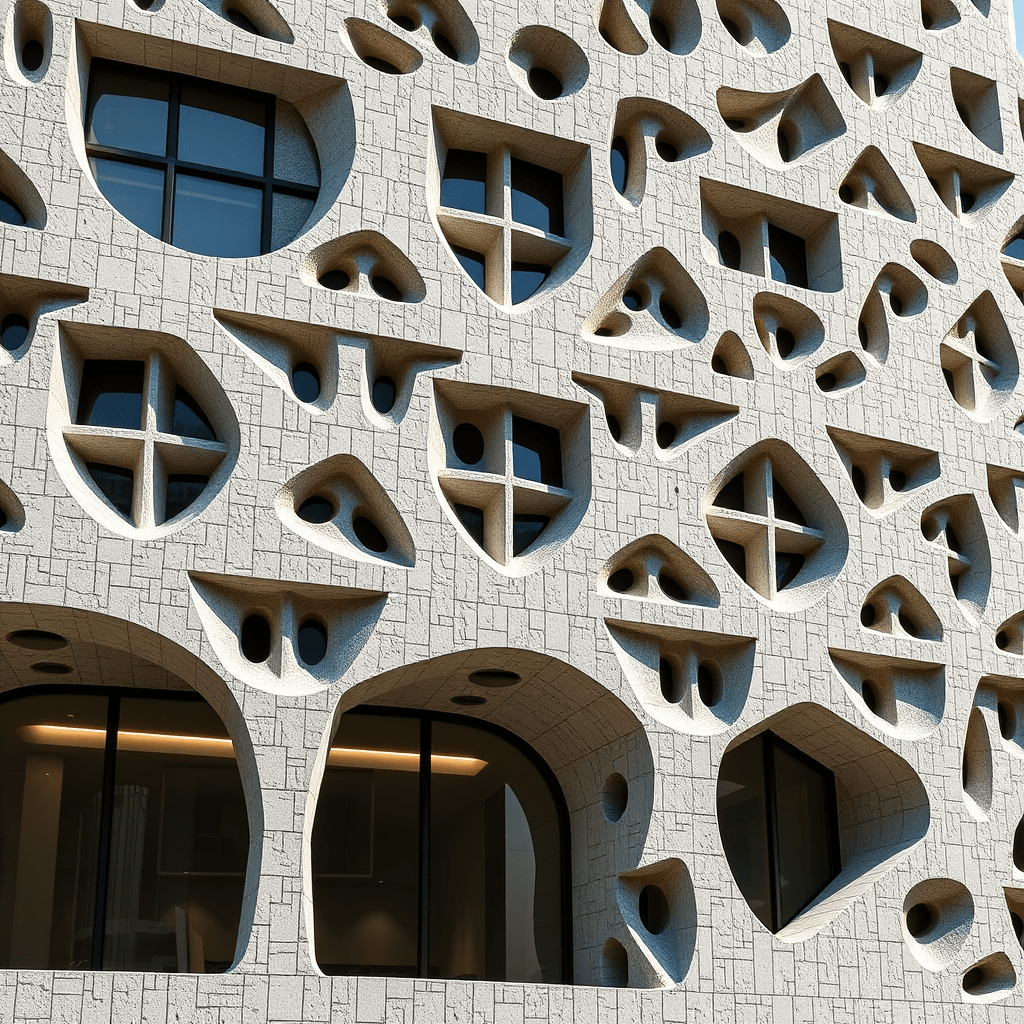
Carbon‑Capture Concrete: Building the Future with 3D‑Printed, CO₂‑Sequestering Structures
Carbon‑capture concrete is redefining the construction industry by turning ordinary concrete into a powerful tool for climate mitigation. By integrating mineral carbonation directly into the mix, each block of this engineered material locks atmospheric CO₂ into a stable mineral form. When the same material is used in 3D‑printed buildings, architects can create complex geometries while simultaneously turning the built environment into a carbon sink. This article explores the science, technology, and real‑world applications of carbon‑capture concrete, and why it is poised to become the cornerstone of sustainable construction.
1. The Chemistry Behind Carbon‑Capture Concrete
At its core, carbon‑capture concrete relies on the natural reaction between calcium‑rich aggregates (such as limestone or recycled concrete fines) and dissolved CO₂. When CO₂ dissolves in the alkaline pore water of fresh concrete, it forms carbonate ions that combine with calcium to produce calcium carbonate (CaCO₃). This mineral is far more stable than the original cement hydration products, effectively locking carbon into a solid form that can remain for centuries.
The reaction can be summarized as:
- CO₂(g) + Ca²⁺ + 2 H₂O → CaCO₃(s) + 2 H⁺
Because the carbonation process continues well after the concrete has hardened, a significant portion of the CO₂ released during cement production is reabsorbed over the life of the structure. Research shows that up to 40% of the CO₂ emitted in cement manufacture can be recaptured by the concrete itself.
Key Factors Influencing Carbon Sequestration
- Aggregate Composition: High calcium content accelerates carbonation.
- Water-to-Cement Ratio: Lower ratios reduce porosity, limiting CO₂ penetration but also slowing the reaction; an optimal balance is required.
- Environmental Exposure: Temperature, humidity, and CO₂ concentration in the surrounding air dictate carbonation speed.
- Admixtures: Certain additives, like fly ash or slag, can enhance durability while influencing carbonation rates.
2. Merging Additive Manufacturing with Carbon‑Sequestering Concrete
3D printing of concrete—often called “direct‑write” or “material extrusion”—has revolutionized architectural design by enabling on‑site, layer‑by‑layer construction of complex geometries. When this technology is combined with carbon‑capture concrete, builders gain both aesthetic flexibility and a built‑in carbon sink.
The process typically involves:
- Material Formulation: The concrete mix is tailored for printability—adequate cohesion, rapid setting, and sufficient viscosity.
- Extrusion System: A robotic nozzle deposits the mix in precise patterns, building walls, columns, and even integrated structural components.
- Post‑Processing: After printing, the structure may be cured in controlled environments to optimize carbonation.
Because each printed layer is fresh, it exposes a large surface area to atmospheric CO₂, accelerating the mineral carbonation reaction. Additionally, the unique microstructures produced by extrusion (e.g., smaller pore sizes in certain orientations) can enhance the rate at which CO₂ penetrates the material.
Benefits Over Traditional Construction
- Reduced Material Waste: 3D printing allows precise placement of concrete, minimizing excess material.
- Design Freedom: Organic shapes, lattice structures, and optimized load paths are possible.
- Speed: Large volumes can be printed in hours, cutting construction time.
- Carbon Sequestration: The dual role of structure and carbon sink is inherently integrated.
3. Case Studies: From Prototype to Production
Several projects worldwide are showcasing the potential of carbon‑capture concrete in 3D‑printed buildings.
3.1 The Carbon‑Zero House in Rotterdam
Constructed in 2021, this 150‑square‑meter dwelling used a custom carbon‑capture concrete mix. The 3D‑printed shell featured a lattice façade that reduced weight while maintaining structural integrity. Post‑construction analysis estimated that 800 kg of CO₂ were sequestered during the first year, offsetting the building’s embodied emissions by 30%.
3.2 The Sustainable Office Pavilion in Singapore
Designed for a corporate client, this 400‑square‑meter office building utilized a hybrid printing approach: large structural columns printed on‑site and prefabricated panels cast in a lab. The carbon‑capture concrete incorporated recycled fly ash, further reducing the building’s carbon footprint. Over five years, the structure absorbed an additional 1.2 tonnes of CO₂, making it one of the largest carbon‑sequestering office spaces in Southeast Asia.
3.3 The Emergency Shelter in Nepal
In response to the 2022 earthquake, a rapid‑deployment shelter was 3D‑printed using carbon‑capture concrete. The lightweight design allowed for quick assembly, while the material’s natural carbonation helped lock away CO₂ even in a harsh, dry environment. The project demonstrated that sustainable materials can also be deployed for disaster relief.
4. Lifecycle Assessment: The Real Impact of Carbon‑Capture Concrete
Assessing the true environmental benefit of carbon‑capture concrete requires a full lifecycle analysis (LCA). Key considerations include:
- Embodied Energy: Cement production is energy‑intensive. Replacing a portion of cement with calcium‑rich aggregates can cut energy demand.
- Carbon Sequestration Rate: The rate depends on the mix, exposure, and curing conditions. Real‑world data suggest an average sequestration of 1.5–2 kg CO₂ per cubic meter of concrete over five years.
- End‑of‑Life: Recycled concrete can be crushed and reused, extending the carbon sink effect.
- Operational Energy: Buildings with integrated carbon sinks can be designed to minimize HVAC loads, further reducing CO₂ emissions.
When combined with the reduced waste and faster construction times of 3D printing, the overall LCA shows a net decrease in life‑cycle CO₂ emissions of up to 25% compared to conventional reinforced concrete.
5. Challenges and Future Directions
Despite promising results, several challenges remain before carbon‑capture concrete can become mainstream.
5.1 Material Consistency and Quality Control
Ensuring uniform carbonation across large volumes is difficult. Variations in aggregate size, mix homogeneity, and environmental exposure can lead to uneven carbon sequestration.
5.2 Standardization and Certification
Building codes currently lack provisions for carbon‑capture concrete. Developing standards and certification processes is essential for widespread adoption.
5.3 Economic Viability
While the material reduces embodied emissions, the initial cost can be higher due to specialized admixtures and quality testing. Long‑term savings through reduced lifecycle emissions and potential carbon credits may offset these costs.
5.4 Scaling 3D Printing Infrastructure
Large‑scale printers capable of producing multi‑storey structures are still in development. Advances in robotics, software, and material handling will be key to bringing this technology to commercial construction.
6. The Road Ahead: Policy, Innovation, and Collaboration
Policy frameworks that incentivize low‑carbon construction—such as carbon pricing, green building certifications, and research grants—will accelerate the uptake of carbon‑capture concrete. Collaboration between material scientists, architects, engineers, and governments is essential to refine mix designs, validate long‑term performance, and develop standardized testing methods.
Emerging technologies like AI‑driven mix optimization, real‑time structural health monitoring, and blockchain‑based supply chain tracking promise to address many of the current challenges. These innovations will help ensure that carbon‑capture concrete not only meets but exceeds performance expectations, setting a new standard for sustainable construction.
Conclusion
Carbon‑capture concrete represents a paradigm shift in building construction—transforming a traditionally carbon‑intensive material into a living carbon sink. When paired with the flexibility and speed of 3D printing, it offers architects and builders a powerful tool to create structures that are not only visually striking but also actively combat climate change. As research, policy, and industry converge, we can expect to see an increasing number of carbon‑neutral or even carbon‑negative buildings dotting skylines worldwide.
Take the first step toward a sustainable future by exploring carbon‑capture concrete for your next project.