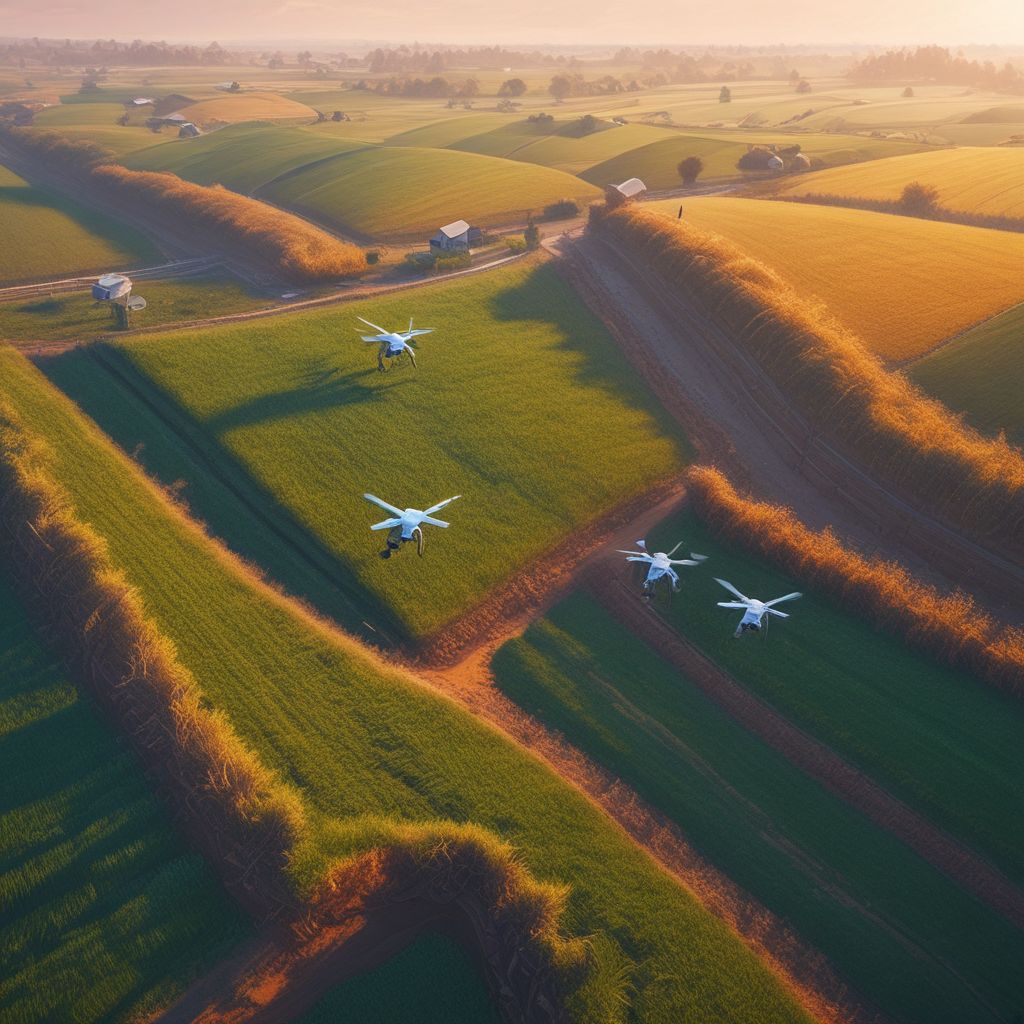
Swarm Robotics in Agriculture: Tiny Drones Cultivating the Future
Swarm robotics in agriculture is no longer a speculative vision; it’s a growing reality that leverages thousands of tiny drones to perform tasks ranging from soil analysis to targeted pesticide application. By combining lightweight UAVs with advanced algorithms, modern farms can now experience precision farming on an unprecedented scale. This article explores how these swarms are engineered, their current applications, and the transformative impact they promise for the future of food production.
1. What Exactly Is a Swarm Drone?
A swarm drone is a lightweight, autonomous aerial vehicle that operates in coordinated groups. Unlike a single robot, a swarm relies on decentralized communication and collective behavior. Each unit follows simple rules—avoid collisions, stay connected, and achieve a shared goal—yet the emergent outcome is complex and efficient. This decentralized nature makes swarms highly robust; if one unit fails, the rest continue the mission unhindered.
1.1 The Hardware Behind the Swarm
- Microcontrollers: Tiny processors like the ESP32 manage flight dynamics and data exchange.
- Lightweight Frames: Carbon fiber or polymer composites keep the drones under 100 grams.
- Energy Sources: Advanced lithium‑polymer batteries or kinetic‑energy harvesting allow flights of 20–30 minutes.
- Sensors: RGB cameras, multispectral imaging, LiDAR, and CO₂ sensors provide real‑time environmental data.
- Communication Modules: Wi‑Fi, Bluetooth, or custom mesh protocols keep drones connected over several hundred meters.
1.2 Software and Swarm Intelligence
Swarm behavior is governed by algorithms inspired by natural systems—ants, bees, and birds. Key techniques include:
- Particle Swarm Optimization (PSO): Optimizes coverage patterns for tasks such as seeding or spraying.
- Distributed Consensus: Allows drones to agree on mapping or task allocation without central control.
- Reinforcement Learning: Drones learn optimal flight paths and energy‑saving strategies over time.
- Obstacle Avoidance: Real‑time sensor fusion prevents collisions with trees, poles, or each other.
2. Practical Applications in Modern Farming
2.1 Precision Planting
Instead of manual seeding or mechanical planters, a swarm can plant seeds directly into the soil. Each drone carries a micro‑dispenser that drops a precise quantity of seed or bio‑seed coating. This method reduces seed waste by up to 30 % and ensures uniform distribution even in irregular terrains.
2.2 Targeted Pest Control
Pest outbreaks often require rapid response. Swarm drones can spray insecticides only where insects are detected, dramatically cutting chemical usage. By integrating optical flow cameras and machine‑learning classifiers, drones identify pest hotspots and deliver micro‑sprays in real time.
2.3 Crop Health Monitoring
Multispectral imaging captures plant stress indicators like chlorophyll concentration or water stress. A swarm spreads over the field, collecting data in parallel, thus reducing monitoring time from days to hours. The aggregated data feed into farm‑management software, enabling predictive analytics for yield forecasting.
2.4 Soil and Micro‑Climate Assessment
Soil heterogeneity is a major challenge for crop consistency. Swarm drones equipped with spectrometers and temperature sensors can map soil moisture, pH, and temperature gradients at centimeter resolution. Farmers can then apply variable-rate irrigation or fertilization, conserving resources and enhancing yields.
2.5 Harvesting Assistance
Some prototypes already use swarms to identify ripe fruits or vegetables. Equipped with AI vision, drones can signal optimal harvest windows to workers or autonomous ground machines. This hybrid approach reduces labor costs while maintaining human oversight for delicate crops.
3. Economic and Environmental Benefits
Deploying swarm robotics can lower operational costs in several ways:
- Labor Efficiency: Swarms reduce manual scouting and spraying, freeing human workers for higher‑value tasks.
- Energy Savings: Each drone’s lightweight design consumes less power, and swarm algorithms optimize flight paths for minimal energy use.
- Reduced Chemical Footprint: Targeted spraying cuts pesticide use by up to 70 %, benefiting both ecosystems and farm profitability.
- Water Conservation: Precision irrigation guided by swarm‑derived soil maps saves up to 25 % of water.
- Yield Improvement: Uniform seeding and timely pest control can increase yields by 5–10 %, depending on crop type.
4. Challenges and the Road Ahead
Despite its promise, swarm robotics in agriculture faces hurdles that must be addressed before widespread adoption.
4.1 Regulatory Landscape
Airspace rules for UAVs vary by country. Farmers must navigate certification, no‑fly zones, and data‑privacy laws. Some governments are developing “UAV corridors” for agricultural use, but standardization remains limited.
4.2 Infrastructure and Connectivity
Reliable mesh networks are essential for real‑time coordination. In remote rural areas, connectivity may be spotty, requiring investment in ground repeaters or satellite links.
4.3 Cybersecurity
Decentralized swarms are vulnerable to signal spoofing or hacking. Robust encryption and fail‑safe protocols are necessary to protect both data and physical assets.
4.4 Skill Gap
Farm operators need training to manage swarm software, interpret sensor data, and maintain hardware. Educational initiatives and user‑friendly interfaces will accelerate adoption.
4.5 Scalability and Cost
While individual drones are inexpensive, large swarms require substantial upfront investment in batteries, sensors, and data centers. Economies of scale will lower costs as the technology matures.
5. The Future Landscape: From Field to Farmhouse
Imagine a future where your farm’s first line of defense against pests is a silent, shimmering flock of drones that can be commanded with a single tap on a smartphone. As AI matures, these swarms will not only execute tasks but also anticipate problems, adapt to weather changes, and learn from past missions. Coupled with blockchain-based traceability, every seed planted, pesticide applied, and harvest recorded will be verifiable—boosting consumer confidence and market value.
Researchers are already testing swarms that work in tandem with autonomous tractors, creating an integrated robotic ecosystem. Meanwhile, open‑source platforms are democratizing swarm development, allowing smallholder farms to build custom solutions tailored to their local conditions.
Conclusion
Swarm robotics in agriculture represents a paradigm shift from single‑robot operations to collaborative, data‑driven farming. With the ability to plant, monitor, and protect crops at scale, these tiny drones are cultivating a future that is more productive, sustainable, and resilient. As technology advances and regulatory frameworks evolve, the vision of a fully automated, smart farm is becoming not just feasible but inevitable.
Ready to bring swarm robotics to your fields? Explore the latest drone platforms and start transforming your farm today.