Eco-Friendly VR: Virtual Travel as a Low-Carbon Alternative to Air Travel
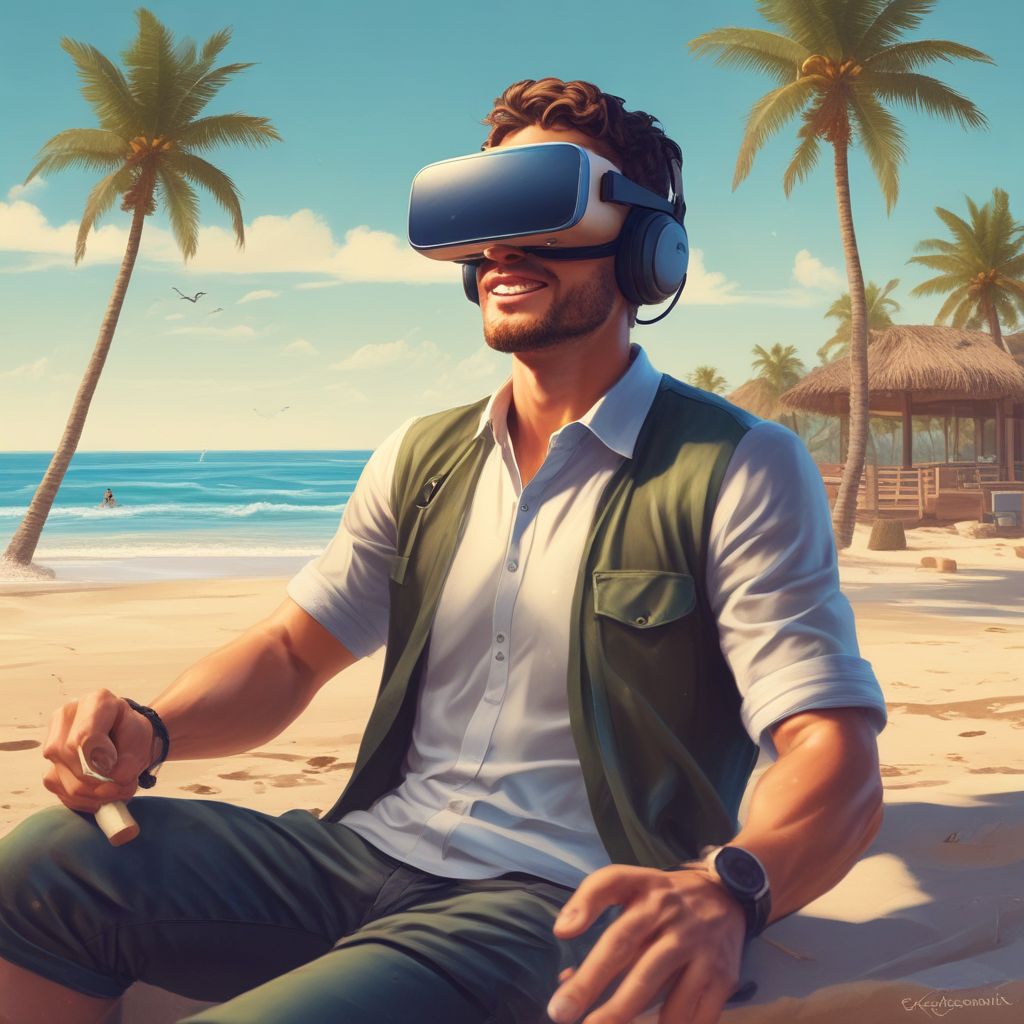
In a world where carbon emissions from aviation are soaring, Eco-Friendly VR offers a compelling solution: virtual travel that lets us explore the globe without the environmental cost of a plane ride. This article examines the environmental impact of traditional air travel, evaluates the user experience of leading VR tourism platforms, and explores how immersive virtual journeys can become a sustainable travel choice.
The Carbon Footprint of Conventional Air Travel
Aviation is responsible for roughly 2–3 % of global CO₂ emissions, a figure that is projected to climb as passenger numbers rebound. A single transatlantic flight can emit more than 1.5 tons of CO₂ per passenger, comparable to the annual emissions of a small household. Moreover, air travel releases non-CO₂ pollutants—water vapor, particulates, and nitrogen oxides—that contribute to high-altitude cloud formation and further climate warming.
Beyond emissions, airports consume large amounts of energy for lighting, heating, and air conditioning, and jet fuel production itself involves significant fossil fuel extraction and refining. The cumulative environmental cost of a single tourist trip is therefore substantial, prompting travelers and industry stakeholders alike to search for greener alternatives.
Virtual Reality Tourism Platforms on the Rise
Virtual Reality (VR) tourism has evolved from a niche tech demo to a robust, commercially viable platform. Companies such as Wander, AirPano, and Google Earth VR now offer 360° tours of iconic destinations—ancient ruins, pristine beaches, bustling city streets—accessible via a headset or smartphone. These platforms enable users to:
- Experience high-fidelity, spatially immersive environments.
- Interact with virtual guides, audio narrations, and informational overlays.
- Customize routes, pace, and content depth to suit individual interests.
Case Study: Wander’s “Virtual Safari”
Wander’s flagship “Virtual Safari” lets users traverse the Serengeti from the comfort of their living room. Powered by photogrammetry and real-time rendering, the experience features:
- Photorealistic wildlife animations that react to user movement.
- Dynamic weather simulations that mirror actual seasons.
- Educational prompts about conservation efforts.
Users report a sense of awe comparable to in-person safaris, yet without the ecological disturbance that mass tourism can cause. The platform also offers a “Carbon Offset” mode, where users can support real-world wildlife projects through micro-donations.
Environmental Impact of VR Tourism
While VR itself reduces the need for travel, it is not free of ecological footprints. Key factors include:
- Energy Consumption: Rendering high-resolution scenes demands powerful GPUs and CPUs, consuming electricity—ideally from renewable sources to maximize sustainability.
- Data Centers: Hosting VR content requires robust servers, which also draw significant power. Many providers now partner with green data center operators to offset their impact.
- Hardware Production: VR headsets, controllers, and accessories involve mining, manufacturing, and shipping, all of which generate emissions. However, the lifecycle emissions of a single headset are far lower than those of an airplane trip.
When compared to a typical commercial flight, a VR session lasting 30 minutes consumes roughly 2–4 % of the carbon footprint of a one-way transatlantic journey, assuming the device runs on renewable electricity. Moreover, because VR experiences are repeatable and shareable, they can reduce the frequency of physical trips to the same location, further mitigating emissions.
User Experience: Immersion, Accessibility, and Social Interaction
Beyond sustainability, the viability of VR travel hinges on user experience. The following elements have emerged as critical to success:
Immersive Realism
High-definition textures, accurate spatial audio, and haptic feedback create a convincing sense of presence. Users can look around, walk along a beach path, or peer into a cave—all while the headset tracks head movement with millisecond precision.
Ease of Use
For mainstream adoption, VR interfaces must be intuitive. Many platforms now feature gesture controls, touchpad navigation, and even voice commands, reducing the learning curve for older or less tech-savvy audiences.
Social Connectivity
Virtual travel is no longer a solitary experience. Multi-user modes allow friends or family to join the same tour, sharing commentary, virtual souvenirs, and synchronized audio. Some services offer live guide chats, turning the experience into a group expedition.
Educational Layering
Augmenting visuals with contextual information—historical facts, cultural insights, ecological data—enriches the experience. Interactive hotspots can provide deeper dives into specific landmarks, satisfying both casual explorers and academic enthusiasts.
Challenges and Limitations
Despite its promise, VR tourism faces several obstacles:
- Hardware Barriers: High-end headsets are still relatively expensive, limiting accessibility for many potential users.
- Motion Sickness: Some users experience nausea or vertigo during fast movements or poorly optimized frames.
- Content Licensing: Accurately representing protected sites requires permissions from local authorities, which can delay content release.
- Physical Disengagement: Extended VR sessions can be tiring, leading to shorter average engagement times compared to a quick Instagram photo.
Addressing these issues involves continued hardware innovation, user interface refinements, and collaborations with tourism boards to secure content rights.
The Future of Low-Carbon Travel
As technology matures, the line between virtual and physical travel will blur further:
- Mixed Reality: Combining AR overlays with real-world travel can enhance cultural immersion without the full environmental cost.
- AI-Generated Content: Procedural generation can produce expansive virtual worlds based on limited input data, vastly reducing rendering times.
- Blockchain-Based Carbon Credits: Transparent tokenization of carbon offsets can incentivize users to choose VR over physical travel.
- Hybrid Tourism Packages: Tour operators may offer “VR previews” that allow travelers to experience a destination virtually before committing to a physical trip, reducing over-tourism and guiding responsible visitation.
Conclusion
Eco-Friendly VR stands as a powerful tool in the global effort to curtail aviation emissions while preserving the human desire to see and experience the world. By offering immersive, low-carbon alternatives, VR tourism platforms empower travelers to explore cultural heritage, natural wonders, and iconic cities from any corner of the globe—without the ecological toll of a plane trip.
Start planning your next eco-friendly adventure with virtual travel today.