Slow travel by rail through hidden European routes offers a way to see the continent that most tourists never experience, and these lesser-known lines through the Carpathians, Rhodope Mountains, and Baltic coast deliver exactly that kind of unhurried adventure. While the Orient Express and the Glacier Express get all the attention, a quieter network of regional and secondary routes weaves through some of Europe’s most dramatic and culturally rich landscapes without the summer crowds. Below are seven routes worth planning around in 2026, along with practical booking and timing advice to make the journey smoother.
Why Hidden Rail Routes Are the Future of European Travel
The appeal of secondary rail lines has grown steadily as travelers look for alternatives to overtourism hotspots. Regional trains thread through valleys and along coastlines that highways bypass entirely, stopping in villages where the rhythm of life has barely changed in decades. For travelers who want depth over checklist sightseeing, these routes reward patience with longer conversations at station cafés, spontaneous detours to a local festival, and scenery that unfolds at a pace the eye can absorb.
Booking these lines requires a different approach than reserving a high-speed seat months in advance. Many smaller operators do not appear in the most common European rail search engines, and a few require either a local ticket office visit or a domestic rail app. The trade-off is flexibility: walk-up tickets are usually available, and seat reservations are rarely mandatory outside of peak holiday weeks.
1. The Carpathian Forest Line: Sighetu Marmației to Cluj-Napoca (Romania)
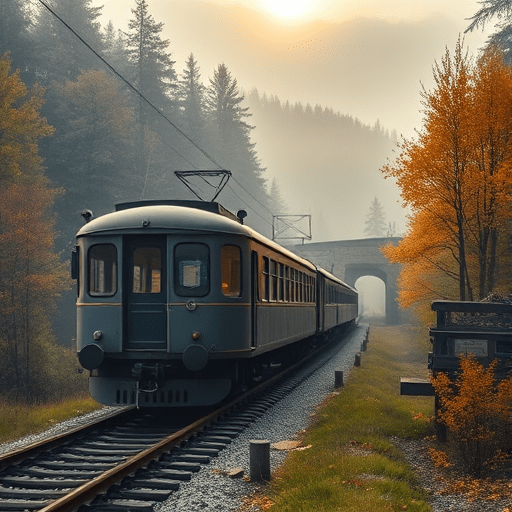
This cross-Carpathian route climbs from the Maramureș region in northern Romania into Transylvania, passing through oak and beech forests that turn amber in late September and crisp white in January. The line runs several times daily on CFR, Romania’s national operator, and tickets cost a fraction of a high-speed European fare. The northern section around Vișeu de Sus is also the terminus of the famous Mocanița forestry railway, which can be combined with the mainline journey for a two-day steam-and-diesel experience.
Best time to ride: late September for autumn color, or February if you want snowy villages and quiet platforms. Avoid August when domestic holiday traffic peaks.
2. The Upper Oder Valley: Wrocław to Kłodzko (Poland)
Polregio trains run along the upper Oder River from Wrocław deep into the Sudetes foothills, terminating at Kłodzko Główne, a town wrapped around a medieval fortress. The route is largely overlooked by international visitors but beloved by Polish hikers who use it to access trailheads in the Stołowe Mountains. Trains are frequent on weekdays and the journey takes roughly two and a half hours end to end.
Buy tickets through the Polregio app or at any station kiosk, and consider a same-day return if you only have a short window. The morning departures tend to be quietest.
3. The Baltic Coastal Crawl: Gdynia to Hel Peninsula (Poland)
p>The narrow-gauge line from Gdynia to Hel traces the tip of the Hel Peninsula, where the Baltic narrows against the bay. During summer the line is busy with Polish beachgoers heading to the resort towns of Jastarnia and Jurata, but from October through April the service thins and the atmosphere shifts to fishing villages and winter seascapes. The line’s highlight is the half-kilometer ferry crossing at the peninsula’s narrowest point, included in the ticket.
Practical note: schedules are seasonal and the timetable shifts in mid-December, so check PKM SKM timetables closer to your travel date.
4. The Rhodope Mountain Loop: Plovdiv to Velingrad via Vacha (Bulgaria)
Bulgarian State Railways (BDZ) operates a slow but spectacular route from Plovdiv south into the Rhodope range, terminating at the spa town of Velingrad. The line crosses the Vacha reservoir on a long embankment, and the windows frame forested slopes that few tourists ever see. Service is limited to two or three trains per day, and tickets should be booked the morning of travel at Plovdiv station, where the international ticket hall also handles domestic routes.
Combine this route with the narrow-gauge Septemvri-Dobrinishte line, which climbs deeper into the mountains and is considered one of the most scenic narrow-gauge journeys still in regular service in Europe.
5. The Visegrád Forest Railway: Vác to Romhány (Hungary)
Hungary’s secondary network includes a quiet branch from Vác, north of Budapest, into the Börzsöny foothills. The line ends at Romhány, a village better known to Czech hikers than to international tourists. The journey takes roughly 90 minutes and passes through forests that were once royal hunting grounds. MÁV tickets are valid and can be purchased at any Budapest suburban station before departure.
Travelers with more time can continue by local bus toward the Slovak border, where the historic town of Esztergom and its basilica make for an easy day-return extension.
6. The Dalmatian Hinterland: Knin to Split via Perković (Croatia)
Most visitors to Split arrive by ferry from the islands, missing the overland rail route that descends from the Dinara massif through the karst interior. HŽ Putnički trains run several times daily between Knin and Split, with a junction at Perković for those continuing toward Šibenik. The route is dramatic: limestone cliffs, sudden tunnels, and views across the Adriatic appear in the last hour.
The timetable is more reliable than it once was, but delays of 15 to 30 minutes remain common. Build slack into any onward connection.
7. The Lithuanian Coastal Line: Klaipėda to Šilutė (Lithuania)
LG trains trace the Curonian Spit approach along Lithuania’s western coast, terminating at Šilutė, a gateway to the Nemunas Delta and one of Europe’s largest wetland reserves. The line sees almost no international tourists and serves mostly local commuters and birdwatchers heading to the delta in spring and autumn. Trains are diesel railcars, often older Soviet-built units refurbished in the 2010s, and the journey has a distinctly unhurried character.
Reservations are not required; tickets are bought on board at a small surcharge over the platform price.
Practical Booking and Timing Tips for 2026
- Buy domestic tickets locally when possible. Apps like Polregio, MÁV, and LG handle booking better than international rail planners for these regional lines.
- Avoid August and the Easter week. These are peak periods for domestic tourism across Central and Eastern Europe, and small-branch lines get crowded quickly.
- Travel midweek if your schedule allows. Tuesday through Thursday departures are noticeably quieter than weekend services.
- Allow buffer time on connections. Many of these routes share infrastructure with freight services, and delays cascade.
- Carry cash in the local currency. A few ticket offices on the smallest branches do not accept foreign cards reliably.
Conclusion
The seven routes above share a common feature: they reward travelers who prioritize atmosphere over itinerary. Whether it is the forested curves of the Carpathians, the fog-bound Baltic coast, or the sun-bleached karst behind Split, these lines reveal a Europe that moves slowly and rewards attention. With regional apps and a bit of flexibility, planning a slow rail trip through any of them in 2026 is well within reach for travelers willing to look beyond the continent’s flagship trains.