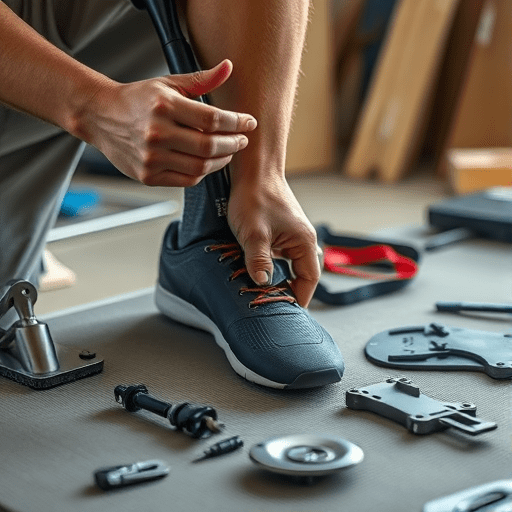
Adaptive sports gear that grows with young athletes is reshaping how inclusive product design meets the realities of childhood and adolescence. Traditional assistive equipment is typically built for a static body, but kids change every few months. Modular prosthetics, adjustable wheelchairs, and reconfigurable sport-specific components are quietly rewriting the rulebook for inclusive product innovation in adaptive athletics. This case study explores how engineering teams, clinicians, and young athletes themselves are co-designing gear that adapts to growth spurts, shifting biomechanics, and evolving sporting ambitions.
The Problem With Static Equipment in a Dynamic Body
Puberty is a moving target. A prosthetic socket fitted for an 11-year-old rarely fits the same child at 14. Wheelchair seat depths, back heights, and camber angles that worked for a 35-kilogram frame become misaligned as bone length, muscle mass, and center of gravity shift. The result is discomfort, reduced performance, and in some cases injury.
For adaptive athletes, the stakes are even higher. Misaligned seating can contribute to scoliosis, pressure injuries, or shoulder impingement over time. A poorly fitted running blade can alter gait mechanics enough to cause secondary strain in the contralateral limb. Designing for growth is not just a convenience; it is a clinical and performance imperative.
Modular Prosthetics: Building Systems Instead of Single Devices
Rather than treating a prosthetic as a single object, modern designers treat it as a kit of parts. A modular running prosthesis for a young athlete may include:
- Stackable pylons that add or remove length without recasting the socket
- Interchangeable feet for sprinting, distance running, or court sports
- Carbon composite cuffs that can be repositioned as residual limb geometry changes
- Modular suspension systems using pin locks or vacuum seals adaptable to limb volume fluctuation
One emerging approach uses parametric socket design, where the internal shape is generated from scan-based data and 3D printed. When a child’s limb changes, the digital file is re-tuned and a new inner liner is printed, while the outer frame remains. This drastically reduces the replacement cycle and keeps the athlete in competition-ready gear rather than waiting weeks for a refit.
Case Insight: The Triathlon Teen
A 13-year-old triathlete with a transtibial amputation was fitted with a modular system combining a cycling-specific foot, a run-specific blade, and a swim-safe waterproof socket. Across her first competitive season, she grew 6 centimeters. Instead of replacing the entire system, her clinician replaced the pylon stack and reprinted a single socket insert, a process that took 72 hours from scan to fit. Her coach reported measurable improvements in power transfer and a notable drop in contralateral hip strain.
Adjustable Wheelchairs: Geometry That Travels With the User
Wheelchair design for youth sports is undergoing a similar modular shift. Court wheelchairs for basketball, tennis, and rugby require precise frame geometry: seat angle, back height, wheelbase, and camber all influence both performance and injury risk. Traditional frames are welded and fixed, making adjustments impossible without a full rebuild.
The new generation of adjustable sport wheelchairs incorporates:
- Telescoping seat rails that extend fore-aft and laterally
- Clamped backrest uprights that slide vertically and angle-adjust
- Modular camber plates allowing wheel angle to be tuned for different sports
- Quick-release axles with millimeter-precise centering
- Interchangeable seat cushions with pressure-mapping verified fits
This kind of adjustable architecture lets a family own one frame that evolves across sports and growth stages. A wheelchair purchased for recreational use at age 10 can be reconfigured for competitive basketball at 14 with a new cushion, taller back, and altered camber, all without replacing the structural chassis.
Case Insight: The Basketball Bench
A junior wheelchair basketball program partnered with a manufacturer to pilot a frame with tool-free camber adjustments. Coaches, who previously could not fine-tune chairs between drills, began adjusting wheel angles for scrimmages versus skill work. After one season, athletes reported fewer pressure hot spots and more stable lateral cuts. One player grew 4 centimeters and required only a new backrest and seat depth insert; the frame itself remained unchanged.
Biomechanics, Growth Charts, and the Data Layer
What separates 2025-era adaptive gear from earlier generations is the integration of biomechanical feedback. Embedded strain sensors in prosthetic pylons and instrumented wheels in sport chairs now stream force, cadence, and symmetry data to a clinician dashboard. Combined with periodic 3D scans and growth charts, this data helps predict when an adjustment is approaching, rather than waiting for the athlete to report pain or performance drop.
Design teams are increasingly treating the device as a data-bearing interface, one that not only serves the body but learns from it. Algorithms flag asymmetries in real time, and in some cases trigger a notification to schedule a refit before a growth spurt fully manifests in discomfort.
Co-Design With the Athletes Themselves
Perhaps the most important shift is methodological. The best outcomes in this space come from participatory design sessions where children and teens iterate on prototypes alongside engineers. Young athletes test intuitiveness of adjustment, weight distribution during play, and aesthetic preferences that affect adoption. Many programs now run annual design jams with the actual user base.
One youth para-swimming collective reported that athletes pushed for color-coded adjustment points, simple visual cues that let them self-tune between heats. The resulting product now ships with that feature as standard. Co-design also surfaces use-case diversity that clinicians alone often miss, such as the need for a chair that fits inside a school locker, or a prosthetic that tolerates both gym flooring and outdoor track surfaces.
Manufacturing and Material Choices
Modularity has implications for manufacturing. High-end modular prosthetics often use recycled carbon fiber layups, while adjustable wheelchair frames increasingly rely on aerospace-grade 7075 aluminum with CNC-machined clamp collars. These materials handle repeated adjustment cycles without fatigue failure, a critical consideration when a single frame must last five to seven years across intense athletic use.
Additive manufacturing remains central: lattice-structured socket interiors distribute pressure across growth-sensitive tissue, while printed jigs allow customization at relatively low marginal cost. The economics work because the expensive structural elements are reused; only the body-contact geometries are refreshed.
Looking Ahead: A Standard, Not a Niche
What began as bespoke solutions for elite adaptive athletes is migrating toward mainstream expectation. As modular systems become more affordable, the line between “youth adaptive gear” and “youth sports gear” is dissolving. Future products will likely treat adjustability as a default feature, not a premium add-on, mirroring trends in kids’ bikes, ski boots, and baseball gloves that already accommodate multi-year growth windows.
For families, coaches, and clinicians, the practical takeaway is this: ask whether the device can be adjusted, not whether it fits today. The gear that earns trust over a decade is the gear that refuses to be outgrown.
Designing adaptive sports equipment for growth is ultimately a design philosophy as much as a technical problem. It treats the young athlete not as a static user, but as a moving target worthy of an evolving toolkit. In that sense, modular prosthetics and adjustable wheelchairs are less a product category and more a quiet statement about how inclusive engineering should always be calibrated to the body it serves, at every stage of its development.