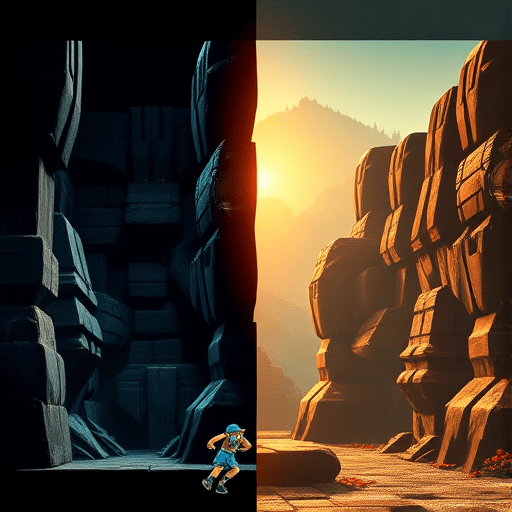
There is a quiet argument happening inside every video game remaster, hidden behind flashy 4K trailers and developer interviews. It is the argument between pixel-perfect purity and polished modern presentation—a debate fought not with words, but with textures. The decision to keep a beloved game grainy, glossy, or somewhere in between has more emotional weight than most studios acknowledge. Remaster texture choices do not just change how a game looks; they reshape how players remember the games they loved in the first place.
The Hidden Psychology of Texture Fidelity
Human memory is not a hard drive. It is a storyteller that fills in gaps with what makes a moment feel right. When players revisit an old favorite through a remaster, the textures they encounter act as emotional anchors. Crisp, high-resolution surfaces can feel clinical—almost alien—while intentionally rough or filtered textures can trigger a warm wave of familiarity, even before conscious memory kicks in.
This is why a perfectly clean 4K rebuild of a PS2-era RPG can leave longtime fans strangely cold. The game looks better, but it does not feel like the game they remember. The brain was not storing polygons; it was storing the soft glow of a CRT television, the muddy shadows of a low-light dungeon, the slightly blurred textures of a console that never quite matched arcade precision.
What “Pixel-Perfect” Really Means in 2026
The phrase pixel-perfect remaster has evolved. Early in the remaster era, it meant simply increasing resolution while preserving the original art. Today, it carries more nuanced implications:
- Authenticity-first approach: Keeping original texture maps and artwork untouched, only upscaling them.
- Display-aware design: Tailoring output for modern OLED screens and HDR, not just resolution.
- Era-preserving filters: Adding subtle scanlines, color banding, or CRT-style bloom to mimic the look of original hardware.
This shift reflects a growing acknowledgment that nostalgia is a visual texture of its own. Players in 2026 increasingly expect remasters to honor the past without imprisoning it in amber.
The Case for the Glossy Rebuild
Not every nostalgic memory benefits from authenticity. Some classic games aged poorly—not because of their art, but because of technical limits that modern hardware can finally escape. Think of the muddy textures in certain N64 platformers or the washed-out color palettes of early PS1 survival horror games. In these cases, a full texture overhaul is not betrayal; it is restoration.
A glossy rebuild works best when:
- The original textures were a compromise, not an intentional art style.
- Lighting and shadows were severely limited by hardware.
- The developers themselves have expressed interest in seeing their vision realized at higher fidelity.
The key is intent. When a studio clearly announces that they are reinterpreting a classic with modern tools, players tend to welcome the change. Resistance usually comes from surprise—when a “remaster” quietly replaces beloved visuals without warning.
When Nostalgia Breaks: The Texture Mismatch Problem
Texture mismatches happen when one part of a game looks brand new and another looks like it crawled out of 2003. It is the most common remaster sin in 2026, and it is more jarring than a full visual overhaul.
Imagine a beautifully re-rendered protagonist standing in front of a background texture that still has visible seams and stretched pixels. The brain immediately flags it as wrong, even if the player cannot articulate why. This is not nostalgia—this is cognitive dissonance. Modern players are remarkably sensitive to visual inconsistency, and remasters that mix old and new assets without careful blending often feel worse than doing nothing at all.
Studios have responded with smarter asset pipelines:
- AI-assisted texture upscaling trained on original art direction.
- Hybrid rendering modes that offer multiple fidelity options.
- Mod-friendly releases that let players choose their preferred texture era.
The Rise of “Controlled Lo-Fi”
One of the most interesting trends in recent remasters is the deliberate use of lower-fidelity textures to preserve mood. Some studios have begun adding optional filters that intentionally degrade texture sharpness, reduce color depth, or mimic the look of older displays. These are not lazy ports—they are carefully designed nostalgia tools.
This approach recognizes that for many players, a sharp, clean version of an old game feels off in a way that is hard to explain. The “controlled lo-fi” filter gives players permission to feel at home, without forcing them to dig out a CRT television or original console.
It also opens a door for creative experimentation. Indie developers have started releasing “remaster-style” filters for modern games, letting players experience contemporary titles through a nostalgic lens. The line between old and new is blurring, and texture fidelity is at the center of it.
Player Communities Are Driving the Conversation
Texture debates used to live in obscure forum threads. In 2026, they are front and center in community feedback, Kickstarter campaigns, and even shareholder communications. Players are no longer passive consumers of remasters—they are active stakeholders in how classics are preserved.
This shift has produced a healthier ecosystem:
- Crowdsourced texture comparisons that hold studios accountable.
- Open-source preservation projects documenting original assets.
- Voting systems on platforms that let players choose preferred visual styles before patches roll out.
The result is a new kind of transparency. Where early remasters were judged primarily on resolution and frame rate, today’s players evaluate them on texture philosophy, artistic intent, and emotional resonance.
The Future of Remaster Textures Looks Deliberate
Looking ahead, texture choices in remasters will likely become even more intentional. Studios are beginning to treat visual style as a core design decision, not a technical afterthought. We can expect to see more remasters released with multiple texture presets, more detailed developer commentary on art choices, and more collaboration with original creators to ensure that modern updates honor their original intent.
There is also growing experimentation with dynamic textures that subtly shift based on player behavior or narrative context—offering, for example, a slightly softer look during emotional cutscenes and sharper detail during action sequences. Whether players will embrace or reject such features remains to be seen, but the willingness to experiment is itself a sign of a maturing medium.
The Quiet Power of a Single Texture
In the end, remaster texture choices are about more than pixels. They are about how a generation of players chooses to remember. A single texture swap can make a beloved game feel fresh, can break the spell of nostalgia, or can transport a player back to a childhood bedroom faster than any orchestral remix of the soundtrack ever could.
The studios that understand this—that treat texture fidelity as emotional design, not technical housekeeping—are the ones that will earn lasting gratitude from the communities they serve. Everyone else risks being remembered for the wrong reasons: as the team that polished the soul out of a classic.
Remasters are not just technical upgrades. They are acts of cultural preservation, and every texture choice is a quiet vote for how the past should look in the present. Whether that vote is for pixel-perfect authenticity or carefully controlled modernity, it shapes not just the game itself, but the memory of it, for decades to come.