The conversation around smartwatch ECG accuracy versus medical-grade Holter monitors has shifted dramatically over the past two years. With Apple, Fitbit, Samsung, and Withings all shipping FDA-cleared atrial fibrillation algorithms, more patients arrive at cardiology appointments clutching a wrist-saved PDF rather than a 24-hour hospital printout. But the leap from a convenient on-wrist tracing to a clinician-acted diagnosis is not a small one, and the gap between consumer-grade and medical-grade data is wider — and narrower — than most users assume.
How Holter Monitors and Smartwatch ECGs Actually Capture Heart Rhythms
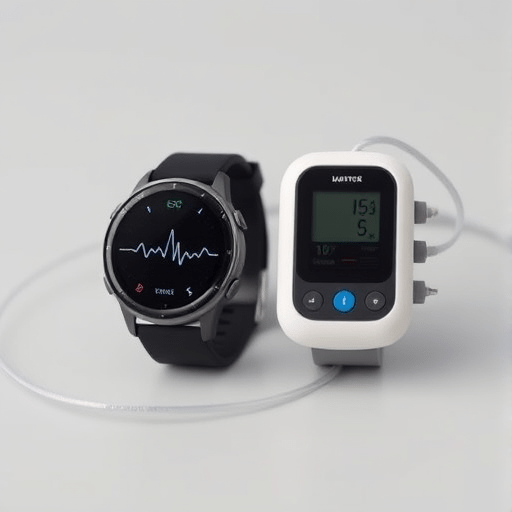
A medical-grade Holter is a continuous, multi-lead recorder, typically worn for 24 hours to 14 days. It samples at 256 Hz to 1024 Hz per channel, runs 2 to 12 leads across the chest, and stores every beat for offline analysis by trained technicians. Its strength is duration: it captures intermittent arrhythmias that a clinic visit might miss entirely.
A smartwatch ECG is, at heart, a single-lead recorder. Two points of skin contact — usually the wrist and a fingertip on the crown — generate a 30-second strip sampled at roughly 512 Hz on newer devices. The watch applies an on-device algorithm to flag possible atrial fibrillation, then saves a downloadable PDF. It is brief, user-initiated, and dependent on stillness and contact quality.
The sensor physics are not the same league, but the clinical question a patient usually cares about is: does this thing catch what matters? That is where the data has gotten genuinely interesting.
The Single-Lead Trade-Off
Single-lead ECGs cannot localize arrhythmia origin the way a 12-lead does, and they struggle with subtle ST-segment shifts, QRS morphology nuances, and paced rhythms. What they can do, with enough clean captures, is distinguish regular sinus rhythm from irregularly irregular patterns consistent with AFib — and this is exactly what AFib screening algorithms are optimized to detect.
Arrhythmia Detection Rates: What the Latest Studies Show
The most cited 2023 to 2025 meta-analyses pooled over 40,000 paired recordings and found that consumer smartwatch algorithms detect atrial fibrillation with a sensitivity between 87% and 95%, depending on the cohort. Specificity hovered around 84% to 92%. Those numbers sound impressive until you compare them to a Holter analyzed by a cardiac technician, which approaches 99% sensitivity for any sustained arrhythmia present during the recording window.
The catch is cohort selection. Most validation studies enroll patients already in a cardiology clinic, many of whom have confirmed AFib. In a real-world screening population — younger, lower-prevalence, more motion artifact — performance dips. A 2024 Stanford-led community study using consumer wearables reported sensitivity falling into the high 70s when users captured readings during symptomatic episodes rather than at rest.
For rare or paroxysmal arrhythmias, no smartwatch currently competes with extended Holter monitoring. A 30-second spot check will simply miss an event that happens twice a week.
False Positives: The Hidden Cost of Convenience
False positives are where smartwatches lose ground fastest. In low-prevalence populations, even an algorithm with 90% specificity generates far more false alarms than true positives. Insurance claims databases from 2024 show that emergency room visits triggered by a “possible AFib” smartwatch alert — and later confirmed to be sinus rhythm with artifact — rose sharply, particularly among users under 40.
Common Sources of Artifact
- Loose wrist contact during the 30-second capture
- Talking or moving fingers while pressing the crown
- Skin moisture, tattoos over the sensor area, or cold extremities
- Pacemaker spikes misinterpreted by the algorithm
- Premature atrial or ventricular contractions (PVCs and PACs) flagged as possible AFib
This last category is underappreciated. Frequent PVCs can produce an irregularly irregular rhythm that fools AFib algorithms, especially in otherwise healthy adults. A Holter with a human reader will classify these correctly; a smartwatch PDF will not always make that distinction obvious.
When Smartwatch Data Is Clinically Useful
There are specific scenarios where on-wrist ECGs add real clinical value, particularly when the patient brings the data to an informed clinician.
For symptomatic patients with intermittent palpitations, a smartwatch can capture an event during symptoms that a Holter might miss if worn during an asymptomatic week. Doctors increasingly prescribe what is informally called a “capture when symptomatic” protocol: when you feel something, sit still and take a 30-second reading, then email the PDF before the next appointment. This workflow has documented utility in case series from 2022 through 2025.
For post-ablation monitoring, where the clinical goal is detecting AFib recurrence over months, smartwatch-based intermittent checks extend monitoring windows affordably and have correlated reasonably well with implantable loop recorders in low-burden recurrence. For AFib screening in older adults — the highest-yield population — systematic smartwatch screening programs in some European health systems have doubled AFib detection rates versus usual care.
Where Wearables Fall Short for Clinical Decisions
There are decisions no smartwatch PDF should drive, at least not yet.
Anticoagulation initiation is the obvious one. Starting, stopping, or changing a blood thinner based solely on a single-lead, algorithm-flagged event is not standard of care, regardless of the device brand. Guidelines still require a confirmed diagnosis, typically via 12-lead ECG or Holter with technician overread.
Syncope evaluation is another weak spot. Smartwatches cannot capture the rhythm during a faint reliably because the user is rarely in a position to take a manual reading. Implantable loop recorders dominate here, and Holter remains a reasonable middle step.
Postoperative cardiac surgery monitoring has documented failure modes for consumer devices. Sternal healing, chest bandages, altered lead vectors, and electrolyte shifts produce patterns that single-lead algorithms misclassify at unacceptable rates.
Finally, children and adolescents are largely outside the validated population for most AFib algorithms. Pediatric cardiology still relies on dedicated Holter or event monitors.
What Cardiologists Actually Want to See
Talk to electrophysiologists and a consistent pattern emerges. They do not dismiss smartwatch data; they contextualize it. The most useful patient-generated ECGs share three properties:
- A clear timestamp and ideally a symptom note (“felt fluttering at 2:14 PM”)
- Multiple captures during the same episode, if possible
- The original PDF rather than a screenshot — the waveform matters for human reading
The unhelpful submission is a single screenshot with no context, often a blurry phone photo of the watch face showing a colored blob. Clinicians literally cannot tell sinus rhythm from noise in many of these files.
A Practical Framework for Patients and Clinicians
A wearable is a screening tool, not a diagnostic one. The clearest mental model is this: treat the smartwatch the way you treat a fever thermometer — useful for triggering further evaluation, not a substitute for it.
For a tech-aware patient, this means pairing the convenience of a wrist ECG with the discipline of a Holter when symptoms are unexplained or recurrent. For clinicians, it means integrating the patient’s wearable PDFs into the chart while preserving the diagnostic standard: confirmation via medical-grade recording before irreversible treatment decisions.
The devices will keep getting better. Continuous wrist-based rhythm monitors, multi-lead smartwatch prototypes, and AI-assisted technician overreads are already in late-stage trials. The boundary between consumer and clinical is genuinely blurring — but in 2026, it has not disappeared, and trusting a single-lead PDF with a high-stakes anticoagulation decision remains, on the evidence, premature.
The safest summary is also the most useful: a smartwatch can tell you when to see a cardiologist. A Holter, with a human reading it, can tell the cardiologist what to do.