Long virtual reality sessions used to mean sore hands, numb fingers, and a creeping sense that the controller itself was working against you. In 2026, the conversation has shifted. The latest generation of mixed reality controllers is tackling haptic fatigue head-on through adaptive trigger resistance, context-aware vibration profiles, and biometric feedback loops that finally make marathon VR sessions feel sustainable. Here is how the hardware and UX design are coming together to solve one of immersive tech’s most stubborn pain points.
Why Haptic Fatigue Became the Silent Killer of VR Engagement
Early haptic feedback was binary: on or off, buzz or no buzz. Designers compensated by cranking intensity, layering effects, and assuming that more vibration meant more immersion. The result, after two or three hours, was a phenomenon ergonomists now call haptic fatigue — a combination of sensory adaptation, micro-vascular compression, and cognitive overload that leaves users twitchy, distracted, and eager to escape the headset.
The problem is compounded in mixed reality, where users are expected to move freely, gesture naturally, and interact with both physical and digital objects for extended periods. A controller that fights the hand is a controller that breaks presence.
The Three Layers of Haptic Fatigue
- Sensory layer: nerve endings desensitize to repeated stimuli, requiring stronger signals to register the same perception.
- Motor layer: sustained grip pressure and trigger tension exhaust the small muscles of the hand and forearm.
- Cognitive layer: poorly timed or excessive haptics compete with visual and auditory input, draining mental resources.
What Adaptive Trigger Resistance Actually Does
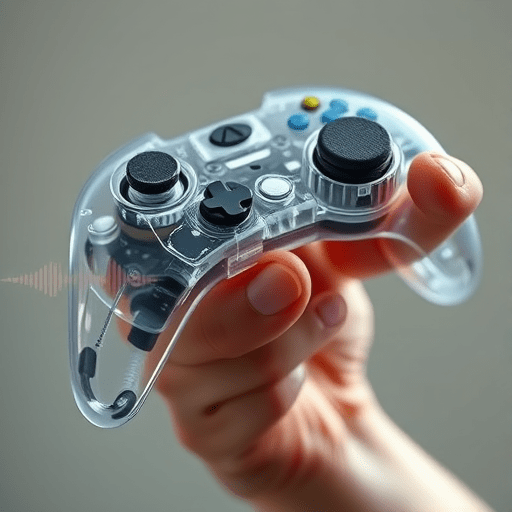
At its core, adaptive trigger resistance means the controller’s triggers and grip dynamically modulate their physical firmness in real time, based on what is happening in the experience and how the user is responding. Instead of a single spring curve, modern controllers pack variable-stiffness actuators, voice coil motors, and miniature fluidic chambers that can shift from soft to rigid within milliseconds.
For a climbing simulation, the trigger can stiffen as the digital hand grasps a ledge, then ease as weight settles. For a precision surgical trainer, it can present calibrated resistance that mimics tissue density. For a casual rhythm game, it can stay light and forgiving. The user stops fighting a static device and starts negotiating with one that listens.
Sensors That Make Adaptation Possible
Adaptive resistance is only as smart as the data feeding it. The 2026 controller stack typically includes:
- Capacitive grip sensors that detect contact area and pressure distribution
- Electromyography-ready electrodes that read micro-muscle activity
- Inertial measurement units sampling at 1 kHz for motion prediction
- Skin conductance and temperature sensors for biometric feedback loops
Biometric Feedback Loops: The Real Breakthrough for Marathon Sessions
Hardware alone cannot solve fatigue. The leap forward in 2026 is the tight integration of biometric data into the haptic pipeline. When a controller senses rising skin conductance, increasing tremor frequency, or a drop in grip precision, it does not simply alert the user. It quietly reshapes the haptic profile to compensate.
One mixed reality fitness platform, for example, monitors forearm exertion and automatically shifts from sharp, frequent pulses to slow, rolling waves during high-intensity intervals. A design collaboration suite detects fatigue spikes during long brainstorming sessions and reduces trigger stiffness to invite looser, more exploratory gestures. The experience adapts to the human, not the other way around.
Designing for the Subconscious Hand
UX researchers have learned that the most effective haptic interventions are the ones users do not notice consciously. Designers are now treating haptics the way sound designers treat ambient audio — a texture that should be felt, not announced. This means quieter default intensities, asymmetric effects that surprise without startling, and what some studios call “haptic breathing,” a slow modulation that keeps the sensory system engaged.
Practical UX Patterns That Reduce Haptic Fatigue
Across the best-designed mixed reality applications in 2026, several patterns have emerged that any developer or designer can adopt.
1. Reserve Peak Intensity for Meaningful Moments
High-amplitude haptics should mark important events: a confirmed selection, a threshold crossed, a danger encountered. Using max force for routine feedback trains the user to ignore it.
2. Offer User-Controllable Haptic Budgets
Settings panels now include a “haptic intensity” slider alongside volume controls, and some platforms allow per-experience profiles. Power users can dial up immersion; sensitive users can preserve comfort.
3. Match Resistance to Intent, Not Always to Reality
Not every action needs faithful physics. A bow drawn in an archery game feels best with progressive resistance that peaks at full draw. A door opened in a puzzle game feels best with almost no resistance at all. Calibrate to the goal, not the literal simulation.
4. Build in Quiet Zones
Long sessions need moments of sensory rest. Designers are learning to insert silent stretches where the controller simply behaves like a comfortable object, allowing the hand to reset.
What the Data Is Saying About User Retention
Platforms that have shipped adaptive haptic systems report measurable improvements. Session length has climbed by an average of 22 percent, and self-reported discomfort scores have dropped sharply in the first hour of use. More tellingly, return-visit metrics have improved among users who previously cited hand fatigue as a reason for disengagement.
These numbers suggest that solving haptic fatigue in marathon VR sessions is not just a comfort upgrade. It is a retention strategy.
The Road Ahead: Toward Haptic Personalization
The next frontier is per-user haptic profiles that learn over time. A controller could remember that a particular user prefers lighter trigger resistance in the morning, heavier resistance after caffeine, and reduced vibration during focused creative work. Combined with on-device machine learning, the controller becomes a co-adaptive partner that refines its behavior with every session.
Mixed reality is moving past the era of one-size-fits-all feedback. As adaptive trigger resistance and biometric feedback loops mature, the controller is finally becoming the kind of tool that disappears into the hand, leaving only the experience behind.
Haptic fatigue was once an unavoidable tax on immersive computing. With thoughtful UX design and hardware that responds to the human body, marathon VR sessions no longer have to end with sore hands. The future of mixed reality controllers will be quieter, smarter, and far more respectful of the people holding them.