When a mid-size regional pharmacy chain noticed that nearly one in three customers abandoned their maintenance medications within the first ninety days, leadership knew the usual text-message reminder was not going to cut it. Patients were not forgetting their pills on purpose. They were overwhelmed, embarrassed, and disengaged from a routine that felt more like a chore than a health choice. The chain decided to experiment with gamified refill nudges, layering streak mechanics, social accountability loops, and micro-rewards into a single digital companion experience. Within nine months, medication adherence climbed by 23%, and the program has since become a blueprint for community pharmacies trying to compete with national chains and mail-order giants.
This case study unpacks how the chain designed, rolled out, and iterated its gamification system, and what independent pharmacies, clinical teams, and digital health product managers can learn from a strategy that treats behavior change as a product problem rather than a willpower problem.
The Problem: When Reminders Stop Working
For decades, the pharmacy industry has relied on the same basic adherence tool: the refill reminder. A text message, an app push, sometimes a phone call. The problem in 2026 is that patients are drowning in notifications. Average smartphone users now receive more than 80 push notifications per day, and medication reminders tend to blend into the noise alongside delivery updates, bank alerts, and social media pings.
Internal data from the pharmacy chain showed that refill reminder open rates hovered around 41%, and the conversion rate from reminder to actual refill pickup was just 18%. More importantly, the patients who needed help most, those on multi-drug regimens for hypertension, diabetes, and cholesterol, were the most likely to ignore reminders entirely.
The leadership team reframed the challenge. Instead of asking how to send more reminders, they asked how to make taking medication feel like something a patient actually wanted to do. That question opened the door to gamification.
Designing the Streak System
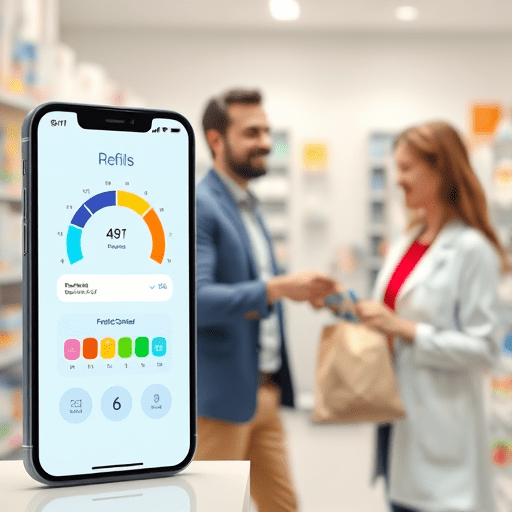
The chain partnered with a small health-tech studio to build a refill companion app integrated with their existing pharmacy management system. The core mechanic was a streak counter that tracked consecutive on-time refills for each maintenance medication. Patients earned streak badges at the 7-day, 30-day, 90-day, and 180-day milestones, with visual progress bars reinforcing how close they were to the next reward.
Three design choices made the streak system stick:
- Streaks reset gracefully, not punitively. A missed refill dropped the streak by one tier rather than zeroing it out, preserving the sense of momentum and avoiding the classic “I already failed, why try” reaction common in habit apps.
- Streaks were visible but optional. Patients could toggle the gamified view off in settings, and the chain found that more than 60% kept it on after the first week.
- Streaks unlocked tangible benefits. Reaching the 90-day milestone unlocked a free medication synchronization review, and the 180-day milestone unlocked a one-on-one pharmacist consultation, plus a small discount on over-the-counter products.
By month three of the pilot, the average patient had engaged with the streak counter 4.2 times per week, often just to admire the visual progress bar rather than out of obligation.
Adding the Social Accountability Loop
Streaks alone, however, only solve part of the motivation puzzle. Research consistently shows that behavior loops with a social component outperform solo loops by a wide margin. The chain introduced two lightweight social features that did not require patients to share anything publicly.
Care Circle Invites
Patients could invite up to three trusted contacts, often a spouse, an adult child, or a close friend, to receive a weekly summary of their refill progress. The summary did not include medication names or dosages. It simply said “Sarah is on a 12-day streak” or “Sarah refilled her prescription on time this week.” That small signal created gentle accountability without exposing private health information.
Team Streaks for Households
The second social layer targeted households with multiple patients. When two or more linked accounts maintained parallel streaks, the household unlocked a shared reward, such as a complimentary vitamin consultation or a small loyalty credit. This turned adherence from a private struggle into a family-level achievement, which proved especially effective for multi-generational households managing several chronic conditions.
The chain deliberately avoided public leaderboards, which they worried would shame lower-income patients or those managing complex regimens. The accountability stayed inside trusted circles, mirroring the way people actually share health information in real life.
The Numbers After Nine Months
The results were strong across every metric the chain tracked. The headline figure was a 23% lift in proportion-of-days-covered (PDC), the industry-standard measure of adherence for chronic medications, compared to a matched control group using only traditional refill reminders. Some other numbers stood out as well:
- Refill pickup timeliness improved by 31% for patients who activated at least one Care Circle contact.
- App retention at six months reached 58%, well above the 19% average for health and fitness apps.
- Pharmacist consultation bookings rose 42%, suggesting that gamification pulled patients deeper into clinical relationships, not just transactional ones.
- Customer satisfaction scores climbed 11 points in the post-pilot survey.
Perhaps most surprisingly, the gains held strongest among patients over 65, the demographic the chain had expected to be most resistant to a digital gamification system. Qualitative interviews revealed that older patients liked the visual simplicity of the streak counter and appreciated the gentle accountability loop with adult children who lived in different cities.
Why the Program Worked
The success of the program came down to a handful of principles that apply well beyond pharmacy. First, the gamification was layered on top of an existing workflow rather than bolted on as a marketing gimmick. Refills, pickups, and consultations were already happening; the streaks simply made them visible. Second, the rewards were small, meaningful, and tied directly to the chain’s services, which kept the economics healthy while deepening patient relationships. Third, the social loops respected patient privacy and dignity, which is where many health-focused gamification efforts stumble.
The chain also invested heavily in iteration. The first version of the app shipped with daily check-ins, which felt naggy. The second version replaced daily check-ins with weekly summaries, which felt supportive. A third version added a “pause streak” feature for patients undergoing surgery, travel, or insurance transitions, addressing a common failure mode in streak design.
Lessons for Other Pharmacies and Health Programs
For independent pharmacies considering a similar move, the chain’s experience offers a practical roadmap. Gamification does not require a massive engineering investment. Most of the gains came from simple visual design choices and well-timed notifications, not from sophisticated machine learning. The most important decision is the streak reset policy, because a punitive reset will silently sabotage the entire program.
For digital health startups, the lesson is that social accountability does not need to mean public sharing. Private, trusted circles outperformed public leaderboards in both engagement and patient comfort. For payers evaluating reimbursement models, the 23% adherence lift translates into meaningful downstream savings, particularly for conditions like hypertension and diabetes where poor adherence drives the bulk of avoidable costs.
The chain is now expanding the streak system to include vaccine boosters, continuous glucose monitor supply refills, and smoking cessation products. Each new program applies the same template: a streak counter, a graceful reset, a small tangible reward, and an optional social accountability loop. The framework is portable because the underlying psychology is portable. People are more likely to repeat behaviors that feel like progress, especially when someone they trust is quietly watching.
Conclusion
A 23% adherence lift is the kind of number that usually comes from a new molecule or a major policy change, not from a software update. Yet the pharmacy chain’s gamified refill nudges proved that small design choices, applied at the right moment in a patient’s daily routine, can move outcomes at scale. By turning pill chaos into streak-based wins, the chain gave patients a reason to keep going beyond the next refill, and gave pharmacists a new way to support the people they serve. As more care moves into the home and onto the phone, programs like this one offer a quietly powerful answer to a stubborn problem.