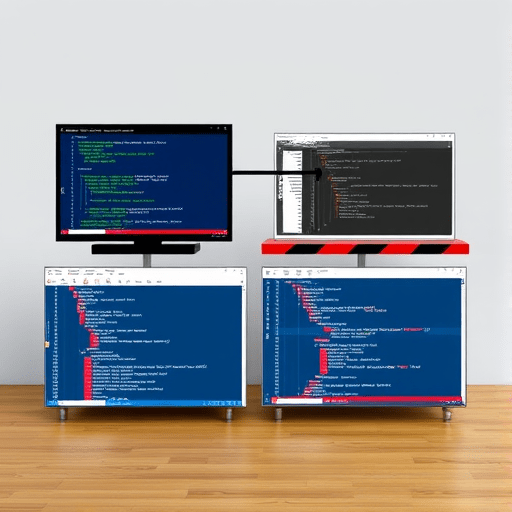
Developers working on microservices-heavy stacks in 2026 often reach for Visual Studio Code as a universal default. It is familiar, extensible, and forgiving when projects span multiple languages. Yet as service meshes grow more polyglot—mixing Go, Rust, Kotlin, Python, TypeScript, and Elixir in a single repository—VS Code’s “one editor fits all” approach starts to show friction. Toolchain conflicts, mismatched language servers, and divergent debugging protocols can turn a supposedly unified workspace into a juggling act. A more deliberate approach is emerging: matching purpose-built IDEs to specific language ecosystems, then anchoring them in remote dev containers that faithfully reproduce production parity.
Why the Universal Editor Hits Its Limits
VS Code’s extension marketplace is unrivaled, and its Remote – Containers extension set a new standard for cloud-anchored development. But universality has costs. Language servers for Rust, Elixir, and Scala each compete for memory inside a single Electron process. Debug adapters for JVM-based services and Node.js workers behave differently across host operating systems. Linting rules conflict when polyglot packages share a workspace. The result is an editor that does many things adequately rather than a few things excellently.
For teams whose architecture includes five or more services in distinct languages, context-switching between debugging sessions in heterogeneous runtimes introduces measurable drag. Cognitive overhead compounds when the same project requires simultaneously tuning a Rust WebAssembly filter, a Python ML inference worker, and a TypeScript BFF.
The Case for Language-First IDEs
Specialized IDEs are not a step backward into the era of heavyweight desktop software. JetBrains’ fleet of IDEs—GoLand, IntelliJ IDEA, RustRover, and PyCharm—now offer container-based backends through Gateway. Each provides deep refactoring, type-aware navigation, and integrated profilers tuned to a single language’s idioms. For Rust, the RustRover toolchain understands macro expansions that VS Code’s rust-analyzer handles only partially. For Kotlin and JVM-based microservices, IntelliJ’s debugger unwinds coroutines more reliably than generic adapters.
The trade-off is hardware footprint and license cost. Mitigations include per-developer licensing for critical paths only, or community editions where the language ecosystem allows.
Neovim, Helix, and the Terminal-First Renaissance
For teams that prefer terminal workflows, Neovim and the newer Helix editor deserve renewed attention. Neovim’s LSP ecosystem matured around Treesitter parsers, giving semantic awareness across Go, Rust, TypeScript, and Python from a single binary. Helix ships with LSP and Treesitter out of the box, eliminating configuration overhead. When paired with a remote dev container, the editor runs locally while compilation, testing, and debugging execute inside the same image that ships to CI.
Developers who adopt this combination often find that latency-sensitive operations—keystroke response, search, file navigation—remain crisp regardless of how heavy the containerized toolchain becomes. The drawback is a steeper learning curve and a reliance on community-maintained plugins for some niche languages.
Anatomy of a Polyglot Dev Container Stack
Remote dev containers are most powerful when the container image mirrors the production runtime. A reference stack for a five-service mesh might include:
- Base layer: A distroless or Debian-slim image with build essentials, SDKMAN for JVM toolchains, and rustup for Rust versioning.
- Language SDKs: Pinned versions of Go, Python, Node, Rust, and the JDK matching service dependencies.
- Service mesh tooling: Linkerd or Istio sidecar proxies, plus a local control plane for tracing.
- Observability: OpenTelemetry collectors, Prometheus exporters, and a lightweight Grafana instance.
- Shared caches: Mounted volumes for Cargo, Gradle, npm, and pip to accelerate cold starts.
Developers attach their preferred IDE—JetBrains Gateway, VS Code, Neovim, or Helix—to this container using SSH, Docker exec, or the editor’s native remote protocol. The editor’s UI stays responsive locally; every compile, test, and debug session runs inside the container, eliminating “works on my machine” drift.
Matching Editors to Language Ecosystems
The optimal pairing depends on which languages dominate the mesh and which developer experience metrics matter most. A few patterns observed in 2026:
Go and Rust Services
GoLand and RustRover excel at deep static analysis, integrated benchmarking, and memory profilers. For teams standardized on Go, the Go plugin in Neovim is a credible alternative once LSP performance is tuned. Rust teams frequently pair RustRover for complex refactors with Helix for quick edits.
JVM-Heavy Meshes
IntelliJ IDEA Ultimate remains the gold standard for Kotlin and Scala services, especially when coroutines, reactive streams, or Akka actors dominate. The integrated JFR profiler and Async Stack Traces cut hours off incident investigations.
Python for ML and Glue Code
PyCharm’s scientific mode, integrated Jupyter support, and CUDA-aware debugging remain unrivaled for ML microservices. Data scientists moving from notebooks to production services benefit from PyCharm’s ability to profile GPU memory alongside CPU-bound code.
TypeScript BFFs and Edge Workers
VS Code retains a strong case here. The TypeScript language server is mature, and the surrounding ecosystem—esbuild, Vite, Bun—is first-class. WebStorm is a worthy alternative for larger teams that value structural search and refactor safety.
Remote Dev Containers and Service Mesh Fidelity
One underappreciated benefit of dev containers is reproducible sidecar injection. A mesh-aware container image can spin up an Envoy or Linkerd proxy alongside each service, mirroring production routing rules. Developers can then test canary releases, retry budgets, and circuit breakers locally before pushing to staging. This was tedious in 2023 but has become straightforward with OCI-based dev environments such as GitHub Codespaces, Gitpod, and self-hosted alternatives like Coder.
For polyglot repos, monorepo build systems like Bazel or Nix pair naturally with dev containers. Bazel’s hermetic builds align with container immutability, while Nix flakes produce reproducible images regardless of the host distribution. The IDE becomes a thin presentation layer over a fully deterministic build graph.
Performance and Cost Considerations
Running a full dev container for every service in a five-language mesh demands attention to resource allocation. A practical baseline is 4 vCPUs and 8 GB of RAM per container, scaled down for read-heavy tasks. Caching layers—remote build caches for Bazel, sccache for Rust, and Gradle build cache—reduce startup time dramatically. Cloud-hosted dev environments amortize cost across teams but introduce per-user subscription fees; self-hosting on Kubernetes with virtual desktop nodes often wins at scale.
Editor choice also influences resource profile. JetBrains IDEs with remote backends consume more network bandwidth but lighter local CPU. Neovim and Helix keep local resources minimal but require careful LSP tuning to avoid stuttering inside heavy containers.
Practical Migration Path
Teams transitioning away from a single VS Code workspace should start with one service rather than the whole mesh. Identify the service whose tooling causes the most friction—often a Rust service with long compile times or a Scala service with flaky debugger sessions—and pilot a specialized IDE inside a dev container. Measure cycle time, mean time to debug, and developer satisfaction. Expand the pattern only after the pilot demonstrates measurable improvement.
Polyglot microservices do not demand polyglot pain. With deliberate editor-to-ecosystem pairing and a disciplined approach to remote dev containers, the daily development loop becomes faster, more reproducible, and far better aligned with how the services actually run in production.