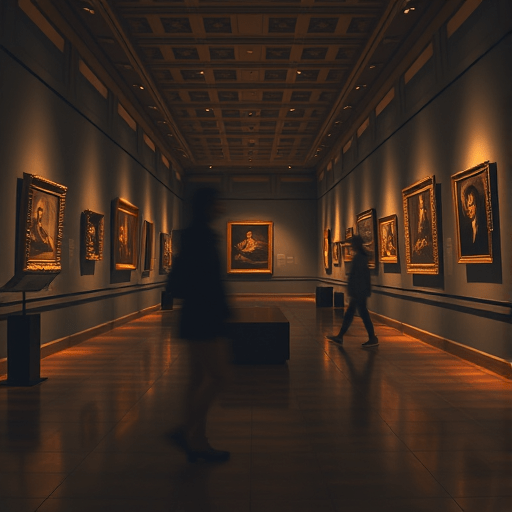
There is a particular kind of magic that settles over a European capital once the tour buses depart and the day-trippers retreat to their hotels. The light softens, the cobblestones cool, and the museums, those great temples of culture, exhale. After-hours museum tours in Europe’s hidden capitals offer a way to experience that magic directly, slipping past the daytime crowds into spaces that feel almost private. In 2026, a growing number of curators and cultural foundations are embracing the trend, opening collections for intimate evening visits that reveal sides of a city no guidebook ever mentions.
Why After-Hours Tours Are Redefining Cultural Travel
For decades, museum-going meant racing through rooms, jockeying for a view of the Mona Lisa, and leaving exhausted. The contemporary traveler wants something different: a slower, deeper connection to place. Evening tours answer that desire in ways daylight visits simply cannot.
- Smaller group sizes, often capped at eight to twelve visitors
- Access to storage rooms, conservation labs, and curator-only exhibitions
- Twilight views from rooftop terraces and rarely opened galleries
- Storytellers, historians, or the curators themselves leading the way
What was once a luxury reserved for donors has become a quietly accessible movement across smaller European capitals that never appear on the standard ten-city itinerary.
Tallinn’s Secret Wings After Sundown
Estonia’s compact capital has spent the past few years quietly reinventing its cultural calendar. The Kumu Art Museum, already a striking architectural statement in the Kadriorg Park, now offers occasional “Kumu by Night” sessions where visitors wander the Finnish and Estonian modern collections after the doors shut. Guides point out works that rarely get attention during busy afternoons: a brooding Eduard Wiiralt etching, a quietly radical piece by Kadri Aare.
Beyond Kumu, the Estonian History Museum inside the elegant Maarjamäe Palace has begun hosting twilight tours of its ethnographic wing, where folk costumes and rural artifacts are illuminated by soft amber lighting that recalls the long northern dusk. Visitors often have the run of the galleries alone, with only the soft footfall of the guide to accompany them.
Riga’s Hidden Cellars and Forgotten Salons
Latvia’s capital hides much of its artistic heritage in unexpected places. The Latvian National Museum of Art, a wedding-cake of a structure perched above the Daugava River, occasionally opens its lower galleries and storage corridors for evening visitors. Tourists who arrive in Riga for the Art Nouveau facades of Alberta iela rarely suspect that beneath the museum’s grand halls lie rooms holding Soviet-era photography, contemporary sculpture, and ethnographic textiles from the Latgale region.
One of the more intriguing after-hours experiences is the “Riga by Candlelight” tour run by a small cultural foundation. It begins in a private salon inside a 19th-century merchant’s house, where a local historian reads passages from diaries kept during the 1905 revolution, before leading the group into the candlelit halls of a closed-for-renovation gallery for an exclusive preview of restoration work.
Ljubljana’s Quiet Evenings Among the Masters
Slovenia’s leafy capital often gets overlooked, which is precisely why its after-hours offerings feel so special. The National Gallery of Slovenia, an understated neoclassical building just steps from the Parliament, has started hosting intimate twilight tours of its Slovenian Impressionist collection. The works, often overshadowed by their Viennese contemporaries, take on new depth when discussed in low light by a curator who knew the painters personally.
Equally memorable is the City Museum of Ljubljana after dark, where visitors are guided through centuries of the city’s history in rooms that once served as granaries and stables. Evening sessions often end with a glass of local wine on the museum terrace, looking out over the castle hill and the lights of the Old Town below.
Bratislava’s Castle Collections Reimagined
Across the Danube from Vienna, Bratislava remains one of central Europe’s most quietly fascinating capitals. The Slovak National Museum, housed in part within the reconstructed Bratislava Castle, has introduced evening visits that combine the historical collections with stunning sunset views over three countries from the castle ramparts.
These tours focus on less-visited wings: the treasury, the coin collection, and the rotating exhibitions of contemporary Slovak photography. Guides frequently take small groups into the castle’s restored chapel, where the acoustics of a small Renaissance organ are demonstrated during a private recital. It is the kind of cultural encounter that feels less like tourism and more like a gift from the city itself.
Sarajevo’s Living Memory After Dark
Bosnia and Herzegovina’s capital carries a complex history, and its museums handle it with care. The Historical Museum of Bosnia and Herzegovina, famous for its permanent exhibition on the 1914 assassination that triggered the First World War, now offers after-hours tours that include time in the archive rooms. Visitors can examine original documents, photographs, and artifacts not on public display, accompanied by a historian who brings nuance and context.
Sarajevo’s other quiet gem is the Museum of Crimes Against Humanity and Genocide, which occasionally opens in the evening for guided reflection tours. These are sober experiences, and they ask something of the visitor, but they also offer a way of connecting with the city’s resilience and ongoing cultural renaissance.
Practical Tips for Booking After-Hours Tours
These tours are not always advertised in mainstream travel portals. A few strategies help curious travelers find them.
- Check the cultural sections of national tourism boards, which often list evening programming
- Follow smaller museums and curators on social media, where new tours are announced first
- Email the visitor services offices directly to ask about upcoming after-hours events
- Consider traveling in shoulder seasons, spring and early autumn, when evening tour schedules expand
- Book in advance, as group sizes are intentionally kept small
It is worth noting that after-hours tours can require modest additional fees, sometimes fifteen to forty euros per person, but they are usually far less expensive than comparable experiences in Europe’s larger capitals.
The Deeper Appeal of Twilight Culture
What makes these after-hours tours so compelling is not just the absence of crowds, though that is part of it. It is the shift in atmosphere, the sense that you are seeing the city as insiders might. The galleries feel less like displays and more like inhabited spaces. The artworks, often lit in ways curators cannot justify during busy daytime hours, reveal textures and details invisible under flat fluorescent lighting.
Travelers seeking meaningful cultural encounters in 2026 are looking beyond the obvious choices. They want quieter cities, smaller crowds, and experiences that reward curiosity rather than checkboxes. After-hours museum tours in Europe’s hidden capitals deliver exactly that, offering evenings that linger in memory long after the trip is over.
Whether it is the soft hush of a candlelit gallery in Riga, the resonance of a small organ echoing through Bratislava Castle, or the careful silence of a Sarajevo archive, the experience is the same: a reminder that some of Europe’s most extraordinary cultural moments happen after the rest of the world has gone home.