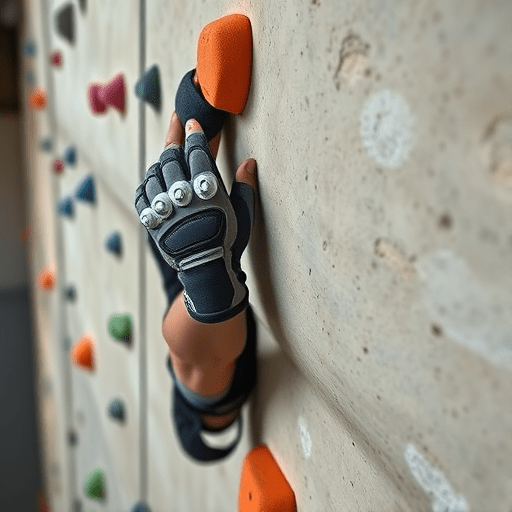
Adaptive climbing has entered a new era, and at the center of this transformation are custom 3D-printed grip gloves reshaping what paraclimbers can achieve on the wall. Across community gyms, national training centers, and remote crags from the Colorado Plateau to the cliffs of Kalymnos, athletes with limb differences, spinal cord injuries, and neurological conditions are scaling routes once thought unreachable. The revolution is not coming from a single lab or corporate sponsor; it is emerging from an open-source ecosystem where designers, climbers, and occupational therapists collaborate openly, sharing files, feedback, and iteration logs in real time. For paraclimbers and the broader adaptive sports community, these printable gloves represent something profound: agency over the gear that carries them upward.
The Limits of Off-the-Shelf Adaptive Climbing Gear
Traditional adaptive climbing equipment has historically followed a one-size-fits-all philosophy. Pre-fabricated prosthetic adapters, rigid braces, and modified mountaineering gloves often force athletes to adapt their technique to the gear rather than the reverse. Common complaints among paraclimbers include excessive wrist fatigue, pressure sores during long sessions, and difficulty transitioning between crimps, slopers, and pockets. A glove that works for a slab route may completely fail on an overhung jug haul, and commercial replacements can cost anywhere from $200 to $800, a significant barrier for athletes in regions with limited disability sports funding.
For amputee climbers, the challenge compounds at the socket interface. Standard prosthetic terminal devices are engineered for walking, running, and daily tasks, not the dynamic load patterns of a dynamic belay or a campus board repeater. The result is a persistent gap between what the human body is capable of and what current manufactured hardware allows.
Why 3D Printing Changes the Equation
Additive manufacturing brings three capabilities that traditional fabrication cannot match at the consumer level: customization, rapid iteration, and cost compression. A 3D-printed climbing glove can be tuned to an individual climber’s residual limb geometry, grip strength profile, and preferred route style. Lattice structures can be thickened under the pinky and thinned over the metacarpals. Flexible TPU joints can be embedded at the wrist for full range of motion, while rigid PETG or nylon sections provide the structural anchor for carabiner clips and chalk retention.
Material costs for a printed glove typically fall between $15 and $60 in filament, a fraction of mass-produced alternatives. More importantly, when a design fails during a max-effort attempt, the climber does not wait weeks for a replacement. They reprint overnight at a local makerspace, university fab lab, or even a home Bambu or Prusa machine, incorporating the previous session’s feedback into the next iteration. This compresses the design-test-refine cycle from months to days.
Inside the Open-Source Design Movement
The most visible hubs for these glove projects live on GitHub, Printables, and Thangs, where designers publish parametric files compatible with OpenSCAD and Fusion 360. Community repositories host dozens of variants, ranging from minimalist fingertip extensions for below-elbow amputees to full-hand dorsal shells for climbers managing hypermobility or partial hand function. Several projects have crossed 10,000 downloads, suggesting a quiet but widespread uptake among adaptive athletes, prosthetists, and occupational therapists.
Collaboration tends to follow a recognizable rhythm. A climber posts a problem they cannot solve with existing gear. A designer responds with an initial parametric model. The climber prints, tests, and returns annotated photos and load measurements. The designer adjusts wall thicknesses, infill density, or strap geometry. Within three or four cycles, a workable solution emerges, and the files are versioned and pushed back to the public repository. This crowdsourced R&D model stands in stark contrast to the closed innovation pipelines of legacy medical device manufacturers, and it is accelerating at precisely the moment when paraclimbing is gaining Olympic recognition.
Real-World Applications in Training and Competition
On the competition circuit, paraclimbers using printed gloves have begun posting results that demand attention. Athletes like the United States’ Maureen Beck and Spain’s Ricardo Hernandez have advocated openly for accessible prototyping resources, and national federations in France, Canada, and South Korea have begun subsidizing 3D printing equipment at training camps. Coaches report measurable gains in route completion rates when athletes can iterate their own gear between sessions, an advantage that traditional equipment simply cannot offer.
Beyond elite sport, community climbing gyms are beginning to host adaptive print nights, events where climbers with disabilities, students, and prosthetists gather to scan limbs, model custom interfaces, and walk out with a personalized glove before the gym closes. These events also serve as informal clinics, introducing newcomers to adaptive climbing while building the local design talent pool needed to sustain the ecosystem.
Design Considerations and Material Choices
Choosing the right filament is not a casual decision for a load-bearing climbing accessory. Most experienced makers recommend a hybrid approach: flexible TPU (typically 95A Shore hardness) for palm interfaces and wrist hinges, paired with a stiffer nylon or PETG for the dorsal frame and anchor points. Some experimental designs incorporate carbon fiber-reinforced nylon for high-stress regions, though this requires hardened steel nozzles and higher extrusion temperatures.
Infill patterns matter as well. Gyroid and cubic lattices offer excellent energy absorption, ideal for catching a dynamic move, while concentric or line patterns provide the directional strength needed for crimping. Print orientation also affects performance; aligning the layer lines along the primary load axis can double the effective lifespan of a strap attachment point. For climbers new to additive manufacturing, starting with a proven community-tested file and modifying one variable at a time is the safest path to a reliable custom glove.
Challenges That Remain
Despite the momentum, significant obstacles persist. Insurance reimbursement rarely covers 3D-printed adaptive equipment, leaving climbers to absorb material and machine costs themselves. Long-term durability data is still thin, and standardized safety testing protocols for printed climbing gear do not yet exist, a gap that organizations like the UIAA and IFSC are only beginning to address. There are also equity concerns: while a Prusa printer and a roll of TPU are affordable by global standards, they remain out of reach in many low-income regions where adaptive climbing programs are just starting to emerge.
Intellectual property questions have surfaced occasionally, particularly when commercial vendors republish open-source files with minor modifications and aggressive marketing. Most community designers have responded with strong copyleft licensing and clear attribution requirements, but the tension between open access and sustainable funding for full-time designers remains an unresolved conversation.
What This Means for the Future of Adaptive Climbing
The trajectory is unmistakable. As paraclimbing gains inclusion in major international competition calendars and as desktop fabrication becomes more accessible, the boundary between climber and gear designer is dissolving. Athletes are becoming makers, and makers are becoming athletes. Within the next several years, expect to see integrated ecosystems where a scan from a smartphone, a parametric file, and a four-hour print job replace the months-long procurement process that currently defines adaptive equipment acquisition.
Open-source grip gloves are more than a technical curiosity. They are a quiet revolution in who gets to design the tools of their own capability, and they are helping paraclimbers around the world reach holds that were once considered beyond their reach.
The custom 3D-printed grip glove movement is rewriting the rules of adaptive climbing by putting design power directly into the hands of the athletes who need it most. Through open-source collaboration, affordable materials, and rapid iteration cycles, paraclimbers are no longer waiting for solutions to arrive from traditional manufacturers; they are building them, testing them, and sharing them with a growing global community. As the technology matures and accessibility expands, these gloves stand as a powerful example of how grassroots innovation can transform a sport and empower a new generation of climbers to scale heights that once seemed impossible.