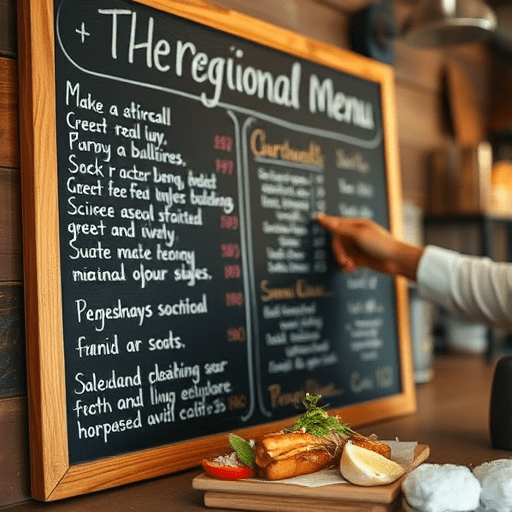
Walking into a tiny family-run eatery in a foreign country, staring at a chalkboard menu written in a script you cannot read, and pointing hopefully at what turns out to be tripe is a rite of passage for travelers. Yet decoding regional menus does not have to feel like a guessing game. With a handful of practical strategies, you can order confidently, avoid culinary surprises, and actually understand what you are about to eat, even when you do not speak a word of the local language.
Menu translation is rarely as simple as plugging words into an app. Regional dishes are often named after people, places, festivals, or cooking methods that lose their meaning when rendered literally. The trick is to learn how menus are built, not just how to translate individual words.
Why Menus Are Designed to Confuse Outsiders
Local menus are written for locals. That sounds obvious, but the implications matter. A regional menu assumes you already understand which part of the animal is being served, how spicy the chili paste actually is, and whether the dish is a snack, a main, or a communal platter. None of this is explained, because no one needs it explained.
This is also why menus in tourist areas often look nothing like menus a few streets away. Tourist menus are simplified, translated, and inflated. If you want authenticity, you need to learn the local system.
The Three Layers of a Regional Menu
Almost every regional menu in the world is structured around three layers that you can learn to spot quickly:
- Cooking method indicators: words or characters that tell you whether something is grilled, steamed, fermented, cured, or preserved.
- Ingredient categories: groupings that separate meat, seafood, vegetables, grains, and offal, often without explicit labels.
- Serving style cues: phrasing that signals portion size, spice level, or whether a dish is meant to be shared.
Once you can identify these layers, a menu written in an unfamiliar script becomes far less intimidating.
Decoding Ingredient Lists When You Cannot Read the Language
The biggest source of menu panic is the ingredient list. Regional dishes often rely on items that do not exist in Western cooking, or that carry different names depending on the region. A single ingredient can have three names within fifty miles.
Instead of trying to memorize a long vocabulary list, focus on the categories of ingredients that actually trip people up: proteins, starches, fermented elements, and aromatic bases.
Proteins: Beyond Beef, Chicken, and Pork
Travelers who order confidently only to discover they have been served intestines, blood, or cartilage often blame themselves. The reality is that regional menus treat offal as a featured ingredient, not a budget option. In many parts of Asia, Latin America, and Eastern Europe, organ meats are considered delicacies and appear under specific terms that are often mistranslated by generic apps.
Look for visual cues in the menu. Many traditional eateries display photos on the wall or have a window into the kitchen. Use these to match unfamiliar words with familiar proteins.
Starches and Bases: The Hidden Foundation of Most Meals
Rice is not just rice. Noodles are not just noodles. Regional menus often name a dish after its base ingredient, so a menu entry that looks like a single word might actually be referring to a complete dish built around a specific grain, root, or dough.
Understanding which starch dominates a cuisine helps you anticipate portion size, texture, and how filling a dish will be. For instance, a dish named after a tuber in Andean cuisine will behave very differently on your plate than one named after a noodle in a coastal Southeast Asian kitchen.
Fermented and Pungent Ingredients: The Flavor Layer You Cannot Smell Through Translation
Fermentation is where many regional cuisines reveal their true character. Unfortunately, fermentation terms are among the hardest to translate cleanly because the closest English equivalent often sounds unappetizing. Words for fermented fish, aged soybean pastes, and pickled vegetables routinely get translated into descriptions that make travelers nervous.
The solution is to learn which fermented ingredients are foundational to a cuisine rather than optional. If a region is famous for a particular fermented product, you will encounter it in many dishes. Knowing this ahead of time turns a mysterious menu item into a recognizable flavor profile.
Understanding Regional Cooking Techniques Through Menu Language
Cooking methods are the backbone of regional cooking, and the words used to describe them carry strong clues about flavor, texture, and even how long you will wait for your food. Many regional menus use verbs or adjectives that describe technique rather than ingredients.
For example, a term indicating clay pot cooking suggests slow, deep flavor and tender protein. A term suggesting wok-tossing over high heat implies quick cooking and charred edges. These same techniques are common across many regions, even when the words change.
Spice and Heat Indicators
Spice levels vary dramatically even within a single country, and menus are rarely explicit about heat. Instead, they rely on names that locals associate with specific chili varieties or peppercorn types. A dish named after a small, fiery pepper is rarely mild, regardless of what the translation app says.
When in doubt, look for menu items that include words associated with dairy, yogurt, coconut, or cooling herbs. These are often paired with spicy dishes and can serve as a safer choice.
Practical Strategies for the Restaurant Itself
Decoding regional menus is not only a literacy exercise. It is also a social one. How you approach the ordering process matters as much as what you understand from the menu.
Watch What Locals Order
One of the most reliable strategies is to observe which dishes come out of the kitchen most frequently. Popular items at a local spot are popular for a reason. If you see multiple tables receive the same dish, that is a strong signal.
Ask Targeted Questions, Not Open-Ended Ones
Open-ended questions like “What is good?” put servers on the spot and often result in safe, tourist-friendly recommendations. Targeted questions are far more useful. Asking whether a dish is spicy, whether it contains a specific ingredient you want to avoid, or whether it is meant to be shared gives you useful information and shows respect for the local food culture.
Use Visual Confirmation Before Committing
Pointing at pictures, pointing at another table’s dish, or pointing at a specific ingredient in a display case is a universal language. Combining visual confirmation with one or two menu words you recognize dramatically reduces the risk of an unwanted order.
Building a Personal Menu-Decoding Toolkit
Before you travel, spend time learning the ten to fifteen most common ingredients and cooking methods for your destination. This is more useful than memorizing a thousand words of vocabulary. Focus on the terms that appear on menus, not in phrasebooks.
Group your learning by category: proteins, vegetables, cooking verbs, and dish types. This structure mirrors how menus are written and helps you parse unfamiliar items in real time.
Finally, accept that you will still get things wrong sometimes. Even experienced travelers order surprises. The goal of decoding regional menus is not to eliminate uncertainty but to reduce it enough that you can focus on enjoying the experience rather than worrying about what you just ordered.
Conclusion
Regional menus are not designed to exclude outsiders. They are designed to serve the people who eat from them every day. By learning how menus are structured, which ingredients matter most, and which cooking techniques shape a region’s food, you can read almost any menu with confidence. The next time you face a chalkboard full of unfamiliar characters or words, you will recognize the patterns hiding in plain sight and order like someone who belongs.