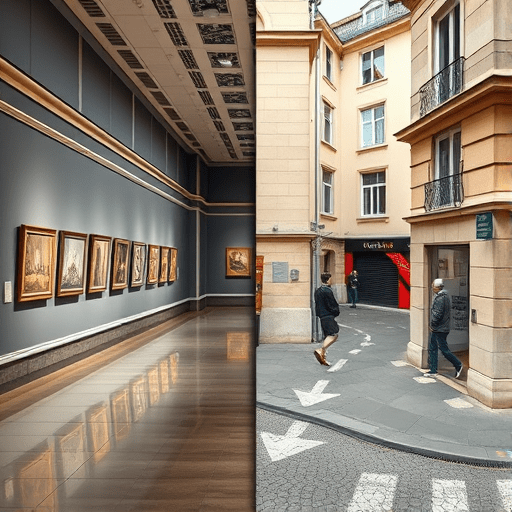
Turning museum exhibits into city walking tours might sound like a logistical puzzle, but the underlying idea is simple yet profound: the stories told indoors have physical anchors outside. The real work is in curating a path that connects each gallery to a street, a square, or a landmark that echoes the exhibit’s theme. For 2026, the most successful walking tours don’t just point out sights—they create a dialogue between the curated object and the living city. The key is to treat every museum room as a chapter, then let the urban fabric become the next page. This article walks through a step-by-step method for designing such tours, balancing historical accuracy, spatial logic, and the serendipity of the street.
Mapping an Exhibit’s Narrative to Urban Coordinates
Before you lace up your walking shoes, you need to study the museum’s permanent collection or a temporary exhibit through a spatial lens. Ask yourself: what physical locations in the city would have influenced this artwork, this historical artifact, or this scientific invention? For example, an exhibit on industrial textile production could lead you to the old factory district or a preserved warehouse street. A gallery devoted to a local painter might connect to the homes they lived in, the cafés they frequented, or the viewpoints they painted.
Use a simple spreadsheet to list each gallery or thematic cluster. Then assign a potential street or one or two specific addresses to each. The goal is not to force a one-to-one correlation, but to find a natural bridge—something that makes a visitor say, “Ah, so this is where that happened.”
Reading the City as a Gallery Companion
The most revealing matches often emerge from civic infrastructure: old signage, changes in pavement, a bridge’s structure, or the orientation of a major avenue. Look for what urbanists call “ghost layers”—traces of the past still visible in the present. A museum exhibit about municipal water systems can walk to the street where an original fire hydrant or a decorative manhole cover remains. A gallery on immigration history might connect to a street market that has served overlapping communities for decades.
Do not ignore the invisible, either. A street’s old boundaries, abandoned railway corridors, or realigned tram tracks all hold the keys to linking exhibit narratives to the physical ground. The best walking tours are built on these underlying connections, not on surface-level historical plaques alone.
Designing a Themed Route That Flows Like a Gallery Visit
Museum curation follows a sequence: a welcome space, thematic clusters, climax sections, and a quiet ending. Your walking tour should mimic this dynamic. Begin near the museum entrance or at a public square that acts as the introductory gallery. Then let each stop correspond to a room that would logically follow in the museum’s own layout. If the museum’s second gallery covers trade and shipping, your walking route’s early stops should include streets that historically connected to the port or the main market.
Avoid a purely chronological approach unless the exhibit’s own narrative is chronological. Instead, think in terms of contrasts and resonances. Pair an exhibit on technology and innovation with a street that shows both old engineering (cobblestones, wrought-iron balconies) and modern smart-city upgrades (sensor-equipped traffic lights, digital kiosks). This creates a richer conversation between the indoor artifact and the outdoor environment.
Creating a Sense of Movement Between Galleries
Use the city’s own transitions—plazas, alleys, river banks, or busy intersections—as the equivalent of gallery thresholds. A narrow alley could replicate the feeling of entering a dimly lit side gallery, while an open square offers the breather needed after a dense exhibit. Pay attention to physical energy: if the museum section is intellectually demanding, your walking route should include a longer stretch of casual walking or a small park. If the exhibit is visually immersive, the street segment should offer shallow depth of field—like a street art mural or a facade with unusual textures.
Time also matters. Note how long visitors typically spend in each gallery and match that with the time it takes to walk between your chosen urban anchors. You want the rhythm to feel organic, not like a rushed checklist. Make it possible to pause for coffee, look into a shop window, or sit on a bench—all while staying within the theme.
Weaving Digital Layers Into the Physical Walk
For the current year, a walking tour without some digital enhancement feels incomplete. But you do not need a heavy app to make it work well. A simple geolocated audio guide, a set of QR codes on printed cards, or even a low-bandwidth WhatsApp bot can serve as your interpretive layer. Each stop should have a short audio snippet or text that references both the museum object and the street context. For instance, as you stand where a 19th-century market once stood, your audio could play an archival recording of a vendor’s call, then tie it directly to a sound installation you saw inside the museum.
Consider adding an augmented reality mode that overlays historical photos onto the live street view. This is a powerful way to make the museum’s collection feel current and relevant to the everyday commuter. But keep it optional—some visitors prefer a purely analog experience. The goal is to deepen, not complicate, the encounter.
Designing for Spontaneous Discovery
One of the best aspects of a museum-based walking tour is its versatility. You can design the route as a self-guided map that visitors pick up at the museum’s info desk, or as a live guided experience. Both formats benefit from a few moments of directed wandering. Instead of simply saying, “turn left at the old bank,” invite visitors to search for a specific detail, such as a particular carved face above a doorway or the color of a tile that appears in a painting shown in the gallery. This turns the whole city into a scavenger hunt, directly linking the exhibit’s visual language to the streetscape.
For live tours, train your guides to be “connectors” rather than lecturers. Their job is to help visitors see how the museum’s objects gain new meaning when placed back into their original spatial context. A guide might say, “Look at this bronze sculpture from the exhibit—now notice the way the balcony rails across the street repeat the same curve. That’s no coincidence; both designers drew from the same architectural pattern book.”
Testing and Refining the Walking Tour
After designing your route, do a dry run in both good and poor weather. Walk the exact path you propose, timing each segment and noting any obstacles—construction, steep gradients, noisy intersections, or closed sidewalks. Check if the narrative pacing works. Are you spending too much time describing a building’s history before people have even located it? Consider writing micro-prompts that direct attention to the current sensory experience: the smell of a bakery, the vibration of a tram, the shade pattern from an old tree.
Collect feedback from a small pilot group. Ask them to identify which gallery-to-street linkage felt strongest and which felt forced or confusing. Use that input to adjust both the route and the interpretive content. A walking tour is never finished; it evolves with the city itself. New businesses open, old buildings are restored, and museum exhibitions rotate.
Building Partnerships for Greater Depth
You do not have to construct this tour alone. Local historical societies, urban planning departments, and small business associations often have missing pieces of the puzzle. A neighborhood café owner might know a story about the building’s basement that authentically connects to a museum’s domestic-life exhibit. A public librarian can point to old street maps or municipal records that help you make more accurate spatial claims.
These collaborations also increase the chance of the tour being picked up by tourism boards or cultural newsletters. When a walking tour links museum galleries to real streets, it naturally generates interest beyond the museum’s own audience. The diversity of partners gives your route credibility and makes it feel woven into the city’s living fabric.
Conclusion
Turning museum exhibits into city walking tours is less about inventing new attractions and more about uncovering the existing threads that bind a collection to its physical environment. By mapping each gallery to a corresponding street, treating the route as a curated sequence, and layering in light-touch digital tools, you can create an experience that makes both the museum and the city more legible. Visitors walk away with a deeper understanding of how art, history, and everyday life intersect—and with a renewed curiosity for the places they thought they already knew.