Every year, a fresh wave of supply chain blockchain tracking pilot announcements promises frictionless visibility, tamper-proof data, and instant counterparty trust. Yet by 2026, the noise-to-signal ratio has never been worse. Some pilots quietly scale into production infrastructure, while token-powered projects evaporate along with their treasury. This teardown puts one working tracking pilot under a microscope and contrasts it with a token that burned investor cash without ever proving the core use case.
The 2026 Supply Chain Blockchain Reality Check
The industry has stopped asking “does blockchain belong in supply chain?” and started asking “which blockchain designs deserve a seat at the shipping counter?” The answer is increasingly boring: no tokens, no cryptocurrency price loops, and no giant consortiums waiting for permission. The winners are integrating with existing systems like RFID tags, IoT sensors, and ERP backbones. The losers are still trying to convince us that a distributed ledger alone flips a logistics company into a fintech unicorn.
Let’s look at two very different attempts. One is a live freight tracking network run by one of the world’s largest retailers. The other is a Swiss temperature-tracking startup whose ICO became a cautionary tale.
Case Study One: A Working Tracking Pilot — Walmart Canada’s Freight Network
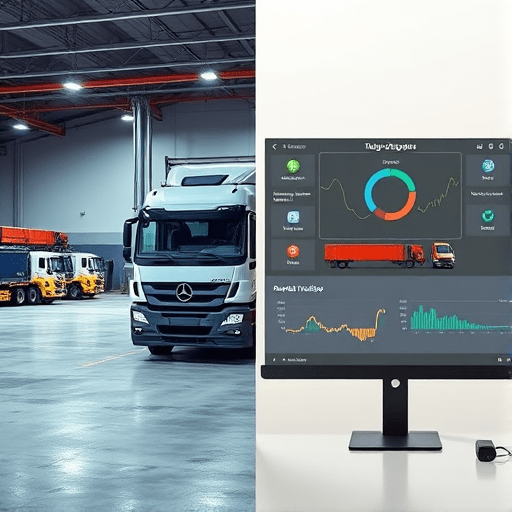
Walmart Canada does not call its blockchain project a pilot anymore. It calls it “a core part of our logistics infrastructure.” Built with DLT Labs, the system tracks freight movements, automates invoice settlement, and gives carriers a real-time view of load status. Launched in 2021 and steadily expanded, it now processes millions of loads across a growing network of third-party trucking partners.
What Made It Different
First, no token. The value lies in shared data, not speculative assets. Walmart Canada and its carriers write shipment status, proof of delivery, and payment obligations to a permissioned ledger. Smart contracts automatically reconcile freight bills against telematics data from IoT devices on trailers. In the past, this reconciliation involved phone calls, emails, and a dispute process that could stretch weeks. Now, discrepancies are flagged and resolved in near real-time.
Why It Scaled Beyond the Pilot Phase
The system did not try to track every micro-step in the cold chain or build a complex digital twin. It focused on one business pain point: freight invoice disputes. That narrow scope allowed early wins. Carriers came on board because they got faster payment, not because they were promised a token or dashboards with flashy 3D maps. The blockchain layer became invisible, like a better API. That is the hallmark of a working pilot: the technology disappears under the use case.
Case Study Two: The Temperature Tracking Token That Burned Cash — Modum
Modum was a Swiss startup founded in 2017 with ambitions to bridge IoT and blockchain for pharmaceutical cold chains. The premise was straightforward: sensors measure temperature during drug shipment, data is written to the Ethereum blockchain, and pharma buyers can verify that goods never broke the cold chain. Modum raised roughly $13 million through an ICO. The token, MOD, was supposed to facilitate data exchange between senders, carriers, and receivers.
The ICO Promise
The whitepaper painted a future where a tokenized payment network would reward participants for sharing sensor data. Early marketing emphasized the openness of Ethereum and the potential for token value to rise as adoption grew. In practice, the pharma customers did not care about tokens. They cared about regulatory compliance, audit readiness, and whether the solution could plug into SAP or Oracle. Modum spent years and significant cash trying to explain why a token was even necessary, while also developing its physical sensor hardware and cloud dashboards.
Where the Money Went Wrong
By 2020, Modum had publicly pivoted away from its ICO model, admitting that the token was not required for the business to function. The MOD token lost most of its secondary-market value, and the company re-focused on traditional software subscriptions. Investors who bought the token during the hype effectively funded the development of a conventional SaaS product that could have been built without the token or the blockchain layer. The cargo tracking and temperature monitoring that did exist worked, but they were not meaningfully better than existing solutions with encrypted, auditable databases.
The token was not burned because of malicious intent. It was burned because the use case did not demand a token. Every dollar spent on token economics, smart contract audits, and exchange relationships was money that could have gone toward sensor integration or UI improvements. In 2026, Modum serves as an efficient lesson: a supply chain blockchain tracking pilot can be technically sound, yet still be a financial failure if it is grafted onto an unnecessary economic layer.
The Real Difference: Integration, Not Tokens
Comparing these two case studies reveals a clear pattern. The Walmart Canada project succeeded because it attached to existing freight settlement flows and offered immediate ROI through fewer disputes and faster carrier payments. Modum struggled because it tried to force a token into a sector that already has legal contracts, banking rails, and regulatory standards.
Another critical difference: governance. Walmart Canada’s network is permissioned, with a small set of known participants. Modum’s early vision of an open Ethereum network where anyone could join created friction. Enterprises in supply chain do not want phantom actors; they want legally bound partners. Permissioned blockchains with strong identity management align with how freight and pharma actually operate.
How to Vette a Supply Chain Blockchain Pilot in 2026
Before you get excited about a new pilot announcement, run it through this checklist:
- Does the token have a reason to exist? If the supply chain process already has invoices, purchase orders, or bills of lading, a token is usually a step backward. Ask what unique token utility the project can prove in a live business environment.
- Is the pilot past proof-of-concept phase? Real pilots have named enterprise users, production systems, and metrics like number of shipments processed. If every success story is “we simulated a transaction in a test net,” that is not a pilot.
- Who pays for the integration? A working tracking pilot cuts costs or increases revenue for at least one participant. If the project cannot point to a line item on a CFO’s spreadsheet, it’s still a science project.
- Can the data survive the luxury of a public chain? Public blockchains expose data to every node. That is often unacceptable for commercial contracts. Look for privacy-preserving designs or permissioned frameworks that respect confidentiality.
- What is the exit ramp? If the distributed ledger were switched off tomorrow, what would stop working? The best pilots make the solution so valuable that the entire trading ecosystem demands it stay on.
Conclusion
The supply chain blockchain tracking pilot landscape no longer needs more whitepapers. It needs more Walmart Canada examples and fewer Modum token exercises. A working pilot is not defined by cutting-edge cryptography or a rising asset price. It is defined by whether the freight moves faster, the invoices get paid sooner, and the sensor data actually carries legal weight. In 2026, the smartest adoption teams are those who ignore the token theater entirely and measure success by the same metrics they always have: cost per shipment, dispute resolution time, and trust between known parties.