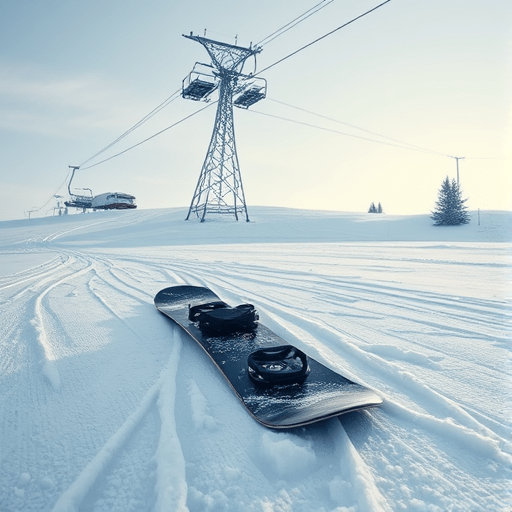
You strap in, the chair bumps you from behind, and as you lift off, you feel a sudden lightness at your feet. You look down. Your snowboard fell off the chairlift. It’s a heart-sinking moment that happens to nearly every rider at some point, but the way you react in the next sixty seconds determines whether it becomes a minor story or a major incident. Understanding the proper steps for a snowboard rescue is critical, especially when you are dealing with icy landings and the potential for a runaway board. Let’s walk through exactly how to handle this stressful situation with confidence and safety.
Why Boards Slip Off Chairlifts (And How to Prevent It)
Prevention is always better than a rescue. Most boards fall because of a simple oversight during the chaos of loading. You might be fumbling with your pass, adjusting your goggles, or simply distracted by the rider next to you. Understanding the root causes helps you build better loading habits.
Equipment Check: Bindings, Leashes, and Step-Ons
Your binding setup plays a massive role in board retention. Traditional strap bindings are reliable, but they fail when riders don’t ratchet down their boots tightly before getting in line. More importantly, the snowboard leash debate is coming back in style. While many resorts don’t enforce leash laws anymore, attaching a high-quality coil leash from your bindings to the chairlift frame or your front leg adds a failsafe that veteran riders swear by. In 2026, modern step-on bindings offer incredible convenience, but they require a clean boot-to-binding interface. If snow or ice packs into the cleats, the locking mechanism might not seat fully, making it easier for the board to detach if you bump the release lever while loading.
The Setup: Positioning Your Board on the Rack
When you sit down, the weight of your board should rest securely on the footrest. Many beginners make the mistake of letting the board hang too far forward or backward. If the chair passes a wooden tower or a snowgun, a misplaced board will get knocked clean off. Keep your board parallel to the ground and centered on the rest. If you’re riding with a buddy, avoid crossing your boards, as the friction can push one of them loose.
The Immediate Response: Don’t Jump, Communicate
Your instincts will scream at you to jump or reach for the board as it falls. Do not do this. Leaning over the side of a moving chairlift throws off the balance of the entire chair and puts you and your companions at risk of falling. The second you realize your snowboard fell off the chairlift, vocalize it. Shout loudly and clearly to the lift operator below. Signal with your hand which side it dropped on.
Lift operators are trained for this. They will immediately slow the chair or stop it entirely to prevent anyone below from getting hit. They will also note the exact tower number or terrain feature where your board landed. Keep your eyes fixed on the drop point for as long as you can safely do so—this gives you a visual marker for when you survey the slope from the top.
Step-by-Step Rescue: Retrieving Your Board
Once you reach the top of the lift and unload safely, you need a structured rescue plan. Do not just blindly hike or ride down to the first spot you think you saw. Follow these steps to ensure a smooth recovery.
Assessing the Landing Zone and Icy Conditions
First, check the terrain below. If it hasn’t snowed in a few days, the groomed runs can be rock-hard. When your board hits an icy landing, it doesn’t just stop—it slides. It can easily travel 100 to 200 feet down the fall line, sometimes over the edge of a cat track or into a gladed area. Look for where it landed and project its likely path. Take note of any hazards in that zone, such as exposed rocks, snowmaking equipment, or rope lines.
Take the Next Chair Down (Don’t Hike)
As tempting as it is to drop your other board and hike down, walking down a steep run in ski boots is treacherous. The safest and fastest way back to your gear is to ask the lift operator if you can take the next chair back down. Resorts typically allow riders to ride down for free when retrieving dropped gear. Alternatively, you can board down yourself—if you’re confident riding with one foot strapped in—but always follow a green or easy blue run to reach the bottom safely.
Using a Board Retrieval Hook or Pole
Many resorts now install board retrieval hooks at the base of lift towers, especially in areas where drops are common. These long aluminum hooks allow you to snag your board from the safety of the cat track without stepping onto a steep or icy pitch. If you have telescoping ski poles, you can sometimes use the basket to drag the board back toward you. For the 2026 season, some resorts are even experimenting with heavier, magnetic retrieval rods to give riders better leverage on bulletproof ice.
Dealing With a Runaway Board on the Slope
There is a significant difference between a board that fell in a safe, open area and one that takes off down a busy slope. A runaway snowboard is essentially an unguided missile traveling at speeds up to 50 mph. Your immediate duty is to warn everyone downhill.
Warning Others
Yell at the top of your lungs: “Runaway board!” This alerts skiers and riders below to brace themselves or take evasive action. If you have a whistle, use it. Make eye contact with anyone downhill and point aggressively in the direction of the board until it comes to a stop.
What NOT to Do
Never attempt to stop a runaway board by stepping on it, grabbing it, or intercepting it with your own body. The edges of the board are extremely sharp, and the impact force is strong enough to break bones. Do not chase it blindly. You may lose sight of your own surroundings and collide with a tree or another rider. Let resort safety nets, snow fences, and the natural terrain slow the board down. Most of the time, it will eventually flatten out in a meadow or crash harmlessly into a snowbank.
Modern Gear and Clever Hacks for 2026
We have more tools than ever to minimize the damage of a dropped board. One of the best low-cost upgrades for the 2026 season is adding a Bluetooth tracker, like an Apple AirTag or Tile, underneath your binding baseplate. If your board slides into dense trees or gets buried in deep powder, you can open your phone and pinpoint its exact location instantly. This saves you from a massive search effort.
Additionally, newer bindings from major brands are incorporating automatic locking mechanisms that engage when the board is placed flat on the chairlift rest. While they won’t prevent a fall if the board is knocked sideways, they significantly reduce the chance of accidental release. If you’re purchasing gear this year, ask your local shop about bindings with a reinforced chairlift lock feature or look into high-end step-ins with redundant locking pins.
Conclusion
Having your snowboard fall off the chairlift is a stressful event, but it is entirely manageable when you stay calm and follow a proven rescue protocol. By communicating with lift operators, assessing the terrain for icy landings, and knowing how to safely handle a runaway board, you can retrieve your gear and get back to riding without adding injury to embarrassment. This skill is just as essential as learning to turn. Master it, and you’ll be ready to handle any mishap the mountain throws your way.