Every content team knows the tension: drafts are messy, evolving, and half-formed, while published articles need to be stable, queryable, and unchangeable. The “draft as NoSQL, publish as SQL” content database pattern resolves this by giving each stage of the content lifecycle a data model that matches its true nature — a JSON document for the drafting phase, and relational rows for the published phase. As AI-assisted editing generates ragged intermediate states and multi-format distribution demands strict referential integrity, this hybrid pattern is becoming one of the most practical ways to build editorial pipelines that are both flexible and accountable.
The Dual Personality of Every Content Asset
Content has an identity crisis. In its draft state, it is exploratory: editors add notes, rearrange sections, experiment with headlines, and leave comments scattered next to half-finished paragraphs. Structurally, a draft is a snowflake — every piece may have a different shape. The moment content publishes, however, it changes character. It becomes a contractual artifact that must be traceable, attributable, and immutable.
Expecting one database schema to serve both personalities is where most CMS designs go wrong. Locking drafts into rigid relational schemas slows iteration, while leaving published content in schema-less JSON makes it impossible to enforce integrity or audit changes. The resolution is not to choose one model, but to use both — each where it belongs.
NoSQL Drafts: Flexibility Without Schema Guilt
Drafts are the natural home for JSON. A document model treats content as a rich, nested structure, exactly how an editor thinks of it. The draft stage can carry arbitrary fields: a proposed meta description, an alternate lead, a quote from an interview that hasn’t been recorded yet, or a placeholder block for an image still in design. None of this needs to conform to a strict definition.
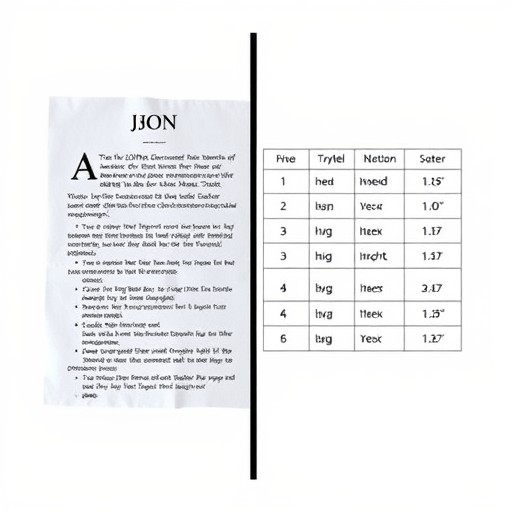
Concretely, a draft stored in a JSON column might look like this:
{ “title”: “…”, “sections”: […], “editorNotes”: “…”, “pendingReviewers”: [“…”, “…”], “aiSuggestions”: […] }
Storing this as a JSONB document gives the editorial backend three clear advantages:
- Schema evolution is free. If an editor decides to add a “factCheckStatus” field mid-project, no migration is needed.
- Incomplete data is welcome. Half-built drafts don’t have to satisfy NOT NULL constraints or foreign keys.
- Spikes and iterations stay isolated. Experimental branches never touch the integrity of anything already live.
This is the “draft as NoSQL” half of the pattern: give creative chaos an elastic home that won’t suffocate it.
SQL Publications: Rows That Don’t Lie
Published content is a promise. It is displayed to readers, cited by other sites, indexed by search engines, and sometimes used as evidence in legal or compliance contexts. Once that promise is made public, the underlying data must be protected from accidental or unauthorized change.
Relational rows provide exactly that protection. When a draft is published, it is transformed into a set of normalized rows: a posts table, an authors table, a post_versions table, and so on, linked by foreign keys and governed by constraints. The published row is immutable in the sense that updates do not modify it in place; instead, a new version is created and the old one remains archived. This gives you:
- Referential integrity. You can’t delete an author who has published posts, and every published post must reference an existing author.
- Clear version history. Each publication becomes an append-only event, providing a trustworthy audit trail for time-stamped corrections.
- Powerful querying. Editors can run analytics — most-read authors, top categories, engagement by publication date — with clean, indexed SQL.
- Programmatic control. Row-level security in PostgreSQL can restrict who edits or deletes published rows.
This is the “publish as SQL” half: convert the messy draft into a trustworthy, relational representation at the exact moment it goes live.
The Handoff: From JSON Document to Relational Row
The heart of this pattern is the handoff — the step that walks a draft through validation and into relational form. It is best implemented as an idempotent transformation pipeline with three stages:
Validation. The JSON draft is checked against a formal schema. Required fields — title, slug, author — must exist; types must match; internal links must be resolvable. This is the moment when the loose draft finally earns its stripes.
Normalization. Nested draft fields are flattened and distributed into relational tables. Tags, authors, and related content become join rows. The primary document body, perhaps still stored as a text column or as a JSONB payload within the row, is attached to the canonical post row.
Version creation. Instead of overwriting a previous row, the pipeline inserts a new version row and points the publication index at it. The old row remains untouched, fully intact for historical queries.
Run this pipeline as a transaction, and publication becomes atomic: a draft either becomes a published row in its entirety, or it fails validation and stays a draft. There is no half-published state.
The Toolchain Today: JSONB and Event-Driven Handoffs
This pattern is no longer a manual integration between separate databases. A single PostgreSQL instance handles both sides of the equation natively: JSONB columns store the drafts, whereas standard relational tables store the publications. This removes the need for dual-database synchronization and makes the handoff a straightforward SQL operation.
Modern ORMs like Prisma and Drizzle make it easy to model this dual personality. You can define a Draft model with a JSON field and a Post model with relational columns, then write a clean service-layer function to perform the handoff.
For larger platforms, the pattern fits naturally into event-driven architecture. The publication handoff emits an event to a message queue, triggering downstream processes — CDN invalidation, search index updates, RSS regeneration — without blocking the editorial workflow. The draft remains available for further edits, so a revised draft can be re-published as a new row version without corrupting the historical record.
When the Pattern Earns Its Keep
The hybrid pattern is not for every blog. But it becomes genuinely valuable in a handful of production scenarios.
Multi-Format Publishing
If the same content is distributed as a web page, an email digest, a podcast description, and a data feed, the published rows have to be rock-solid and the relationships between them explicit. Relational tables guarantee that all formats point to the same canonical version.
AI-Assisted Editorial Workflows
AI-generated drafts are inherently unstructured: model outputs need human revision, fact-check annotations, and provenance metadata. JSONB works beautifully as a holding area for this intermediate state — editors can inspect and edit raw AI output as a document, run fact-checking tasks against it, and only publish what passes the review gate.
Regulated and High-Stakes Content
Financial disclosures, medical content, and enterprise documentation all require a precise audit trail. The SQL side of this pattern delivers exactly that: every published row is versioned, timestamped, and linked to the editor who approved it. Drafts can be as messy as they like, but the published record stays legally defensible.
Conclusion
The content database pattern of drafting as NoSQL and publishing as SQL finally respects what content actually is: a chaotic creative object until the moment it goes live, and a serious data asset after. By using JSON documents for the flexible work that comes before publication and relational rows for the immutable record after it, you get pipelines that encourage creative freedom without compromising reliability. It’s a pattern worth adopting for any content system where both editorial speed and long-term trust matter.