PHP Fibers vs Node.js Streams for high-volume file processing is no longer a niche benchmark conversation. In 2026, as more teams build ETL pipelines, media transcoders, log shippers, and bulk data validators, the real question is not which runtime can read a file faster. It is how the performance and coding-maintainability trade-off for CPU-bound tasks should shape your architecture. Both approaches let you process files in chunks rather than loading everything into memory, but they distribute control and responsibility in very different ways.
Consider a typical high-volume file task: ingest a multi-gigabyte CSV, normalize each row, validate email or IP fields, hash sensitive values, and write the cleaned data to a new file. If the heavy work is simply waiting on a database or an external API, both Node.js streams and PHP fibers provide useful concurrency. The picture changes when the bottleneck is actually the transformation logic itself. Expensive JSON validation, regular expressions, encryption, compression, and complex parsing all shift the load from disk I/O to CPU cycles. That shift exposes the strengths and weaknesses of each programming model.
Why CPU-Bound File Processing Changes the Rules
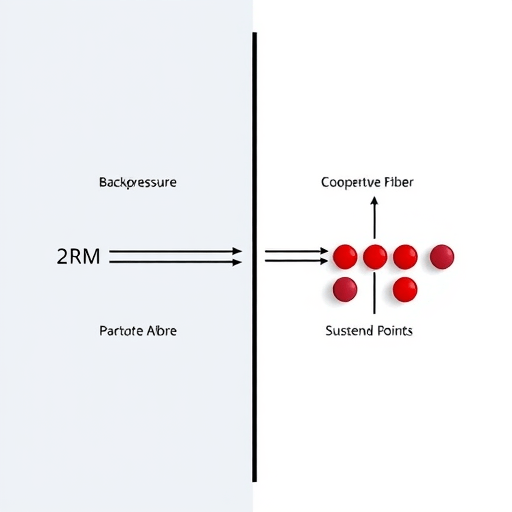
Streams were designed to handle backpressure. A slow consumer can signal a fast producer to pause, which prevents memory from filling up when files are huge. In a traditional I/O-bound pipeline, this works beautifully: the process remains responsive while bytes are moving. But when each chunk of data requires significant CPU work, the stream abstraction does not shield the event loop from that cost. It simply ensures the chunks arrive in bounded buffers. Node.js can still run only one JavaScript operation at a time in a single thread, and a CPU-heavy transform can block every other pending task.
PHP fibers, on the other hand, are a cooperative concurrency primitive. A fiber can suspend itself in the middle of a loop, allowing another fiber to run, and later resume exactly where it left off. This makes it possible to write code that looks very close to a synchronous file-processing script. However, fibers are not a mechanism for parallel execution either. A CPU-heavy loop inside a fiber still occupies the single PHP process until it chooses to suspend. The maintainability advantage is real, but the performance ceiling is similarly limited by one core.
Node.js Streams: Backpressure Is Not CPU Safety
The core value of Node.js streams is composability. You can chain a readable source, one or more transform streams, and a writable destination into a single pipeline. That pipeline handles backpressure surprisingly well. When the destination is slower than the source, the internal buffer stops growing. This is excellent for high-volume file processing where memory safety is critical.
But a transform stream’s callback runs in the main event loop. If that callback performs heavy CPU-bound work, the entire process becomes unresponsive. Other requests, timers, and even the file stream’s own internal events wait until the transformation is done. The backpressure mechanism cannot pause the CPU; it only pauses the flow of data. You can mitigate this by splitting work across worker threads, but then you are no longer relying on streams alone. You have to manage message passing, thread pools, and result ordering, which reintroduces complexity that the stream abstraction initially removed.
PHP Fibers: Linear Code With Cooperative Scheduling
PHP fibers offer a different entry point. Instead of pushing data through callbacks, you can write a function that reads a chunk, processes it, and calls Fiber::suspend() to yield control. A simple scheduler can then resume another fiber that is working on a different file or a different stage of the same file. The resulting code reads like a traditional imperative loop, which is often easier to reason about when business rules are complex.
The maintainability benefit is especially visible in error handling. With streams, errors are emitted as events and must be captured by the pipeline callback or by attaching error handlers to each stage. With fibers, the code can use familiar try/catch blocks around the Fiber::start() and Fiber::resume() calls. If a row has a bad date format or a missing field, you can catch that exception in the same place where the transformation logic lives. That makes a long-running file process much easier to debug.
Still, fibers require discipline. Because scheduling is cooperative, a fiber that gets stuck in a long-running computation can block the entire process until it decides to suspend. If you forget to yield at strategic points, your throughput may appear fine, but other concurrent tasks will starve. The ability to write synchronous-looking code is also a temptation to perform too much processing in one chunk, which can negate the responsiveness benefits of cooperative scheduling.
PHP Fibers vs Node.js Streams: Performance Considerations for CPU-Bound Tasks
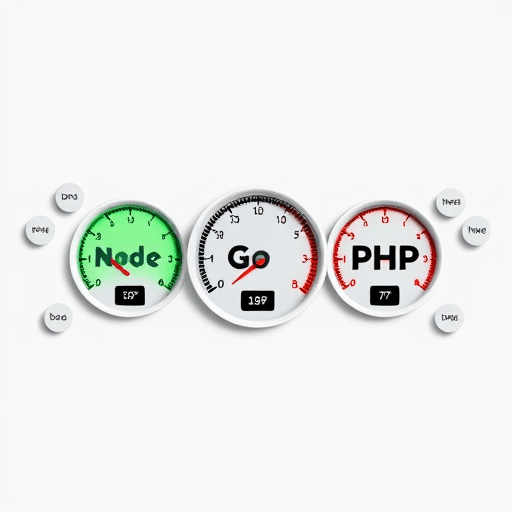
When comparing raw performance for CPU-bound tasks, the runtime difference is often smaller than expected. Both PHP and Node.js are ultimately competing for a single thread unless you deliberately scale out with additional processes or worker threads. The practical performance question is not “which is faster per operation?” but “how well does the model behave under sustained load?”
Node.js streams have an advantage in mixed workloads. If your file processing stage does not spend all its time computing, but also makes asynchronous calls to a database, reads from object storage, or waits on network responses, the event loop can interleave those I/O operations efficiently. Streams were built for that kind of interleaving. The main risk is that a small amount of CPU-heavy code inside a transform callback can stall the entire pipeline.
PHP fibers can be a better fit when the transformation logic is deeply nested and condition-heavy. You can write the file processor as a collection of functions that share state through closures or class properties, and then let the scheduler decide when to yield. This can lead to fewer context switches than a stream implementation, where each chunk must pass through many small callback functions. For CPU-bound work, fewer transitions between pieces of code means less overhead and more predictable cache behavior, although the difference may be modest in real-world applications.
Memory behavior also differs. Node.js streams keep buffers small by default and rely on backpressure to prevent uncontrolled buffering. PHP fibers each have their own stack, which means a large number of concurrently active fibers consumes memory even when they are not processing data. For high-volume file processing with many files open simultaneously, this can matter. For a single large file, the memory profile of fibers and streams is similar because both operate chunk by chunk.
Coding Maintainability: Streams vs Fibers for High-Volume File Processing
The trade-off that teams often underweight is maintainability. A Node.js stream pipeline is elegant when the operations are generic and reusable: parse, transform, filter, compress, write. But the moment you add domain-specific rules, error recovery, or conditional branching, the stream abstraction starts to feel too granular. You end up building custom transform classes with awkward state management and complex callback flows.
PHP fibers allow a more direct representation of the problem. If a file must be processed in stages, you can write a loop that reads the next chunk, validates it, applies a business rule, and decides whether to write it out. The code reads like a checklist, which makes it easier for a new developer to follow. This is not a trivial advantage. In long-lived data processing applications, the majority of total cost is not initial performance but future modifications. When the file format changes or a new validation step is added, a linear fiber-based implementation is often simpler to update.
However, PHP fibers can also be misused. If you try to emulate every stream feature inside fibers, you may recreate the same callback-based complexity without the ecosystem support that Node.js streams provide. The key is to use fibers only where they improve control flow, not to force every data operation through a custom fiber scheduler.
Practical Guidance for Choosing Between Streams and Fibers
There is no universal winner in the PHP Fibers vs Node.js Streams comparison. Instead, the right choice depends on the shape of your workload and your team’s tolerance for different kinds of complexity.
Choose Node.js streams when:
- Your pipeline is primarily I/O-bound and the CPU work per chunk is small.
- You want to use a rich ecosystem of stream-compatible packages for compression, encryption, and parsing.
- You need sophisticated backpressure handling without manually managing buffer sizes.
- You can isolate CPU-heavy work into worker threads or a separate service.
Choose PHP fibers when:
- The file processing logic involves many conditional rules and complex error recovery.
- Your team is more productive writing straightforward, synchronous-style code than composing stream callbacks.
- You are processing a single large file or a small number of files and need to coordinate stages without introducing an async framework.
- You have the ability to run multiple PHP processes if total CPU throughput becomes the bottleneck.
Conclusion
Neither PHP fibers nor Node.js streams eliminate the fundamental constraint of CPU-bound file processing: a single thread can only do so much work per second. Node.js streams excel at managing I/O backpressure and composing reusable data transformations, but they make CPU-heavy code more likely to block the event loop. PHP fibers make complex file workflows easier to read and maintain, yet they still require careful yielding and additional processes for true CPU parallelism. The best engineering decision is to separate I/O concurrency from CPU parallelism, choose the abstraction that matches your team’s mental model, and plan for horizontal scaling when the data volume outgrows a single core.