Integrating pharmacogenomics with consumer DNA kits for dosing is no longer a hypothetical exercise. Patients regularly arrive at appointments with raw data files from 23andMe, Ancestry, or other direct-to-consumer services, asking whether their genes explain medication failures, side effects, or opioid sensitivity. For clinicians, the answer is neither “use it blindly” nor “ignore it completely.” The safer, more practical route is a structured clinical decision support workflow that treats consumer genetic data as a provisional but valuable input, translates it into pharmacogenomic phenotypes, and uses it to drive dosing and drug-selection guidance until confirmatory testing can be completed.
Why Consumer DNA Data Demands a Pharmacogenomic Dosing Workflow
Consumer genomics platforms are excellent at genotyping common variants, but they are not designed for clinical prescribing decisions. Their raw reports list variants such as CYP2C19 *2, CYP2D6 *4, or SLCO1B1 rs4149056, but they rarely provide an evidence-based dosing plan. Moreover, microarrays used by consumer kits do not always detect copy-number variants, rare structural changes, or hybrid alleles that matter for enzymes like CYP2D6. The gap between a variant call and a prescription creates risk—and a clinical decision support workflow is designed to close that gap.
A pharmacogenomic dosing workflow starts with the medication itself. Not every drug has enough evidence to act on, even if the patient has a genetic variant. The workflow therefore filters drug-gene pairs through established sources: CPIC guidelines, FDA labeled pharmacogenomic information, and professional society recommendations. For a patient who is prescribed clopidogrel, a CYP2C19 intermediate or poor metabolizer phenotype is actionable. For a patient taking a beta-blocker with a CYP2D6 variant, the evidence is weaker and the workflow should reflect that uncertainty.
The Anatomy of a Clinical Decision Support Workflow for Consumer PGx Data
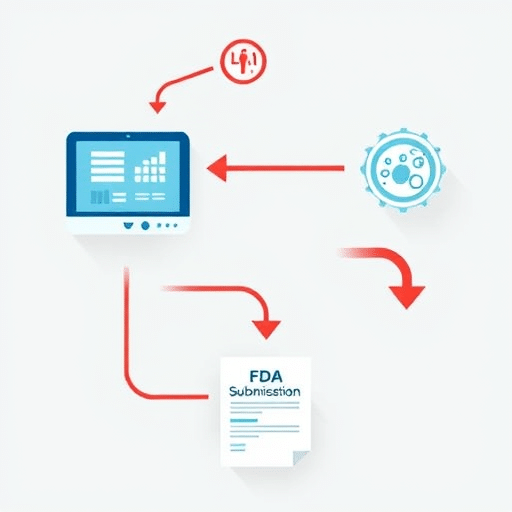
To integrate consumer DNA results into prescribing without creating alert fatigue or liability, the workflow must include several core components:
- Data intake and consent: Patients upload their raw genotype file or enter variants from a direct-to-consumer report. The workflow documents the source, the date, and the fact that the data have not been confirmed in a CLIA-certified laboratory.
- Variant mapping and quality control: The workflow maps rsIDs and variant calls to canonical star alleles, applies genotype quality thresholds, and flags missing or ambiguous calls.
- Phenotype assignment: Using validated translation tables, the workflow calculates activity scores and assigns phenotypes such as CYP2C19 poor metabolizer, CYP2D6 intermediate metabolizer, or SLCO1B1 decreased function.
- Guideline retrieval: The workflow connects the phenotype to medication-specific CPIC or DPWG dosing recommendations, including alternate therapy and contraindication warnings.
- CDS presentation: The result appears as a non-interruptive or interruptive alert in the electronic health record, depending on the severity and the strength of the evidence.
This structured architecture is what separates “integrating pharmacogenomics with consumer DNA kits for dosing” from simply reading a report. It turns raw data into a reproducible, auditable prescribing action.
A Step-by-Step Clinical Dosing Workflow From Raw Data to Dose Change
Imagine a patient who has a consumer DNA file, is about to start voriconazole, and has a CYP2C19 *2/*2 result. A well-designed clinical decision support workflow would move through the following steps:
- Trigger: The prescriber places an order for voriconazole, and the CDS system recognizes that a pharmacogenomic observation already exists for this patient.
- Context check: The system verifies that the prior result is related to a drug-gene pair with strong evidence and that no conflicting genotype has been entered from a clinical lab.
- Interpretation: The consumer result is translated into a CYP2C19 poor metabolizer phenotype. Because voriconazole is metabolized by CYP2C19, a poor metabolizer is at risk for high drug exposure.
- Dose recommendation: The CDS alert displays: “CYP2C19 poor metabolizer phenotype identified from direct-to-consumer data. Consider therapeutic drug monitoring, dose reduction, or alternative antifungal agent. Confirm with a clinical PGx test before finalizing treatment.”
- Documentation: The prescriber can accept, override, or defer the recommendation, and the reasoning is stored with the order.
This stepwise workflow respects clinical autonomy while giving the prescriber a safe starting point. It also provides a clear path for the patient’s consumer DNA test to become a clinically relevant layer of the medication record.
Making the CDS Alert Trustworthy: Provisional vs. Confirmed Results
The single most important rule in a pharmacogenomics CDS workflow is to label the provenance of the data. A consumer DNA result should never be presented with the same confidence as a CLIA-certified clinical pharmacogenomics test. The alert can include a tag that says “provisional–confirm before prescribing if the drug is high risk.” Likewise, the workflow should suppress an alert if the variant in the consumer file is not sufficient to determine a robust phenotype, or if a known issue such as CYP2D6 duplication has not been assessed.
Clinical decision support systems are well suited for this nuance. By integrating with FHIR-based genomic data structures and CDS Hooks, the workflow can deliver a MedicationRequest-level alert that includes the specific genotype, the phenotype, the evidence level, and the suggested action. The prescriber can then order confirmatory testing inside the same EHR workflow, and the system will automatically update the dosing plan once the confirmatory result returns.
Drug-Gene Pairs That Deserve Priority in a Consumer PGx Dosing Workflow
Not all pharmacogenomic associations are equally ready for clinical integration. A consumer DNA–driven workflow should initially focus on drug-gene pairs where the evidence is strongest and the dosing change is clear. The following pairs belong at the top of that list:
- CYP2C19 and clopidogrel: Poor metabolizers have reduced activation of clopidogrel. Aligning with CPIC guidance and switching to prasugrel or ticagrelor may be appropriate for certain patients.
- CYP2D6 and codeine/tramadol: Ultrarapid metabolizers face increased risk of opioid toxicity. A consumer DNA test that predicts ultrarapid metabolism should be flagged immediately, with confirmatory testing performed before the opioid is dispensed.
- SLCO1B1 and simvastatin: Reduced function variants increase the risk of statin-associated muscle symptoms. The workflow can recommend a lower starting dose or an alternative statin.
- CYP2C19 and proton-pump inhibitors: For ulcer treatment and Helicobacter pylori eradication, an ultrarapid metabolizer may need an increased PPI dose or a non-enzyme-dependent alternative.
- HLA-B*57:01 and abacavir: Although not a dosing alteration, the hypersensitivity risk is critical. Consumer data can prompt a formal genotyping test before prescribing.
By limiting initial CDS rules to high-evidence pairs, the workflow avoids overwhelming clinicians with low-consequence variants. This is especially important when dealing with consumer-generated data that may contain hundreds of reported SNPs.
The Three Hidden Traps in Consumer DNA Interpretation
Even the best workflow can fail if the underlying pharmacogenomic interpretation ignores known complications. The first trap is assuming that direct-to-consumer raw data fully captures the patient’s diplotype. CYP2D6, for example, is highly polymorphic and often requires copy-number analysis to distinguish between a deletion and a duplication. Consumer microarrays may only report the presence of variants, not the number of functional copies. The workflow must therefore mark CYP2D6 phenotype assignments as incomplete unless a clinical lab has confirmed the copy-number state.
The second trap is using an allele without considering the patient’s full medication list. Pharmacogenomics does not exist in a vacuum. A CYP3A4 inhibitor can transform a normal CYP2D6 metabolizer into a phenocopy of a poor metabolizer. A clinical decision support workflow should include drug interactions in the same alert, otherwise the dosing recommendation will be technically correct but clinically misleading.
The third trap is failing to document that the decision was made from provisional data. If a patient later experiences an adverse event or a therapeutic failure, the EHR should show exactly what the clinician saw, which variant was used, and how the recommendation was generated. This traceability is essential for both patient safety and medico-legal clarity.
Who Should Own the Workflow?
Pharmacists are the natural owners of a pharmacogenomic dosing workflow, especially in health systems where collaborative practice agreements allow them to adjust medications. The CDS workflow can present a recommendation, but the pharmacist can validate the user-generated data, calculate the activity score, double-check interacting medications, and communicate the final dosing plan to the patient. For small clinics without an embedded pharmacogenomics specialist, the workflow can be supported by tele-genomics services or by a clinical pharmacogenomics consult that the CDS system triggers automatically.
The point is that “integrating pharmacogenomics with consumer DNA kits for dosing” works best when it is a team function, not a prescriber’s solo interpretation of a direct-to-consumer report. The clinical decision support workflow should hand the prescriber a complete package: patient genotype, phenotype, evidence, and suggested action—then let the team confirm, refine, and act.
Conclusion
Consumer DNA kits are not going away, and patients will continue to bring their genetic results into clinical conversations. The responsible response is to embrace those results as a starting point within a clinical decision support workflow that translates variants into evidence-based dosing guidance and clearly separates provisional data from clinically confirmed results. With the right checks, a pharmacist-led team, and a CDS system that knows when to act and when to ask for more information, integrating pharmacogenomics with consumer DNA kits for dosing can become a routine, safe, and genuinely useful part of modern medication management.