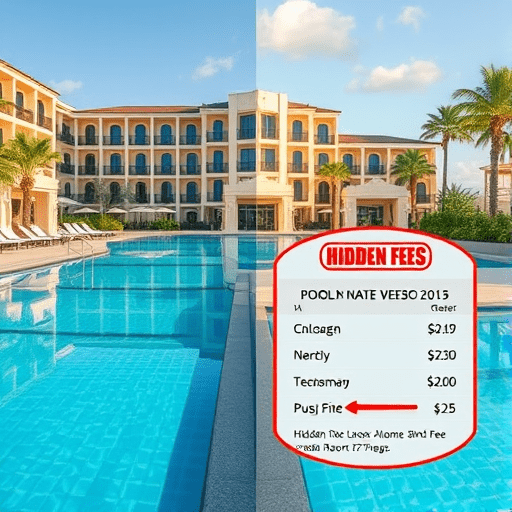
Knowing how to spot overpriced luxury resorts before you book is no longer about recognizing a famous name, counting stars, or trusting a glossy photo gallery. In 2026, the hospitality industry has entered a new era of dynamic pricing, AI-driven rates, and “quiet luxury” positioning. A nightly rate can look aspirational and still hide a long list of add-ons that turn a $900 stay into a $1,400 line item. The real trick is to compare five specific hidden fees and value markers that separate a truly excellent resort from one that is simply charging you more because it can.
Resorts have always used pricing psychology. But this year, the gap between sticker price and actual cost has widened. Travelers are savvier, so resorts have become more creative. The best defense is not to avoid luxury entirely — it is to build a simple comparison framework before you hit “Book Now.”
The 2026 Rate Landscape: Why the Sticker Price Means Less Than Ever
Hotel pricing now behaves like airline pricing. Algorithms consider your search history, device type, and even the time zone you are browsing from. Luxury resorts have embraced this model because it allows them to test what high-end travelers will pay for scarcity, privacy, or a newly renovated suite.
That means the price you see on a booking site is rarely a fair reflection of the resort’s quality. It is often a reflection of demand, positioning, and revenue management strategy. Overpriced resorts tend to rely on that strategy heavily, while well-run properties focus on transparency. The fastest way to tell the difference is to compare the mandatory extras and the genuinely valuable inclusions side by side.
Five Hidden Fees That Inflate a Luxury Resort Bill
These fees are not always buried in fine print. Some appear during the booking process; others appear only on your final folio at checkout. Compare them before you commit, not after.
1. The “Destination Fee” That Behaves Like a Resort Fee
Many luxury resorts now use the term “destination fee” instead of “resort fee.” It sounds more pleasant, but the effect is the same:
- An automatic daily charge covering Wi-Fi, gym access, beach chairs, and housekeeping line items.
- A surcharge that is often taxed, unlike the room rate.
- A fee that remains on your bill even if you never touch the gym or use the Wi-Fi.
When comparing resorts, add the mandatory fee to the base rate and calculate the total for the entire stay. If one property charges a $95 daily destination fee and another charges $40 but includes breakfast, the “cheaper” property may not be cheaper at all.
2. The “Experience Surcharge” for Things That Used to Be Complimentary
In the past, a resort might have included a morning yoga class, a guided snorkel trip, or a sunset cocktail hour as part of the luxury package. Today, many properties have converted those experiences into paid “enrichment” activities that are quietly added to schedules and invoices.
A common pattern is the resort app offering free activities but requiring a booking code that includes a service charge. Another is the “wellness credit” that applies only to paid treatments, not to the daily classes. The question to ask: What would the itinerary cost if I did everything included in the daily rate? If the answer is “very little,” the resort is charging you for atmosphere, not experience.
3. Automatic Gratuity Layers and Service Add-Ons
Luxury resorts increasingly add automatic gratuities to almost every service. A 20% service charge on poolside dining, a 15% housekeeping gratuity, and a 10% “front desk excellence” fee are not uncommon. In some cases, these charges pile on top of the resort fee and the destination fee.
The problem is not that staff do not deserve gratuities. The problem is that the visitor often has no way to know whether the resort passes that money to employees or uses it to offset labor costs. Compare the “service, taxes, and fees” line across multiple properties. If one resort’s mandatory add-ons exceed 30% of the base rate, that is not a tip; it is a pricing strategy.
4. Energy, Sustainability, and Climate Resilience Add-Ons
Sustainability has become a luxury marketing tool, but it can also be a hidden fee. Some resorts add a “green fund,” “carbon offset,” or “climate resilience surcharge” to every room night. A portion of that charge may fund genuine conservation work, but it is often just a way to make the resort look responsible while boosting revenue.
Look for what is included in that surcharge. A resort with solar panels, water refill stations, and on-site organic gardens rarely needs to charge guests extra for sustainability. The ones that do are often charging for storytelling.
5. Arrival and Mobility Packages
Remote luxury resorts often require a boat, floatplane, or private transfer to reach them. Some include this in the nightly rate; others invoice it separately as a mandatory “arrival package.” The fee can cover two airport transfers, but it can also include a surprise valet service, porter gratuity, and luggage handling that was never itemized.
When comparing far-flung resorts, ask for the exact transfer cost per person and whether it includes all taxes and baggage fees. A resort can look more expensive on paper yet be a better deal if its transfer package covers everything.
Value Markers That Justify a Higher Nightly Rate
Hidden fees are only half of the equation. A resort might charge more than its competitors and still be worth every dollar. The key is to identify value markers that translate directly into a better stay.
1. Staff-to-Guest Ratio and Response Time
Overpriced resorts love to mention “butler service” and “personal concierge.” But the real indicator is how many staff members are available per guest, and how quickly requests actually arrive. Look for recent reviews that mention response times for ice, towels, dinner reservations, or maintenance issues.
A resort with 500 rooms and five public pools may have a lower staff-to-guest ratio than a smaller property with 80 suites. The smaller one can justify a higher rate because it offers more attention, faster service, and fewer wait times.
2. What’s Included Before You Ask
In luxury hospitality, the best value marker is the length of the list of things you do not need to pay for. A top-tier resort includes:
- Guaranteed beach chairs shade without a reservation fee.
- Premium coffee and tea service available at any hour.
- Non-motorized water sports, guided nature walks, and fitness classes.
- Mini-bar basics that restock daily without a per-item charge.
- High-speed Wi-Fi with enough bandwidth for video calls.
If a resort charges for any of those separately, it is not necessarily overpriced — but it must compensate with exceptional service or location. If it charges for all of them, you are paying for the brand, not the experience.
3. The Right Ownership and Management Model
Brand-managed resorts are often priced higher because of name recognition, marketing budgets, and loyalty-program expectations. Independent resorts and owner-operated properties may offer a better value because they focus on repeat guests and local reputation.
That does not mean independent is always better. But when you compare rate sheets, ask whether the resort is trying to maximize a real estate portfolio or build a long-term hospitality legacy. Properties that depend on strong reviews and return visits tend to include more and charge for less.
4. Sustainability That Lowers Costs Instead of Raising Them
Genuine sustainability can lower a resort’s operating costs. On-site water filtration eliminates plastic bottle delivery. Solar panels reduce electricity bills. A farm-to-table kitchen cuts out expensive supply chains and produces fresher food. Resorts that invest in those systems can offer better quality while keeping prices honest.
Look for sustainability markers that reduce daily friction: no plastic water bottles, in-room filtered water, locally sourced meals, and energy-efficient architecture. If a resort’s sustainability program is mostly signage and a small surcharge, it is a value marker in name only.
A Quick Pre-Booking Comparison Checklist
Before you settle on a resort, list three properties side by side and answer these questions:
- What is the total mandatory cost for the exact dates, including taxes and mandatory fees?
- Which experiences, meals, and activities are included in that total?
- How many automatic gratuities appear on sample folios from recent guests?
- Does the resort publish its staff-to-guest ratio online, or can you estimate it from review responses?
- What would a typical day cost in extras — coffee, water sports, beach chairs, and a spa visit?
If one resort is significantly more expensive but answers these questions with clearer, more generous terms, it may be worth the premium. If the extra cost comes with vague language and a long list of exclusions, you are likely looking at an overpriced product.
The most important skill in luxury travel is not finding a low price. It is recognizing the difference between a high price and a real value. By comparing five hidden fees and value markers before you book, you can enjoy the best of luxury hospitality without financing a resort’s clever pricing experiments.