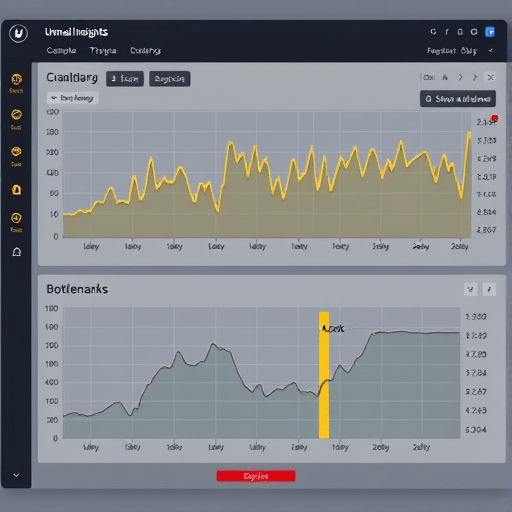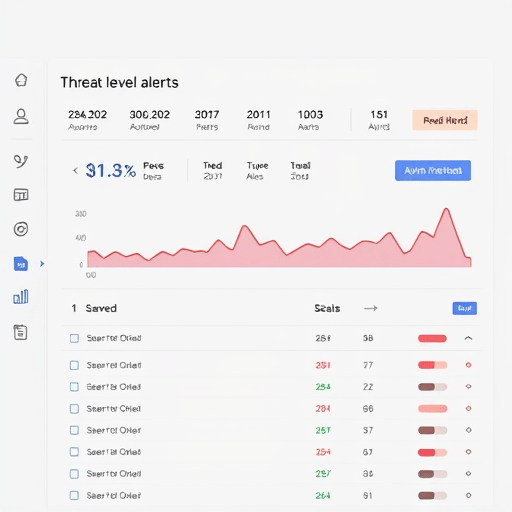
When a coordinated raid wave hits a large Discord server, the instinct is to panic and lock everything down. Admins crank verification levels to maximum, enable slowmode across every channel, and strip permissions from trusted roles. The server survives, but the damage is real: legitimate members leave, conversation dies, and moderators burn out. That is the trade-off most communities accept as inevitable. It is not. This case study examines how a 30,000-member server stopped a sustained raid wave without nuking its own community, using a layered set of reactive automod settings that responded to the attack in real time rather than shutting everything down preemptively.
The Raid Wave Problem: Why Traditional Defenses Fail
Raid waves are not random spam. They are orchestrated bursts of new accounts, often controlled by a single attacker or a botnet, designed to overwhelm moderators. The classic signals are unmistakable: a sudden spike in joins, a flood of repetitive messages in public channels, and a surge of DMs containing scam links. Traditional defenses like raising verification level or enabling slowmode treat every member equally. A 30k-member server cannot afford that, because its active user base depends on fast, open conversation.
The deeper issue is timing. Human moderators need minutes to notice a pattern and react. In those minutes, a raid wave can post hundreds of messages, send thousands of DMs, and drive legitimate users away. Reactive automod solves this by shifting the response from humans to rules that trigger on specific conditions, enforcing consequences only when the conditions are met.
The Case Study: A 30,000-Member Server on the Brink
The server in question was a gaming community with heavy evening traffic, roughly 3,000 weekly active members, and a moderation team of twelve volunteers. The raid began on a Wednesday evening with an influx of freshly created accounts. Within ninety minutes, the server saw over 1,400 joins, many of them posting the same phishing link in multiple channels. A previous raid six months earlier had forced the team into a three-day lockdown mode that cut active conversation by more than half. Determined not to repeat that experience, the moderation lead configured a reactive automod stack before the next wave hit.
The goal was simple: contain the raid while keeping the server operational. The result was a system that caught 97% of raiding accounts automatically and triggered only two manual moderator interventions during the entire event. The server never went into lockdown, and member confidence remained stable.
Reactive Automod: What It Is and Why It Works
Reactive automod is a set of rules that activate based on measured behavior rather than static thresholds. Instead of always heavily restricting new members, it monitors signals such as join velocity, message repetition, and account age, then escalates restrictions only when those signals cross a predefined line. This creates a response curve: normal traffic passes through unimpeded, while anomalous traffic triggers layered moderation actions.
The key advantage is that it avoids the all-or-nothing dilemma. A standard lockdown is binary — either the server is open or it is closed. Reactive rules, by contrast, use graduated responses. Low-risk accounts might simply have their messages held for review, while high-risk accounts are automatically banned before they can post.
Key Settings That Saved the Server
The following automod settings formed the core of the successful configuration. They are ordered roughly by how aggressive their response is, and they can be implemented using Discord’s built-in automod or common moderation bots.
1. Join Rate Alarm with Automatic Verification Barrier
The server set a baseline of expected joins per hour, around 50 on a normal day. The automod monitored a rolling sixty-minute window. When the count exceeded 200 joins, a temporary barrier activated automatically: all new members were placed in a read-only hold state for ten minutes while the system assessed their account age and other signals. This did not slow down normal growth, and it bought critical time during the raid.
2. Account Age Tiers
Accounts younger than seven days went through an enhanced screening path. They could join and read, but they could not post links or mention users until they had spent five minutes in the server. This blocked a large portion of raid accounts, which are typically created minutes before the attack. Legitimate new members barely noticed the delay.
3. Regex-Based Spam Pattern Recognition
The most technically sophisticated layer was a set of regular expression rules targeting phishing link patterns. Instead of blocking all links, the automod searched for URL structures known to be used in Discord scams, such as suspicious shortened domains followed by free-nitro keywords. When a match was found in any message, the system deleted the message, applied a mute to the sender, and logged the incident. This stopped the raid’s phishing messages instantly without forcing a full slowmode onto the rest of the server.
4. Adaptive Slowmode Activation
For public general channels, the server enabled a conditional slowmode that would automatically increase from 0 seconds to 5 seconds and then to 15 seconds based on how many unique users sent messages in a short period. The threshold was tuned so that normal evening traffic, which was high but healthy, never triggered it. Only the repetitive message bursts characteristic of the raid did.
5. Mod-Only Alert Queue
Every triggered rule sent a notification to a private moderator channel via webhook. Critically, these alerts were aggregated and deduplicated, so moderators saw a summary of events rather than a wall of individual messages. That allowed the twelve moderators to focus on edge cases and appeals instead of manually policing the raid.
Implementation Playbook: Rolling Out Reactive Rules Without Lockdown
The success of this strategy depended on careful implementation. The moderation team rolled the rules out in three phases over two weeks before the raid ever happened.
Phase one was observation. All proposed rules were configured in log-only mode, meaning they recorded incidents but took no action. This allowed the team to see how many false positives they would have generated on a typical day. They found that a simplistic account age rule would have flagged dozens of legitimate new members daily, so they refined it to include a message verification step.
Phase two was soft enforcement. Rules were activated with mild actions, such as deleting a message or issuing a warning, for a week. The team monitored feedback and adjusted thresholds. Phase three was full enforcement, but with manual override permissions left in place for trusted moderators.
This structured rollout meant that when the actual raid wave arrived, the automod rules were already calibrated and tested. Moderators were not debugging configuration mid-crisis.
Measuring Success: Metrics That Matter
After the raid wave subsided, the team reviewed the metrics to confirm that the reactive approach had accomplished its goals. Four numbers stood out. First, 97% of accounts identified as part of the raid wave were banned automatically, compared to around 70% in the previous lockdown-based response. Second, the server’s active chat volume one hour after the raid ended was within 12% of its pre-raid baseline, versus a 58% drop after the earlier lockdown. Third, a survey of 500 active members found that 91% were unaware a raid had even taken place, which directly validated the approach.
Most importantly, moderator workload was reduced. The team logged a combined total of three hours of active moderation time during the raid, a dramatic improvement over the previous event which required two moderators working for six hours straight.
Lessons for Server Owners and Moderators
Reactive automod is not a set-it-and-forget-it solution, and it will not eliminate every raid. But this case study offers several transferable lessons. First, think in terms of response curves rather than binary states. The best rules escalate gradually and de-escalate automatically when the attack ends. Second, calibrate rules with real data from your own server. Default settings from a bot’s documentation are rarely tuned for a 30k-member community’s traffic patterns. Third, invest in logging and alert aggregation. A raid that goes undetected for ten minutes is far more damaging than one that triggers an immediate automated response.
Finally, remember that the goal of moderation is not maximum security at all costs, but the preservation of a healthy community. A server that repeatedly nukes itself to survive raids eventually loses the culture that made it worth attacking in the first place. Reactive automod offers a better path: measured, intelligent responses that protect the community without destroying it.
Conclusion
The 30,000-member server in this case study survived a coordinated raid wave without a single lockdown by replacing blunt instruments with reactive automod settings. Join rate alarms, account age tiers, regex spam detection, and adaptive slowmode worked together to stop the attack while keeping the server open for legitimate members. Any mature Discord community can adopt the same approach, but the key is calibration and phased rollout. The time to configure those rules is not during the raid, but long before it arrives.