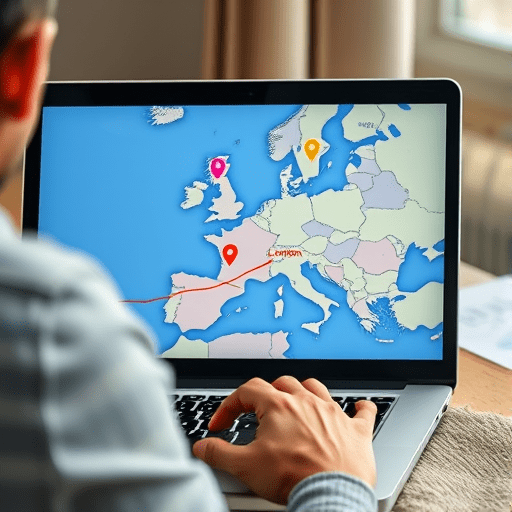
You’ve booked the flight, chosen the seats, and planned the museum visits. But what if the city you’re merely flying over is hosting the biggest carnival of the year on the exact day you pass through? A new class of travel utility — the flight-route event scanner — now makes it possible to scan your route for live events and carnivals before you finalize even a single hotel booking. Instead of treating your flight as a straight line from A to B, this free plug-in treats your entire route as a corridor of possibilities, cross-referencing your trip dates with global event calendars, festival databases, and regional carnival schedules. For travelers in 2026, it’s the simplest way to turn a mundane connection into a spontaneous celebration.
Why Static Itineraries Are a Missed Opportunity
Most travel planning follows a predictable loop: search flights, pick dates, book accommodation, and then — almost as an afterthought — look for things to do. This approach ignores one of the richest sources of serendipity in travel: the en-route destination. A layover in Panama City, a stopover in Lisbon, or a brief scenic detour over Cologne could align perfectly with a world-famous carnival, a local food festival, or a niche music gathering. The problem has always been discovery. You can’t easily ask a flight search engine, “What’s happening along my route on the 14th?”
That’s where the event-aware route scanner changes the game. By pulling structured data from event APIs, municipal tourism boards, and crowdsourced festival calendars, the plug-in builds a temporal map of your journey. It doesn’t just show you what’s at your destination; it shows you what’s happening at every point along the way, sorted by proximity to your flight path and overlap with your travel dates.
How the Plug-In Works: From Route to Event Map
The core workflow is deceptively simple. After you import your flight confirmation or manually enter your route, the plug-in extracts the key geographic coordinates: departure, arrival, and any scheduled stopovers. It then generates a corridor around that path — typically adjustable from 50 to 300 kilometers — and queries a federated network of event calendars. The results are rendered as an interactive map overlay, with each event pinned to its location and tagged with a date. You can filter by event type, expected crowd size, ticket price, or even language.
Under the hood, the matching algorithm runs on a time-weighting system. An event isn’t just checked for date overlap; it’s scored based on how close it falls to your actual flight time window. If you have a four-hour layover and there’s a street carnival happening two metro stops from the terminal, the plug-in surfaces it with a “low friction” badge, indicating that you can realistically attend without endangering your connection. Events on the outbound route are grouped separately from those on the inbound, giving you a cohesive timeline for both legs of the trip.
The Data Sources Behind the Event Feeds
What makes the plug-in genuinely useful is the breadth of its data aggregation. It doesn’t rely solely on major ticketing platforms. It pulls from local urban event registries, regional carnival associations, university cultural calendars, and even community radio station listings. This ensures that smaller, authentic celebrations — the kind that don’t show up on international radar — are represented alongside major spectacles like Rio’s Carnival or Mardi Gras in New Orleans. For 2026, the plug-in has also added several regional datasets from Southeast Asia and the Balkans, covering religious processions, harvest festivals, and maritime carnivals that historically received poor digital coverage.
Carnival Calendars and Regional Festivals: What the Aggregator Gets Right
Carnival calendars are notoriously messy. Dates shift based on lunar cycles, Easter, or even local weather declarations. A static list of “carnival dates by city” becomes outdated the moment it’s published. The flight-route event scanner solves this by integrating directly with the operational calendars maintained by the organizing bodies themselves. Instead of relying on a third-party blog post from 2024, you get the confirmed dates from the official carnival committee. If a festival is postponed due to flooding or political unrest, the plug-in picks up the update and re-scores your route accordingly.
The regional festival coverage is where the tool truly impresses. Consider a flight from Miami to Buenos Aires. A conventional search might surface Carnival in Rio if you stop there. But the route scanner will also detect the Fiesta Nacional de la Vendimia in Mendoza, the Vía Blanca carnival in Montevideo, and even the smaller, but spectacularly colorful, carnival in Gualeguaychú, Argentina. All of these are within a few hours of your flight path. The plug-in’s “route corridor” logic makes it crystal clear which of these events fall within a feasible detour, and which would require a dramatic itinerary restructure.
Layovers Become Mini-Getaways with a Route Event Scanner
The most immediate practical benefit of this event-aware approach is its impact on layover planning. Historically, a layover was a time-suck — a few hours of sterile airport lounges and overpriced coffee. The route event scanner reframes that layover as a micro-adventure window. If your flight from New York to Bangkok has a six-hour layover in Taipei, and the Taiwan Lantern Festival is in full swing during your wait, the plug-in will flag it, estimate transit time from Taoyuan Airport to the event location, and even suggest a rough schedule to get you back with 90 minutes of buffer.
This is a dramatic shift in how travelers should think about airport hubs. Instead of choosing a flight strictly by price or total duration, you can now choose a flight that routes you through a city having a massive celebration on your travel date. The plug-in effectively turns the airline’s schedule into a menu of potential event-adjacent experiences. A cheap flight with a long layover isn’t a penalty; it’s an invitation.
Event Density Mapping for Multi-City Trips
For multi-city trips, the scanner offers a comparative view. You can enter an open-jaw itinerary — say, flying into Madrid, traveling overland to Barcelona, and flying home from there. The plug-in aggregates events along the ground route as well, not just the air route. You’ll see that Zaragoza has a food festival on the day you’d likely be passing through, which might prompt you to adjust your train schedule by a few hours. This ground-route scanning capability distinguishes it from simple flight-oriented event tools and makes it a legitimate trip-planning companion for the modern, flexible traveler.
Smart Filters for Music, Food, and Cultural Carnivals
Not every traveler wants the same kind of event. A family with young children might prefer a daytime street fair over an evening music festival with amplified bass. The plug-in’s filtering system handles this with ease. You can set preferences for family-friendly activities, accessibility requirements, or budget constraints. The free tier includes a surprisingly generous set of filters: event type, date range, and distance from route. Premium filters — like crowd-size predictions or historical attendance data — are available, but the free version is sufficient for most trip-planning needs.
The “food festival” filter is especially worthwhile. It doesn’t just list events with “food” in the description. It cross-references culinary calendars, farm-to-table event schedules, and regional gastronomic weeks. A 2026 traveler passing through Palermo during the Couscous Festival, or over Seville during the Feria de Abril, will find those events immediately flagged. The plug-in also integrates with weather APIs to recommend indoor events if rain is forecast, ensuring that a sudden thunderstorm doesn’t ruin your only evening in a stopover city.
Real-World Use Cases for 2026 Travelers
In practice, this tool lends itself to several powerful use cases. The spontaneous traveler might use it to decide where to go: search a broad date range, look at a map of the world, and see which flight routes pass near significant events. The efficient corporate traveler can use it to schedule a connection that coincides with a local holiday celebration, adding a small personal experience to an otherwise routine business trip. And the deep-dive cultural traveler can use it to validate that the pilgrimage or festival they plan to attend is actually happening on the exact dates they’re flying.
For example, let’s say you’re flying from Vancouver to Dublin in March 2026. The route takes you over Greenland and Iceland. The plug-in might surface the Reykjavik Food and Fun Festival, which typically runs in early March. A strategically chosen Icelandair stopover — a popular option with no added airfare — would let you attend. Similarly, a spring flight from Chicago to Rome might route through Lisbon, where a traditional sardine festival in June could turn an overnight layover into an unexpected evening of grilled fish, music, and local wine.
The plug-in isn’t just about finding the big carnival logo in a calendar. It’s about realizing that the spaces between your departure and arrival are full of human activity. Every flight path crosses territories where people are gathering, celebrating, remembering, and feasting. The tool simply draws back the curtain.
Practical Setup: No More Manual Calendar Checking
Setting up the free plug-in takes less than two minutes. After installation in your browser, it lives quietly until you visit a flight booking site. When you’re on a flight search results page, a small icon appears next to each itinerary. Clicking it expands the event overlay without leaving the page. You don’t copy-paste dates or manually enter airports. The plug-in reads the route data directly from the page structure, runs its event correlation, and presents a summary like: “2 events along this route, 1 during your layover in Reykjavik.” This seamlessness is essential. The entire value proposition is removing friction from serendipitous discovery.
It’s also worth noting that the plug-in respects your privacy. It doesn’t transmit your specific flight confirmation details to third-party servers. The route information is anonymized and used solely for the event-pin query. That’s a reassuring detail for travelers who guard their itinerary data closely.
For those who prefer planning outside of booking platforms, a standalone web interface accepts manual route inputs. You can draw a route on a map, set your travel week, and generate a custom event report. This is useful for road trips, train journeys, or even cruise itineraries where the “route” follows a coastal path rather than a straight flight corridor.
Conclusion
Travel in 2026 is no longer just about the destination; it’s about the journey, the detours, and the beautiful accidents that happen along the way. A free flight-route event scanner gives you a superpower: the ability to see where the world is celebrating, gathering, and performing — right next to your flight path. Whether it’s a world-famous carnival or a small regional festival, the plug-in ensures that your next trip is not just a transportation plan, but a participatory experience. The next time you book a flight, let the route tell you where the party is.