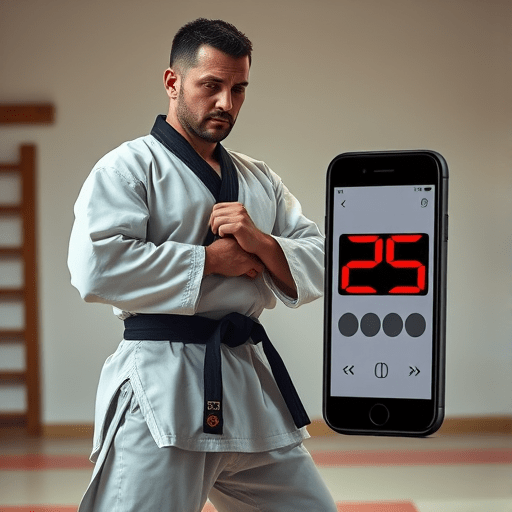
Most martial artists know the feeling: the form is flawless in the dojo, then vanishes under pressure. The missing piece is not effort—it is how your brain and muscles are given time to absorb each repetition. The Pomodoro Technique for kata practice and retention offers a simple but science-backed fix, transforming endless drilling into focused, high-retention intervals that match the way your nervous system actually learns movement.
Why Traditional Kata Repetition Often Fails
Running the same kata for thirty minutes straight feels productive. But fatigue blurs your technique, and your mind drifts after the first few repetitions. The returns diminish quickly. What you are really doing is reinforcing sloppy transitions and half-remembered sequences, not the clean, precise version you want under pressure.
This is where the humble timer changes everything. By breaking practice into short, deliberate chunks with rest in between, you avoid the automatic, attention-less repetition that plagues traditional training. The Pomodoro Technique—typically 25 minutes of focused work followed by 5 minutes of rest—keeps your brain alert and your body honest. For kata, the length of each interval can be adjusted to the complexity of the form and your current stage of learning.
The Science of Timed Intervals and Motor Learning
Kata retention is not just about muscle memory; it is about motor learning, a process that unfolds in stages. The first stage, cognitive, is where you think through every movement. The second, associative, is where you refine the feel. The third, autonomous, is where the kata flows without conscious thought. Timed focus intervals accelerate your path through these stages because they align with how your brain consolidates new skills.
Research on motor learning shows that short, spaced practice sessions produce better retention than massed practice. The rest periods between Pomodoros are not wasted. During these breaks, the brain replays and stabilizes the neural patterns you just activated. This is why a 25-minute focused block with a 5-minute break can outperform a full hour of nonstop repetition. Your muscles do not get tired, but your brain gets a chance to solidify the sequence.
The Role of Attention in Every Repetition
The Pomodoro Technique also forces quality over quantity. You only have 25 minutes, so every repetition matters. Instead of zoning out, you stay in a state of active attention, noticing each stance, angle, and breath. This mindfulness is exactly what builds strong procedural memory. The timer acts as a cue that this is a serious working block, not just casual flailing.
Designing Your Pomodoro Kata Session: A Step-by-Step Protocol
Ready to put this into practice? The protocol below is a starting point, not a rigid rule. Tweak it to fit your art—whether it is karate, taekwondo, kung fu, or any form-based discipline.
- Break the kata into segments. If your kata has 40 movements, divide it into 4 logical blocks of 10. For longer forms, use embusen (the path of movement) or changes in direction as natural boundaries.
- Choose a focus for each Pomodoro. One interval might target a tricky transition; the next might work on timing and rhythm. Always have a specific goal beyond “just practice.”
- Set your timer for 25 minutes. For beginners, 15 or 20 minutes may be more effective. The goal is to remain fully focused for the entire block without drifting.
- Practice the segment, not the whole kata. Repeat only the chosen segment during that interval. This is the core of deliberate practice—you are not running the form; you are sculpting it.
- Take a 5-minute break. Shake out your arms, hydrate, walk around. Do not mentally rehearse the kata. Let the brain rest.
- After 3 to 4 Pomodoros, take a longer break. Ten to fifteen minutes is ideal. Use this time to stretch or visualize the entire kata from start to finish.
Pairing Pomodoros with Spaced Repetition for Long-Term Retention
The Pomodoro Technique handles your within-session focus. For between-session retention, you need spaced repetition. The two methods stack beautifully. Instead of cramming all your kata practice into one day, spread your Pomodoro blocks across the week. Review the kata on Day 1, Day 2, Day 4, Day 7, and Day 14. Each review is a separate 25-minute block, and the gaps between them force your brain to rebuild the memory, making it stronger.
This approach is especially useful when learning a new kata. On day one, you might need three Pomodoros just to get the basic sequence. On day four, one Pomodoro is enough to fix a few errors. By day fourteen, a single Pomodoro serves as a quick maintenance run. The timer keeps you honest, and the spacing ensures that the kata stays in your long-term memory rather than fading after a week.
Combining Visualization with Timed Intervals
Visualization is a powerful addition to any kata practice. During a Pomodoro block, you can alternate between physical execution and mental rehearsal. For example, spend 5 minutes walking through the sequence in your head, then 20 minutes on physical practice. Or, during the short break, close your eyes and replay a particularly difficult turn. This blends cognitive and motor practice, accelerating retention without adding physical fatigue.
Tracking Progress: Metrics That Matter More Than Time
A stopwatch is only a tool. What matters is whether your kata is getting sharper. Use a simple training log to track each Pomodoro session. Record the number of full repetitions you completed, the segment you worked on, and any specific errors you corrected. After a few weeks, look back at the log. You will see that the number of repetitions per Pomodoro may have dropped—but the quality and consistency will have climbed.
Another useful metric is your self-assessed accuracy score. Rate the segment on a scale of 1 to 10 before and after each interval. If your score is not rising, your focus may be too scattered, or your segment is too long. Shorten the segment or slow down the tempo until your accuracy improves. The timer is not a race; it is a boundary within which you strive for precision.
Common Pitfalls and How to Adapt the Timer to Your Art
The Pomodoro Technique is not a one-size-fits-all prescription. Here are a few common mistakes to avoid, along with adjustments that work for kata practice.
- Using long intervals for complex material. If you are learning a new sequence, 25 minutes may be too long. Drop to 10-minute intervals with 2-minute breaks. Short bursts keep you from getting overwhelmed.
- Ignoring the rest period. The break is part of the method. If you skip it, you lose the consolidation benefit. Even sitting quietly with your eyes closed works.
- Running the entire kata every session. Drilling the whole kata every Pomodoro is a mistake. Focus on segments; then occasionally do a full run in the final Pomodoro of the day to tie them together.
- Not adjusting for physical intensity. Kata can be physically demanding. If you are breathless after 4 minutes, your “Pomodoro” is too long. Use the pulse of your training as a guide: the interval should end before form breaks down.
From Timer to Muscle Memory
The pomodoro technique is not just for office workers and students. For martial artists, it is a retention engine that pairs deliberate focus with the brain’s natural consolidation rhythms. Instead of wondering how many times you need to repeat a kata, ask yourself how much focused attention you can bring to each interval. The answer, in 25-minute blocks, will surprise you.