If you’re a founder, you’ve probably checked revenue, churn, and runway this week. But did you check your own nervous system? In 2026, with venture dollars tightening and exit timelines stretching, the most reliable predictor of startup failure isn’t your burn multiple—it’s your weekly burnout level. The founder health metric that predicts failure better than revenue is a simple, measurable number called Burnout Velocity. And once you start tracking it, you’ll know when to pivot, when to push through, and when it’s time to walk away.
Burnout Velocity measures the rate of change in your physical and mental recovery capacity across consecutive weeks. It forces you to separate normal founder stress—which can be harnessed—from chronic depletion, which silently distorts every decision you make. Revenue tells you what the market wants. Burnout Velocity tells you whether you can keep fighting to deliver it.
Why Revenue Is a Lagging Indicator of Founder Collapse
Revenue is the most backward-looking number in your company. It reflects decisions made months ago, not the quality of your judgment this morning. A founder running on four hours of sleep, with a pounding pulse and a fogged cortex, can still see revenue rising for a quarter or two. But research on executive decision-making under chronic stress shows that depleted founders make consistent errors in assessment, risk, and negotiation—errors that show up in your numbers only later, as missed forecasts or sudden churn.
By the time revenue dips, the founder’s health has often been in freefall for weeks. Worse, when a founder finally quits or is replaced due to “personal reasons,” the board typically performs no health postmortem. We treat founder burnout as an individual failure rather than a predictive metric. The result is that preventable collapses are misread as product–market fit problems, and healthy founders pivot for the wrong reasons while burned-out founders remain paralyzed.
Introducing the Core Metric: Weekly Burnout Level Tracking
To move beyond vague self-assessment, define a simple weekly metric with three inputs:
- Physical exhaustion score (1–10): How physically drained do you feel at day’s end, averaged over the week?
- Mental fatigue score (1–10): How hard does it feel to hold focus in meetings, debug code, or read contracts?
- Emotional depth score (1–10): How much do you care about your cofounders, customers, and mission right now?
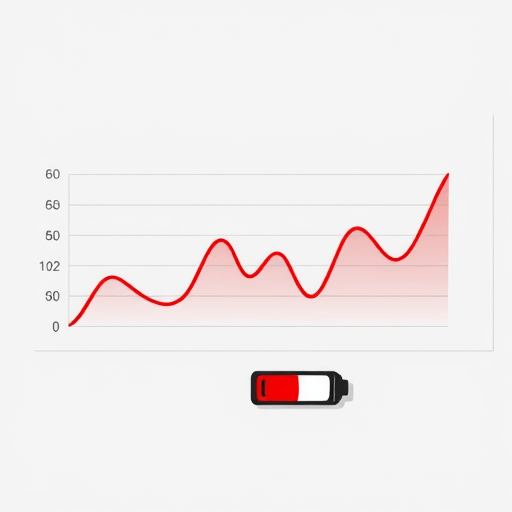
Your quarterly failure risk isn’t any single score—it’s the slope of the combined line across six to ten consecutive weeks. A sustained upward slope of fatigue combined with a downward slope of emotional depth is the founder health metric that predicts failure better than revenue. It predicts degraded judgment, conflict with cofounders, and the eerie “quiet quitting” of a founder who physically remains but mentally left two weeks ago.
Designing a Weekly Measurement Ritual That Doesn’t Feel Like Work
You already carry a tracking device. Your wearable’s HRV—heart rate variability—is a solid biological proxy for burnout. But instead of obsessing over daily spikes, aggregate your weekly average HRV against your weekly self-scores. Build a simple recurring calendar block for Friday afternoon: fifteen minutes to log, reflect, and check whether your slope is flattening or climbing.
Do not turn this into another daily reporting burden. One weekly ritual is enough. The goal is a trend line, not a journal.
The Pivot/Quit Threshold: Knowing When the Slope Is Lethal
A single bad week tells you nothing. Three bad weeks in a row with no recovery on your rest day tells you something. Here is a practical framework used by health-conscious founders in 2026:
- Green zone: Fatigue rises slightly during the week but resets by Sunday. You might feel tired, but you are recovering. Keep going.
- Yellow zone: Fatigue persists into Monday, but emotional depth remains high. You are stressed but still engaged. This is the zone where a controlled pivot may be possible—with sleep and delegation improved first.
- Red zone: Fatigue is high, emotional depth is flat or negative, and HRV is trending below your baseline for three consecutive weeks. This is where decision-making becomes impaired. Do not pivot in the red zone. A pivot requires flexible thinking, which a burned-out founder lacks. When you’re in the red zone, the most strategic move is rest, then reassessment.
When Pivot Is Still the Right Move—and When It Isn’t
The harsh truth is that burnout analysis saves you from making decisions at the wrong time, not from making hard decisions at the right time. A pivot is justified when your burnout slope is steeply rising because you no longer believe in the problem you’re solving or the market has fundamentally changed. In that scenario, your fatigue doesn’t go away after a weekend—but it does settle after a solid ten days of sleep, exercise, and real food, and your interest in new possibilities returns. That clarity is a signal to move.
If, however, your burnout slope is rising while you still love the problem, then the issue is operational, not existential. You need to delegate, reduce meetings, or bring in a strong operator. Quitting during that phase—because you’re exhausted—is the classic founder mistake.
Autopsy Data From Failed Startups Points to Health Decline
We don’t need more failure postmortems about “poor market fit” and “execution issues.” Those are readouts, not root causes. A growing repository of founder mental-health data and post-mortem interviews in 2026 shows a striking pattern: in many failed startups, the founder’s burnout slope crossed a critical threshold weeks before the decision to wind down was taken. The startup died because the founder lost hope—not because the numbers were undeniably fatal.
Revenue is the scoreboard. Burnout velocity is the battery level. You can run a scoreboard score while the battery drains, but eventually the screen goes black.
Building a Simple Company-Level Health Metric Without Shame
If you are a founder with cofounders or a core team, invite them to track a simplified version—not for accountability, but for signal. Set up an anonymous weekly check-in if needed. The goal is to spot patterns in the collective culture before burnout destroys the founding team’s ability to communicate. A single founder quitting often looks like the start of a new story; two or three core team members hitting the red zone simultaneously predicts the end of the company.
Treat this data as confidential and non-punitive. This is not HR surveillance. It’s an early warning system.
Practical Tools and Rules for the Next 90 Days
Here’s a concrete plan to introduce Founder Burnout Tracking into your current rhythm:
- Week 1–2: Establish your personal baseline scores for physical, mental, and emotional states. Wear your wearable consistently, and note your average HRV.
- Week 3–8: Log every Friday. Do not react to single-week swings. Watch the slope.
- Week 9: Review the data. Have you entered the red zone? Was there at least one full recovery weekend?
- Week 10–12: Decide on changes to your workload, team structure, or sleep schedule. If the slope is stable, you are ready to assess tactical pivots. If the slope is still climbing, postpone strategic decisions and cut your obligations by 20%—automatically.
Conclusion
In the end, the most underrated founder health metric is not the number of hours worked or the number of investors met. It is the direction of your energy across weeks. Tracking burnout levels is not a sign of fragility; it is a sign of professionalism. Founders who monitor their own health with the same rigor they apply to their unit economics will make better decisions, protect their teams, and know precisely when to push forward, step back, or walk away clean—long before the revenue statement tells them the same story too late.