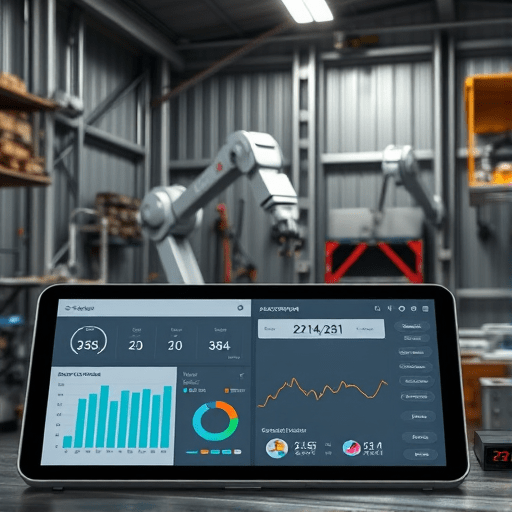
The phrase “Robot as a Service” is no longer a futuristic buzzword. For small machine shops, fabrication units, and electronics workshops, the new subscription economy has finally reached the factory floor. Instead of paying hundreds of thousands of euros for a fixed robotic cell, a growing number of SMEs are now adopting pay-per-use robots that arrive, perform a defined task, and roll away when the job is done. This shift, powered by cloud robotics and flexible financing, is dismantling the oldest barrier to automation: capital risk. As a result, small workshops can now test, scale, and redeploy automation the same way they subscribe to software — with operational flexibility, predictable monthly fees, and no stranded assets.
The idea is simple: the robot is not bought by the SME. It is leased, monitored, and serviced by a provider that charges a usage-based fee. This model, often called RaaS, has matured significantly in recent years. What was once a pilot project for Fortune 500 plants is now a pragmatic option for ten-person workshops. The enablers are not just cheaper hardware; they are smarter software, edge computing, and the ability to swap skills over the cloud.
The Shift from Capital Expenditure to Operational Flexibility
For most small workshops, the decision to automate has traditionally been a binary one: either you can justify a large capital expenditure (Capex), or you cannot. With RaaS, the purchase moves to the operating budget (Opex). This is a crucial change. A small CNC turning shop or a plastic welding workshop can now treat robotics like a utility — paying for the hours a robot works, not for the hardware that sits idle.
This model also lowers the fear of technology obsolescence. In many industries, robots become outdated faster than they wear out. A pay-per-use contract transfers that risk to the service provider. The provider is incentivized to keep the robot fleet current, software updated, and sensors calibrated, which means the workshop always has access to a modern system.
For small enterprises, operational flexibility is not a luxury; it’s survival. When an order spike comes in, extra robotic capacity can be added within weeks. When the market dips, the workshop returns the robot or reduces usage without a painful write-off.
What’s Inside a Modern RaaS Subscription?
Not all RaaS offerings look the same. Some are straightforward hardware rental agreements. Others are outcome-based contracts, where the provider charges per completed weld, per picked part, or per pallet handled. A good 2026-era RaaS package, however, typically includes more than a robot arm and a controller.
Digital Infrastructure and Remote Monitoring
One of the most overlooked benefits is the digital layer. Most RaaS providers install edge devices and cloud-connected sensors that allow their team to monitor the robot remotely. This means diagnostics, preventive maintenance, and even software updates are handled without a truck roll. For a small workshop, this eliminates the need for a dedicated automation engineer.
Automation Cells and End-of-Arm Tooling
Modern RaaS offerings often ship as a complete cell: a robot, a safety cage, a rotating table, and a set of interchangeable grippers. Some providers include vision systems for bin picking or quality inspection. This bundled approach is a huge advantage for SMEs that lack the in-house skills to integrate a robotic palletizer or a CNC machine tender. The vendor performs the integration upfront and takes responsibility for the solution’s performance.
Pay-Per-Use Pricing Models
Pricing structures vary. Some providers charge a base subscription fee plus a per-cycle fee. Others charge purely on machine hours. A few innovative vendors now offer “task pricing” — for example, €0.20 per bottle capped into a box, or €5 per finished part. This aligns the robot’s cost directly with production value, which makes return on investment calculations remarkably simple.
Why Small Workshops Are Ready for Subscription Automation
The old excuse “we are too small for robots” is fading. The reason is not just the lower upfront cost. It is the accelerating shortage of skilled labor in manufacturing. In 2026, small workshops are not competing only with other workshops; they are competing with large manufacturers for machine operators and quality inspectors. RaaS allows a workshop to keep a scarce human team focused on complex tasks, while the robot handles repetitive, ergonomically demanding work.
Another driver is the evolution of safety certification. New RaaS options come pre-certified under CE and ISO 10218 standards, and many use collaborative or speed-separated robots. That eliminates the cost of custom safety engineering, which historically added weeks and thousands of euros to any automation project.
Today’s small workshop owners are also digitally native. They already handle cloud-based ERP, remote ordering platforms, and digital maintenance logs. Adding a robot subscription to that stack is no longer a daunting leap of faith.
This is exactly where an internal knowledge base about selecting the right automation partner can save months of trial and error.
Overcoming the Fear of the Black Box
Even with lower costs, some SME owners worry about losing control of their production process. The robot is a black box, invisible in the cloud, and someone else is moving its arm. Providers have responded by focusing on transparency and tool ownership.
Most contracts now include a full digital twin of the robot cell, which runs in parallel to the real system. The workshop can see what the robot is doing at any moment, from a smartphone or a PC dashboard. This is not an invasive extra — it’s a core feature of the service. It also enables remote troubleshooting: when the robot stops because a part is jammed, the provider’s technician can view a 3D replica of the scene and walk the local operator through the fix.
Another significant shift is the emergence of no-code robot programming through augmented reality and drag-and-drop interfaces. A shop floor technician can change the robot’s motion path by moving a virtual waypoint on a tablet. This removes the need to hire a dedicated programmer or pay the supplier for every minor adjustment. For SMEs, this is a game changer: the robot becomes a tool they can command, not a mysterious machine they have to call someone else to reconfigure.
Practical Steps to Pilot a RaaS Deployment
If you are running a small workshop and considering pay-per-use robots, start with a narrow but painful bottleneck. Do not automate an entire production line on day one. Pick one operation — loading a milling machine, stacking boxes, screwing cases, or inspecting parts — and ask two or three RaaS providers to propose a pilot.
- Define the success metric: Choose a measurable output, such as “1000 parts welded per week” or “30% less manual handling time.” Make the metric correspond to what the robot will be paid for.
- Check the exit clause: Some contracts have minimum terms or decommissioning fees. A true subscription model should allow you to return the robot after a short pilot phase, with no hidden reconditioning costs.
- Look for included training: The best RaaS providers include two weeks of on-site operator training and a digital academy for your staff.
- Ask about cybersecurity: Your robot is a connected device. Make sure the vendor provides encrypted communications, regular security audits, and clear data ownership terms.
Before signing, ask the provider to demonstrate the robot’s performance on your own parts. A reputable RaaS company will embrace this proof-of-concept, often for a symbolic fee or even free, because it reduces their long-term support risk.
Toward a Flexible, Human-Centered Factory
Robot as a Service is not about replacing all your workers; it is about building a production environment that can adapt quickly to changing customer demands. For small workshops, the true promise of pay-per-use robots is the ability to grow without overestimating your own future needs. You can scale up for a busy season, scale down for a quiet month, and always use the most capable hardware available.
By 2026, the subscription model has become more than a flexible financing arrangement. It is a complete service package, with diagnostics, training, safety certification, and software updates included in a single monthly fee. Small workshops that adopt this model are not just lowering entry barriers — they are also learning to treat automation as a variable cost, which is exactly the right mindset for an unpredictable manufacturing landscape.
The role of the human worker becomes more strategic: checking quality, managing exceptions, and shaping the robot’s work schedule. Peering deeper into that relationship, a small workshop’s ability to redesign jobs around automation will determine how smoothly the transition goes. But that is not a reason to hesitate. The pay-per-use robot is here, it is affordable, and it is ready to work next Monday morning.