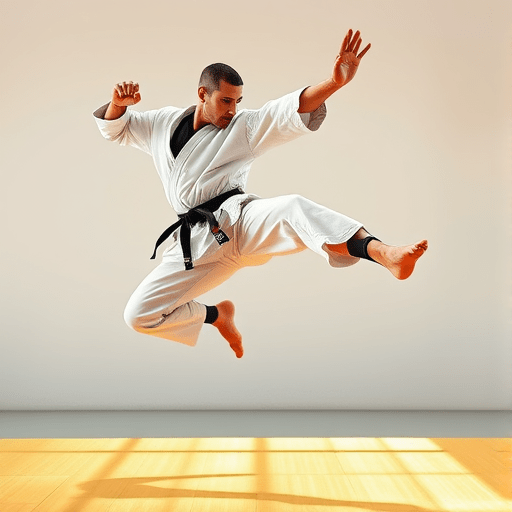
If you’re a martial arts practitioner looking to punch harder, kick farther, and explode on the mat, a 4‑week plyometric plan to boost kicking power is a science‑backed shortcut. By the end of this routine, you’ll have increased myofascial stiffness, reactive strength, and neuromuscular coordination—all essential for that lightning‑fast roundhouse or front kick. Let’s dive into a structured progression that balances intensity, safety, and skill integration.
Why Plyometrics Matter for Kicking Power
Plyometrics—athletic drills that emphasize the stretch‑shortening cycle—train your muscles to generate force faster and stronger than static or simple dynamic movements. In martial arts, this translates to:
- Explosive strength: Faster force production means a higher impulse at impact.
- Improved reactive timing: Your body learns to react to the pre‑stretch more efficiently.
- Enhanced muscle‑tendon stiffness: A stiffer tendinous unit stores and releases elastic energy, boosting the speed of your kicks.
- Neuromuscular coordination: Complex movements develop tighter motor unit recruitment, essential for advanced techniques.
Pre‑Week Preparation: Laying the Groundwork
Before jumping into the routine, assess your current strength and mobility. A brief vertical jump test (standing and a countermovement jump) provides a baseline; you’ll compare it against the end of week four.
Dynamic Warm‑Up (10–15 Minutes)
- High knees, butt kicks, side shuffles – 2 minutes each.
- Hip circles, ankle dorsiflexion with resistance bands – 2 minutes.
- Leg swings (front–back & side‑to‑side) – 2 minutes per leg.
Mobility & Activation Drills
Include glute bridges, clamshells, and thoracic rotations. This primes the posterior chain and improves joint range, reducing injury risk during high‑impact plyometrics.
Weekly Plan Overview
Each week builds on the previous one, adding complexity, volume, and intensity while maintaining recovery. All sessions are performed 3 times per week with at least 48 hours between workouts.
| Week | Focus | Key Drills |
|---|---|---|
| 1 | Foundation & Form | Box jumps, squat jumps, forward lunges |
| 2 | Intensity & Power | Depth jumps, single‑leg bounds, kettlebell swings |
| 3 | Peak Power & Speed | Medicine ball throws, plyo kicks, split jumps |
| 4 | Consolidation & Recovery | Reduced volume, technique work, active recovery |
Week 1 – Foundation & Form
Focus on mastering the mechanics of each movement. Keep repetitions high (12–15) and work within a safe range of motion.
Workout A
- Box Jumps (3 sets × 12 reps) – Start with a 12‑inch box; concentrate on soft landings.
- Squat Jumps (3 × 12) – Emphasize vertical explosiveness; land on the balls of your feet.
- Forward Lunge Jumps (3 × 10 per leg) – Quick transitions; keep hips square.
Workout B
- Depth Jump (3 × 8) – Step off a 12‑inch box, land, then explode upward.
- Single‑Leg Hops (3 × 6 per leg) – Focus on balance and a fast ground contact.
- Standing Kettlebell Swing (3 × 15) – Build posterior chain power; use a light weight.
Workout C – Mobility & Recovery
- Yoga flow for hips and ankles – 15 minutes.
- Foam rolling on quads, hamstrings, calves – 10 minutes.
Week 2 – Building Intensity & Power
Increase the load and add complexity. Keep form impeccable; the slightest wobble can lead to injury.
Workout A
- Depth Jump (4 × 10) – Push for a higher rebound.
- Single‑Leg Bounds (4 × 8 per leg) – Emphasize horizontal distance.
- Push‑up with Clap (4 × 10) – Adds upper‑body explosiveness.
Workout B
- Medicine Ball Chest Pass (4 × 12) – Practice quick releases.
- Split Jumps (4 × 8 per leg) – Work on vertical takeoff.
- High‑Knee Drills (3 × 30 seconds) – Keep cadence fast.
Workout C – Skill Integration
Combine plyometric movements with basic kicks. For example, perform a depth jump, immediately execute a front kick, and land softly.
Week 3 – Peak Power & Speed
At this stage, you’re pushing your limits. Volume tapers slightly, but intensity spikes.
Workout A
- Standing Broad Jumps (5 × 6) – Focus on maximal distance.
- Plyometric Kicks (5 × 8 per leg) – Execute a roundhouse kick immediately after a jump.
- Box Squat Jumps (5 × 6) – Push the box higher (18 inches).
Workout B
- Medicine Ball Overhead Throws (5 × 10) – Build kinetic chain power.
- Depth Jump + Side Kick Combo (5 × 6 per side) – Combine vertical and lateral power.
- Battle Rope Slams (3 × 30 seconds) – Add upper‑body tempo.
Workout C – Active Recovery
- Dynamic stretching with a focus on hip flexors and ankle dorsiflexion.
- Light shadowboxing, emphasizing speed of footwork.
Week 4 – Consolidation & Recovery
This final week is about maintaining power while allowing your body to repair. The volume is reduced, and the focus shifts to perfecting technique.
Workout A
- Box Jumps (3 × 10) – Keep depth but focus on form.
- Single‑Leg Hops (3 × 8 per leg) – Precision over distance.
- Medicine Ball Passes (3 × 10) – Slow, controlled releases.
Workout B
- Depth Jump + Kicking Combo (3 × 6 per leg) – Keep the rhythm.
- Shadowboxing at 100% intensity (5 rounds of 2 minutes) – Apply the power to live movements.
- Static Stretching (10 minutes) – Focus on calves, hamstrings, quads.
Recovery & Assessment
On the last day, measure your vertical jump, record a 5‑meter sprint, and capture a video of a roundhouse kick. Compare these metrics with your baseline to quantify gains.
Nutrition & Recovery: Fueling the Explosion
A powerful body needs proper nutrition and rest. Aim for 1.6–2.2 g/kg of protein daily, and keep carbs around 3–5 g/kg around workouts to replenish glycogen. Stay hydrated—aim for at least 3 liters per day. Sleep 7–9 hours each night; this is when muscle repair and neuroplasticity occur.
Tracking Progress: How to Measure Kicking Power
Beyond the vertical jump, consider these metrics:
- Kick Velocity: Use a motion sensor or video analysis to measure peak speed.
- Distance: Measure the reach of a front kick from a stationary position.
- Reactive Time: Time from stimulus to kick execution; shorter times indicate better neuromuscular response.
- Subjective Feedback: Note the “feel” of your kicks—more snapping, less wobble.
Common Mistakes & Safety Tips
- Overtraining: Plyometrics are high‑impact; if you feel excessive soreness or joint pain, add an extra rest day.
- Poor Landing Mechanics: Always land softly, bend the knees, and avoid over‑extension of the ankles.
- Skipping Warm‑Up: A proper dynamic warm‑up is non‑negotiable; it primes the nervous system.
- Inadequate Footwear: Use supportive shoes with a firm sole to reduce impact shock.
By adhering to this structured plan, you’ll see tangible improvements in explosive power, speed, and overall kicking effectiveness. Remember, consistency beats intensity—stay disciplined, and your martial arts performance will skyrocket.