For telehealth providers launching in 2026, navigating the regulatory maze of the FDA, EMA, and ISO 27001 can feel like steering through a minefield. This step‑by‑step checklist is designed to keep your platform compliant across three key standards: the U.S. Food and Drug Administration’s medical device regulations, the European Medicines Agency’s clinical evaluation guidelines, and the globally recognized ISO 27001 information security management system. By following these practical measures, you’ll protect patient data, validate clinical efficacy, and secure a strong audit trail.
Understanding the Regulatory Landscape
Telehealth applications occupy a unique intersection between health technology, software, and data privacy. Each governing body focuses on a slightly different set of priorities:
- FDA (U.S.) – Emphasis on medical device safety, software as a medical device (SaMD) risk classification, and post‑market surveillance.
- EMA (Europe) – Focus on clinical evaluation, good clinical practice (GCP), and the Medical Device Regulation (MDR) 2017/745.
- ISO 27001 – A standard for establishing, implementing, maintaining, and continually improving an information security management system (ISMS).
Although each standard has its own nuances, the core pillars—risk management, data security, and clinical validation—are universally applicable. Aligning your processes around these pillars ensures cross‑border compliance without redundant work.
FDA Compliance: SaMD, 21 CFR Part 820, and Post‑Market Obligations
Risk Classification and 21 CFR Part 820
Telehealth platforms that provide diagnostic, therapeutic, or monitoring functions fall under the FDA’s SaMD framework. Classification depends on intended use and risk to patients:
- Class I – Low risk (e.g., educational tools). Typically exempt from pre‑market submission.
- Class II – Moderate risk (e.g., remote monitoring of chronic conditions). Requires a 510(k) clearance and adherence to 21 CFR Part 820 quality system regulations.
- Class III – High risk (e.g., tele‑cardiac pacemaker programming). Requires a pre‑market approval (PMA) and stringent clinical evidence.
Key FDA requirements include:
- Device Master Record (DMR) – Document all design, manufacturing, and testing details.
- Device History Record (DHR) – Maintain a traceable history of each product batch.
- Risk Management – Conduct ISO 14971‑based risk analysis and document mitigations.
- Adverse Event Reporting – Submit Medical Device Reporting (MDR) within 15 days of identifying a serious adverse event.
Software Development Life Cycle (SDLC) Controls
FDA expects a formal SDLC that includes:
- Requirements gathering and traceability matrices.
- Code review and static analysis.
- Validation of clinical workflows via automated test suites.
- Change management procedures with version control.
Post‑Market Surveillance
Once your telehealth platform is live, you must:
- Maintain an ongoing post‑market surveillance plan that captures real‑world performance data.
- Implement a system for rapid firmware/software updates that logs change details and re‑validates clinical safety.
- Engage with the FDA’s Medical Device Reporting (MDR) system to monitor adverse events.
EMA Compliance: MDR 2017/745 and Clinical Evaluation
Clinical Evaluation Strategy
Under the MDR, a telehealth platform must demonstrate that its performance meets the intended purpose. This involves:
- Conducting a clinical evaluation report (CER) that compiles relevant clinical data, literature reviews, and real‑world evidence.
- Using GCP principles to design post‑market studies if necessary.
- Documenting clinical data sources and ensuring traceability of outcomes.
Device Classification and Notified Body Involvement
Classifying the device correctly is critical:
- Class I – Simple devices; self‑declaration possible.
- Class IIa/IIb – Moderate to high risk; requires involvement of a notified body for conformity assessment.
- Class III – Highest risk; extensive notified body involvement and pre‑market assessment.
Engage a notified body early to streamline the CE marking process, especially for Class IIa/IIb devices where audit trails and quality system documentation are mandatory.
Post‑Market Surveillance (PMS)
The MDR requires a comprehensive PMS plan:
- Systematic collection of adverse events and performance data across the EU market.
- Annual reports to the notified body and the competent authority.
- Rapid corrective action plans when a safety issue emerges.
ISO 27001: Building an Information Security Management System (ISMS)
Scope Definition and Risk Assessment
Begin by defining the ISMS scope—the telehealth platform’s technical infrastructure, data flows, and stakeholder interactions. Conduct a risk assessment using ISO 27005 guidelines, focusing on:
- Patient data confidentiality and integrity.
- Network security and encryption.
- Access controls for clinicians and administrators.
- Third‑party risk (e.g., cloud services, analytics vendors).
Control Implementation (Annex A Controls)
Key ISO 27001 Annex A controls for telehealth include:
- A.9 – Access Control: Role‑based access, two‑factor authentication.
- A.10 – Cryptography: TLS 1.3 for data in transit; AES‑256 for data at rest.
- A.13 – Communications Security: Secure VPNs for remote clinician access.
- A.18 – Compliance: Align with GDPR, HIPAA, and local data residency requirements.
Monitoring, Audit, and Continuous Improvement
Implement:
- Periodic security audits (internal and third‑party).
- Real‑time SIEM (Security Information and Event Management) for anomaly detection.
- Annual management review to evaluate ISMS effectiveness and update the risk treatment plan.
Step‑by‑Step Compliance Checklist
Below is a consolidated, actionable checklist that aligns FDA, EMA, and ISO 27001 requirements. Use this as a living document that evolves with your product lifecycle.
1. Define Regulatory Classification
- Determine device class (FDA Class I/II/III, EMA Class I/IIa/IIb/III).
- Identify applicable standards (ISO 14971 for risk, ISO 13485 for quality, ISO 27001 for security).
2. Establish Quality and Information Security Management Systems
- Create a QMS following ISO 13485 guidelines.
- Set up an ISMS per ISO 27001, ensuring data governance and encryption policies.
3. Conduct Clinical Evaluation
- Develop a Clinical Evaluation Report (MDR CER).
- Gather real‑world evidence, literature, and clinical study data.
- Validate clinical workflows through simulation and pilot studies.
4. Implement Secure Software Development Life Cycle (SDLC)
- Requirements traceability, design reviews, and threat modeling.
- Static and dynamic code analysis, penetration testing.
- Formal change control and versioning.
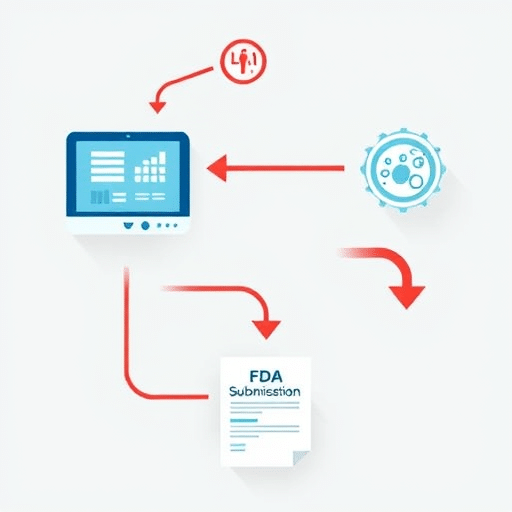
5. Prepare Regulatory Submissions
- Compile Device Master Record (DMR) and Device History Record (DHR).
- Submit FDA 510(k) or PMA, EMA CE marking dossier, and ISO certificates.
- Maintain documentation in a secure, version‑controlled repository.
6. Establish Post‑Market Surveillance Plans
- Define adverse event reporting timelines (FDA MDR, EMA PMS).
- Set up analytics dashboards for real‑time performance monitoring.
- Develop corrective action and risk mitigation plans.
7. Conduct Audits and Continuous Improvement
- Schedule internal audits (QMS, ISMS).
- Engage third‑party audits (notified body, ISO certifying body).
- Iterate on risk treatments and control effectiveness.
Practical Tips and Common Pitfalls
- Data Residency: Ensure cloud providers store patient data within the required jurisdictions (e.g., EU, US).
- Consent Management: Use dynamic consent mechanisms that allow patients to update preferences in real time.
- Interoperability: Adopt FHIR standards for data exchange to simplify integration with electronic health records.
- Vendor Lock‑In: Regularly assess third‑party vendors against ISO 27001 controls and risk appetite.
- Audit Trail Integrity: Use blockchain or tamper‑evident logs for critical events to satisfy audit requirements.
Harmonizing Across Regions
While the FDA and EMA share many safety principles, regional differences—such as data residency rules under GDPR versus HIPAA—require tailored strategies. A unified compliance framework that incorporates:
- Global risk management aligned with ISO 14971.
- Centralized documentation portal with role‑based access.
- Multi‑region data centers with automated data sovereignty controls.
By mapping each regulatory requirement to a common set of controls, you reduce duplication and accelerate market entry.
Conclusion
Telehealth platforms operating in 2026 must meet a complex convergence of FDA, EMA, and ISO 27001 standards. A structured approach—classifying the device, building integrated QMS and ISMS systems, executing rigorous clinical evaluation, and maintaining robust post‑market surveillance—creates a resilient compliance foundation. By treating these frameworks as complementary rather than isolated silos, you can deliver secure, clinically validated telehealth solutions that comply globally and protect patient trust.