If you’re looking to reduce churn in 2026 mobile live games, adaptive event schedules can be the secret weapon that keeps players glued to your app. By moving away from static timers and embracing a data‑driven, player‑centric approach, you create a sense of urgency that feels personal, relevant, and rewarding.
1. Understanding the 2026 Player Landscape
2026 is a year of hyper‑segmented audiences. Players now expect experiences that adapt to their mood, time zone, and play style. The traditional “every 24 hours” or “mid‑week” event model no longer captures the nuance of modern mobile habits. Before you re‑engineer your event calendar, you must profile the players who matter most to your retention goals.
- Core vs. Casual Segments – Core players stay for depth; casual players engage for quick wins.
- Geographic Clustering – Time zones still matter; but global players now play in overlapping bursts.
- Device & OS Trends – High‑end devices allow richer event content; older devices require lightweight triggers.
2. Why Adaptive Event Scheduling Beats Static Timers
Static schedules are inflexible. Players discover a new event pattern early, which can lead to predictable disengagement. Adaptive scheduling offers:
- Real‑time responsiveness to in‑app behavior.
- Personalized urgency that feels earned, not arbitrary.
- Increased conversion rates for limited‑time offers.
Key Benefits
- Reduced Churn – Events that match player context keep them coming back.
- Higher Lifetime Value (LTV) – Players spend more when events align with their play cycles.
- Data‑Rich Insights – Continuous monitoring provides actionable feedback.
3. Gathering the Right Data: Player Behavior Analytics
Data is the engine of adaptive scheduling. Start with a unified analytics stack that captures:
- Login frequency and session length.
- Time‑of‑day and day‑of‑week patterns.
- In‑app purchases and reward redemption.
- Event interaction (clicks, skips, completions).
Once you have a reliable data pipeline, segment your players using clustering algorithms. A popular approach is the Gaussian Mixture Model (GMM), which groups players into behavioral archetypes.
4. Building Your Event Calendar Framework
Design a modular calendar that can shift based on player signals. Define three core components:
- Baseline Schedule – A default calendar that ensures every player receives a minimum event cadence.
- Trigger Conditions – Conditions that override the baseline, such as a 12‑hour inactivity gap or a 3‑day streak of high engagement.
- Event Pool – A curated list of events, each tagged with difficulty, reward type, and duration.
Use a simple rule engine (e.g., IF player_is_active THEN schedule “Rapid Reward” event). Keep the rule set lean to avoid performance bottlenecks on the client side.
5. Personalizing Event Timing with Machine Learning
Once you have a rule engine, inject machine learning for fine‑tuned personalization. Here’s a quick pipeline:
- Feature Engineering – Convert raw logs into features: average session time, average spend per session, event interaction rate.
- Model Training – Use a Gradient Boosted Decision Tree (GBDT) to predict the optimal event start time per player.
- Real‑time Inference – Deploy the model on the server and push predictions to the client via push notifications or in‑app banners.
- Continuous Learning – Retrain weekly with new data to adapt to changing player habits.
In practice, the model might recommend that Player A receive a “Weekend Rush” event at 5 pm local time, while Player B gets a “Morning Sprint” at 8 am, even though both are in the same country.
6. Testing & Iteration: A/B Strategies in 2026
A/B testing remains essential, but you now need multi‑armed bandit (MAB) frameworks to balance exploration and exploitation. Steps:
- Allocate a small cohort to a new adaptive schedule.
- Use MAB to dynamically adjust allocation based on real‑time engagement metrics.
- Measure key outcomes: retention over 30 days, average revenue per user (ARPU), event completion rate.
- Roll out to the broader player base once confidence thresholds are met.
7. Monitoring Retention: Key Metrics & Dashboards
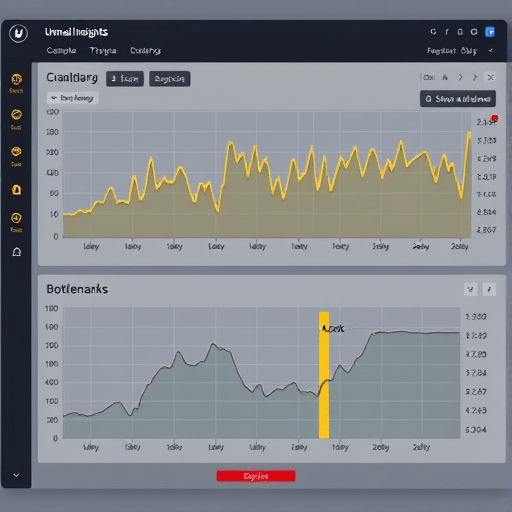
Track these metrics daily to assess the health of your adaptive events:
- Retention cohort tables segmented by event timing.
- Event‑specific churn curves.
- Revenue uplift per event type.
- Notification open rate versus event participation.
Set up alerts for any sudden drop in event engagement, as that could signal a scheduling bug or a shift in player behavior.
8. Integrating Cross‑Platform Sync for Live Events
Players now juggle multiple devices. Ensure your event system is cross‑platform by synchronizing state via a cloud API. Consider the following:
- Persist event assignments in a central database.
- Use webhooks to notify mobile clients of new events.
- Handle offline caching so that events trigger correctly when connectivity is restored.
9. Scaling Adaptive Schedules Across Multiple Titles
If your studio has several live games, reuse the core adaptive scheduling engine. Tailor the event pools per game, but keep the rule engine and ML pipeline identical. This reduces duplication of effort and ensures consistent data quality.
10. Common Pitfalls and How to Avoid Them
- Over‑complicating the rule set – Keep rules interpretable; otherwise debugging becomes a nightmare.
- Neglecting push notification fatigue – Limit the number of event alerts per day to avoid spam.
- Ignoring edge cases – Test for users in rare time zones or with atypical play patterns.
- Failing to update the event pool – Refresh content weekly to maintain novelty.
Conclusion
By shifting from static event timers to an adaptive, data‑driven schedule, mobile live games in 2026 can dramatically reduce churn and increase player lifetime value. The key lies in building a solid analytics foundation, crafting a flexible rule engine, leveraging machine learning for personalization, and rigorously testing the results. With these steps in place, every event feels timely, relevant, and compelling—turning casual clicks into loyal engagement.