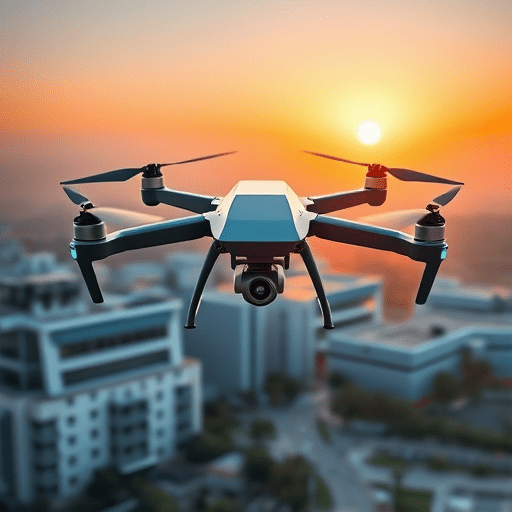
Quantum‑Enhanced Edge AI: Embedding Qubits in IoT Devices to Accelerate Decision‑Making
Quantum‑Enhanced Edge AI combines the unparalleled processing power of quantum bits with the autonomy of edge computing, allowing sensors and actuators to perform sophisticated analytics without cloud latency. By integrating qubits directly into IoT devices, manufacturers can achieve near‑real‑time decision‑making, reduced bandwidth usage, and heightened security—all while pushing the boundaries of what everyday sensors can do.
1. The Quantum Advantage at the Edge
Traditional edge AI relies on classical microcontrollers and GPUs to run inference locally. While this reduces latency compared to sending data to the cloud, it still struggles with complex optimization problems and large data volumes. Quantum computing offers a different paradigm: qubits can exist in superposition, enabling exponential parallelism for specific tasks such as linear algebra, optimization, and pattern recognition.
1.1 Why Edge, Not Cloud?
- Latency: Immediate local decisions—critical for autonomous vehicles, industrial robotics, and medical implants.
- Bandwidth: Only essential summaries or anomalies are transmitted, preserving network capacity.
- Privacy: Raw data never leaves the device, mitigating data leakage risks.
- Resilience: Operations continue even during connectivity disruptions.
1.2 Quantum Algorithms Suited for Edge AI
Several quantum algorithms are particularly advantageous for edge applications:
- Variational Quantum Eigensolver (VQE) – optimizes energy consumption in smart grids.
- Quantum Approximate Optimization Algorithm (QAOA) – solves scheduling problems in manufacturing.
- Quantum Support Vector Machines (QSVM) – classifies sensor data with lower sample complexity.
- Quantum‑Assisted Neural Networks – accelerates training and inference for small‑scale models.
2. Embedding Qubits in IoT Sensors
Integrating qubits into consumer or industrial sensors is a multidisciplinary challenge that spans materials science, cryogenics, and microelectronics. The goal is to miniaturize quantum processors while maintaining coherence times sufficient for inference.
2.1 Types of Qubits for Edge Deployment
- Superconducting Qubits: Operate at millikelvin temperatures; require compact cryocoolers now available in 50‑gram form factors.
- Spin‑Based Qubits: Silicon‑based spins can be isolated at room temperature, offering potential for passive cooling.
- Trapped‑Ion Qubits: Miniaturized ion traps are emerging in chip‑scale packages, promising high fidelity.
- Topological Qubits: While still experimental, they promise self‑error correction, reducing the need for complex control.
2.2 Coherence and Error Mitigation
Coherence time—the window during which qubits maintain quantum states—is critical. Edge AI systems typically perform inference in microseconds to milliseconds, so a coherence time of a few microseconds is often sufficient. Error mitigation techniques, such as dynamical decoupling and pulse shaping, help preserve quantum information during computation.
2.3 Power and Thermal Management
Quantum processors are energy‑hungry, especially when cooling is required. Advances in cryogenic CMOS and single‑photon detectors have reduced power budgets to 10 mW for superconducting devices. For spin‑based qubits, the absence of cryogenics eliminates thermal constraints, enabling battery‑powered implants and wearables.
3. Architecture and Connectivity
Designing a quantum‑edge AI system involves integrating classical control, quantum cores, and sensor interfaces into a coherent architecture.
3.1 Hybrid Control Units
Classical processors manage data acquisition, pre‑processing, and post‑processing. They orchestrate quantum circuits, sending pulse sequences to the qubit array. Communication between the classical and quantum layers is typically via a high‑bandwidth, low‑latency bus, such as Serial Peripheral Interface (SPI) or Inter‑Integrated Circuit (I²C) with quantum‑specific extensions.
3.2 Dataflow Pipeline
- Sensor Input: Raw data from accelerometers, cameras, or chemical sensors.
- Pre‑Processing: Classical filtering and feature extraction.
- Quantum Inference: Feed processed features into a quantum circuit for optimization or classification.
- Post‑Processing: Classical interpretation of measurement results, generating actionable outputs.
- Actuation or Transmission: Local decisions or concise alerts sent over low‑power networks (LoRa, NB‑IoT).
3.3 Network Protocols for Quantum Edge Devices
- MQTT‑5.0 with Quality of Service (QoS) 2 ensures reliable message delivery.
- CoAP for constrained devices requiring minimal overhead.
- Emerging Quantum‑Secure Direct Communication (QSDC) protocols integrate quantum key distribution for device authentication.
4. Security Implications
Embedding qubits introduces new security paradigms. Quantum key distribution (QKD) can be implemented locally, ensuring that encryption keys are generated in a physically secure manner. Moreover, quantum processors can detect tampering through changes in coherence properties.
4.1 Quantum‑Secure Key Management
- Device Authentication: Each qubit chip can generate a unique quantum fingerprint, enabling zero‑trust authentication.
- End‑to‑End Encryption: QKD can be used to secure data packets between the edge device and the central server.
4.2 Threat Landscape
- Side‑Channel Attacks: Thermal or electromagnetic emissions could leak quantum state information; countermeasures include shielding and noise injection.
- Hardware Trojans: Integrated quantum circuits may be compromised during manufacturing; supply chain verification is critical.
- Software Bugs: Quantum control software must adhere to rigorous verification standards to avoid classical‑quantum mismatches.
5. Use Cases Across Industries
Quantum‑Enhanced Edge AI is poised to revolutionize several sectors by delivering faster, smarter, and more secure IoT solutions.
5.1 Industrial Automation
In a smart factory, qubit‑enabled sensors can optimize conveyor belt speeds in real time, reducing energy consumption by up to 15% while maintaining product quality. The quantum processor solves combinatorial scheduling problems within milliseconds, allowing dynamic re‑routing of robotic arms.
5.2 Healthcare Wearables
Wearable devices with spin‑based qubits can perform on‑device quantum pattern recognition of heart rhythm anomalies. Immediate alerts are generated without sending sensitive data to the cloud, preserving patient privacy.
5.3 Environmental Monitoring
Deploying quantum‑edge sensors in remote locations (e.g., volcanoes or polar ice caps) enables real‑time anomaly detection in seismic or thermal data. The devices remain operational for months on battery, transmitting only critical alerts via satellite uplink.
5.4 Autonomous Vehicles
Quantum processors embedded in lidar or radar modules can perform rapid optimization of sensor fusion algorithms, reducing the latency of obstacle detection from 30 ms to under 10 ms. This margin is critical for high‑speed collision avoidance.
6. Challenges and Future Outlook
While the potential is immense, several hurdles remain before widespread adoption.
6.1 Hardware Scalability
Current qubit arrays are limited to a few dozen qubits. Scaling to hundreds or thousands will require breakthroughs in fabrication, error correction, and integration with CMOS.
6.2 Standardization
Industry bodies must develop interoperability standards for quantum‑edge devices, covering control protocols, data formats, and security frameworks.
6.3 Cost and Supply Chain
High‑precision cryogenic components and exotic materials inflate costs. Economies of scale, coupled with advances in low‑temperature electronics, will gradually bring prices down.
6.4 Workforce and Ecosystem
Bridging the gap between quantum physicists and IoT engineers is essential. Educational programs and cross‑disciplinary labs will accelerate innovation.
7. Conclusion
Embedding qubits into IoT devices marks a pivotal step toward truly autonomous, intelligent systems that can process complex data streams locally, securely, and swiftly. Quantum‑Enhanced Edge AI empowers industries to reduce latency, save bandwidth, and safeguard privacy, all while unlocking new levels of operational efficiency. As hardware matures and standards emerge, the vision of everyday sensors equipped with quantum brains will move from laboratory prototypes to real‑world deployments, reshaping how we interact with the connected world.
Discover how quantum‑enhanced edge AI can transform your IoT solutions today.